
Top 10 Types of ACB Breakers and Their Uses?
Selecting the right ACB Breaker begins with understanding where it operates and what it must protect. In a hospital, a breaker may guard a medical distribution board. In a factory, it may interrupt thousands of amperes beside hot, vibrating machinery. These conditions demand different ratings, trip units, arc-control methods, and maintenance plans.
The International Energy Agency’s Electricity 2024 report projects global electricity demand will grow by an average of 3.4% annually through 2026. More power infrastructure means greater pressure on low-voltage protection systems. The IEA’s World Energy Outlook 2024 also highlights rising electrification across buildings, transport, and industry. Those trends make reliable switchgear more important, not optional. IEC 60947-2 remains a central reference for low-voltage circuit-breaker performance, testing, and coordination.
Electrical protection specialist John D. McDonald offers a practical reminder: “A breaker is only one part of a protection system.” That point is easy to overlook. An advanced ACB Breaker cannot compensate for poor short-circuit calculations, incorrect settings, weak cable connections, or neglected inspections.
This guide examines ten ACB Breaker types and their practical uses, including fixed, drawout, air-insulated, electronic-trip, and high-interrupting-capacity designs. The categories are useful, but not perfect. Manufacturers sometimes use different labels for similar products. Selection should therefore consider fault current, voltage, load profile, selectivity, installation space, and service access. A shiny front panel proves very little. Performance depends on the complete system.
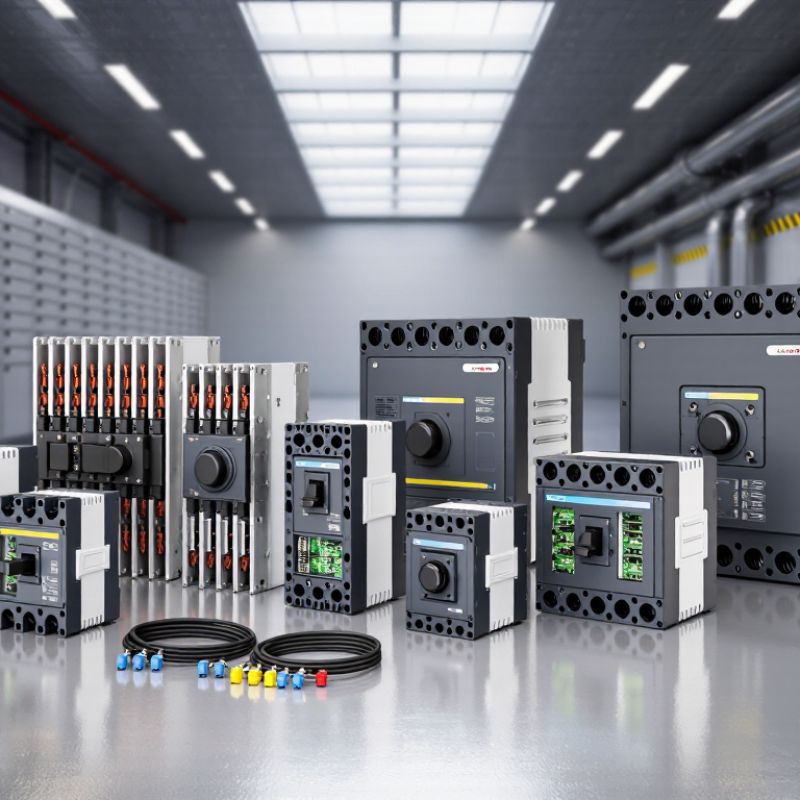
ACB Basics: Structure, Operating Principles, and Classification
Air circuit breakers, or ACBs, protect low-voltage distribution systems by interrupting current in air. Their basic structure includes main contacts, arcing contacts, arc chutes, terminals, a spring-charged operating mechanism, and an electronic trip unit. The trip unit measures overload, short-circuit, and sometimes earth-fault conditions. It then releases the mechanism within milliseconds. Arc chutes divide and cool the arc before it reaches the open air. IEC 60947-2 provides the main technical framework for low-voltage circuit breakers.
Classification is practical, but not perfectly universal. Common ACB types include fixed-mounted, draw-out, two-pole, three-pole, four-pole, manually operated, electrically operated, air-break, current-limiting, and intelligent-trip designs. Fixed units suit stable switchboards. Draw-out units allow safer inspection and faster replacement. Three-pole models serve balanced three-phase loads, while four-pole versions also switch the neutral. Manual mechanisms fit simpler installations. Motor-charged mechanisms support remote operation and automatic transfer systems.
Selection depends on rated current, short-circuit capacity, service voltage, breaking time, installation space, and maintenance access. A 4,000-ampere frame may look suitable, yet its actual trip setting can remain too low for the feeder. That mistake is common. The IEA’s Electricity 2024 report forecasts global electricity demand growth of about 3.3% annually from 2024 to 2026. More demand increases pressure on distribution equipment and protection coordination. Field inspections should verify contact wear, arc-chute condition, insulation cleanliness, and trip-unit settings, not merely the nameplate rating.
Low-Voltage ACB Types for Standard Power Distribution
Top 10 Types of ACB Breakers and Their Uses
Low-voltage air circuit breakers protect large distribution systems from overloads and short circuits. Their design choices affect safety, maintenance, and service continuity. Fixed ACBs suit compact switchboards with stable loads. Draw-out ACBs slide from their compartments for inspection and replacement. Three-pole ACBs serve balanced three-phase feeders. Four-pole models also switch the neutral, helping systems with sensitive loads.
Thermal-magnetic ACBs offer simple, familiar protection for standard feeders.
Electronic-trip ACBs provide adjustable long-time, short-time, instantaneous, and ground-fault settings.
Selective ACBs support coordination, allowing a downstream breaker to clear faults first.
Motor-operated ACBs enable remote closing and opening in automated panels.
Manual ACBs remain practical where local operation is acceptable.
High-interrupting-capacity ACBs protect installations with powerful transformers and high fault currents.
Selection should begin with load current, voltage, fault level, pole arrangement, and enclosure space. Check the breaker’s interrupting rating against the calculated prospective fault current. Do not rely on frame size alone.
In field inspections, loose terminals and poor ventilation often cause more trouble than expected. That detail is easy to miss. Adjustable settings also require a coordination study, not guesswork.
A draw-out unit may improve maintenance access, but it needs correct racking procedures and clear mechanical indicators.
Periodic testing should include connections, trip functions, insulation condition, and operating mechanisms. A careful record helps reveal gradual deterioration before nuisance tripping appears.
Specialized ACB Designs for Industrial and High-Current Systems
Top 10 Types of ACB Breakers and Their Uses
Specialized ACB designs protect industrial and high-current systems where ordinary breakers may lack endurance. Fixed ACBs suit compact switchboards. Drawout ACBs support faster isolation during maintenance. Three-pole versions protect balanced three-phase feeders. Four-pole versions also switch the neutral conductor. Manual ACBs serve simpler installations. Motor-operated models enable remote closing and opening. Thermal-magnetic types provide basic overload and short-circuit protection. Electronic-trip ACBs measure current more precisely. Selective-coordination designs delay tripping to keep upstream power available. Current-limiting ACBs reduce let-through energy during severe faults.
High-current applications often demand adjustable long-time, short-time, instantaneous, and ground-fault settings. IEC 60947-2 provides the core performance framework for low-voltage circuit breakers. Engineers still need verified interrupting ratings, temperature-rise data, and coordination studies. A large frame alone proves little.
The International Energy Agency’s Electricity 2024 report forecasts roughly 4% annual global electricity-demand growth through 2026. More demand means denser industrial distribution and greater fault energy. In practice, drawout electronic-trip ACBs are common in factories, hospitals, data centers, and utility substations. They allow testing without removing the entire breaker. That saves time.
Yet field conditions are less tidy. Dust, heat, poor ventilation, and loose terminations can defeat a carefully selected device. Uptime Institute’s outage analyses repeatedly identify power problems among major data-center outage causes. Protection settings must match real loads, cable sizes, motor starting currents, and maintenance practices. The categories overlap. That is inconvenient, but honest.
Protection Features and Applications Across Ten ACB Types
Air circuit breakers (ACBs) protect low-voltage systems by interrupting faults in open air. Their selection depends on fault current, switching frequency, and maintenance access. The ten common configurations are fixed, draw-out, manually operated, motor-operated, thermal-magnetic, electronic-trip, long-time/short-time/instantaneous-ground-fault (LSIG), undervoltage-release, shunt-trip, and maintenance-mode ACBs. Each serves a different protection or control need.
Fixed ACBs suit compact switchboards with limited servicing requirements. Draw-out versions improve isolation and replacement speed in hospitals, factories, and data centers. Manual units support basic feeders, while motor-operated designs enable remote switching. Thermal-magnetic protection is practical for smaller distribution circuits. Electronic-trip ACBs provide adjustable thresholds and event records. LSIG protection coordinates selective tripping, reducing unnecessary shutdowns. Undervoltage releases disconnect circuits during supply loss. Shunt trips support emergency shutdown systems. Maintenance-mode settings reduce arc-energy exposure during inspection, but they require disciplined procedures.
The International Energy Agency’s Electricity 2024 report projects global electricity demand will grow by about 4% in 2024, increasing pressure on dependable distribution equipment. IEC 60947-2 requires tested performance for low-voltage circuit breakers, including rated short-circuit interruption and trip behavior. Uptime Institute’s 2023 survey also identifies power failures as a continuing data-center concern. That evidence supports remote operation and selective coordination. Still, specifications alone can mislead. I have seen oversized ACBs create poor coordination and unnecessary costs. Engineers should verify cable capacity, available fault current, enclosure conditions, and real maintenance practices before choosing one. Perfect protection does not exist.
| No. | ACB Type | Classification | Typical Protection Features | Primary Uses | Common Applications |
|---|---|---|---|---|---|
| 1 | Fixed-Mounted ACB | Installation method | Overload, short-circuit, and ground-fault protection when equipped with a suitable trip unit; manual or motorized operation may be available. | Provides permanent protection and switching for circuits that do not require rapid breaker removal. | Main low-voltage switchboards, utility distribution panels, industrial feeders, and transformer secondary connections. |
| 2 | Drawout or Withdrawable ACB | Installation method | The same core overcurrent functions as a fixed ACB, with disconnect, test, and connected positions for safer isolation and maintenance. | Allows inspection, testing, replacement, and maintenance without removing the complete breaker from the switchboard. | Critical facilities, data centers, hospitals, process plants, power generation facilities, and large commercial buildings. |
| 3 | Three-Pole ACB | Number of poles | Simultaneous interruption of all three phase conductors; protection settings may include long-time, short-time, instantaneous, and ground-fault functions. | Protects balanced or predominantly three-phase loads where the neutral does not need to be switched. | Motor control centers, industrial feeders, three-phase transformers, chillers, pumps, and large mechanical equipment. |
| 4 | Four-Pole ACB with Switched Neutral | Number of poles | Switches the three phases and neutral together; may provide neutral-current sensing and ground-fault protection when supported by the trip unit. | Provides complete isolation of three-phase circuits with significant single-phase loading or systems requiring neutral disconnection. | Commercial buildings, hospitals, data centers, generator changeover systems, and installations with multiple nonlinear loads. |
| 5 | Thermal-Magnetic ACB | Trip technology | Thermal action responds to sustained overloads, while magnetic action provides fast response to high short-circuit currents. | Offers straightforward overcurrent protection with simple adjustment and limited dependence on auxiliary power. | Conventional distribution boards, general industrial loads, smaller main incomers, and systems where advanced protection coordination is not required. |
| 6 | Electronic LSI ACB | Trip technology | Long-time protection for overloads, short-time protection with adjustable delay, and instantaneous protection for severe short circuits. | Improves selectivity and setting accuracy compared with basic thermal-magnetic protection. | Main switchboards, large feeders, industrial plants, commercial distribution systems, and transformer protection. |
| 7 | Electronic LSIG ACB | Trip technology | Long-time, short-time, instantaneous, and ground-fault protection, with adjustable pickup and time-delay settings depending on the trip unit. | Protects against overloads, phase-to-phase faults, high-current faults, and many line-to-ground faults. | Industrial plants, high-rise buildings, hospitals, data centers, mining facilities, and low-voltage power distribution systems. |
| 8 | Zone-Selective Interlocking ACB | Coordination feature | Uses communication between upstream and downstream breakers to reduce fault-clearing time while maintaining selective coordination. | Limits the duration and energy of short-circuit faults in the affected zone without unnecessarily tripping upstream breakers. | Mission-critical switchboards, hospitals, airports, high-rise buildings, manufacturing plants, and systems with multiple distribution levels. |
| 9 | Current-Limiting ACB | Fault-current performance | Restricts the peak let-through current and fault energy during a short circuit, reducing thermal and mechanical stress on downstream equipment. | Helps protect busbars, cables, transformers, and switchgear in systems with high prospective short-circuit current. | Industrial power systems, utility substations, large commercial installations, and locations near high-capacity transformers. |
| 10 | Arc-Energy-Reduction ACB | Maintenance and safety function | May use maintenance-mode settings, instantaneous override, remote trip, or other arc-energy-reduction functions to shorten fault-clearing time during servicing. | Reduces the potential incident energy available to personnel working near energized equipment, when correctly designed and operated. | Industrial control rooms, electrical rooms, data centers, utilities, and facilities subject to energized maintenance requirements. |
How to Select the Right ACB for Different Electrical Installations
Selecting the right air circuit breaker (ACB) starts with the installation, not the catalog. Fixed ACBs suit stable switchboards with limited maintenance access. Draw-out ACBs support faster inspection and replacement. Three-pole models protect three-phase loads, while four-pole models can switch the neutral when system design requires it.
Consider rated current, service voltage, short-circuit breaking capacity, and expected fault levels. A breaker rated for normal load may still fail during a high-energy fault. Trip units may offer long-time, short-time, instantaneous, and earth-fault protection. Electronic trip units provide adjustable settings for coordination. Thermal-magnetic units can be simpler, but their response may be less flexible. Motor-operated, undervoltage-release, and shunt-trip options support remote control and emergency isolation.
Check the conductor size, enclosure space, ambient temperature, and available maintenance clearance. A dusty plant room may need stronger protection against contamination. A hospital or data facility may prioritize selective coordination and dependable monitoring.
Do not select only by frame size. It can mislead. Verify interrupting capacity against the calculated prospective fault current, then confirm compatibility with the busbar system and protection study.
In practice, installation drawings sometimes omit future load growth. I have seen this create expensive redesigns. A qualified electrical engineer should review settings, local regulations, and commissioning test results before energization.