2026 Top Diaphragm Water Pump How to Choose?
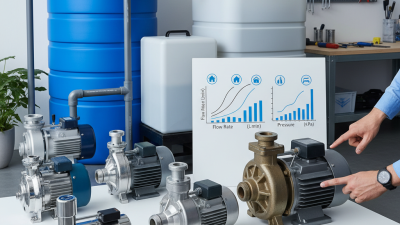
Choosing the right diaphragm water pump in 2026 requires more than comparing flow rates and prices. The pump must match the water source, pressure demand, operating hours, temperature, and installation environment. A unit moving clean water from a storage tank may fail quickly when exposed to sand, chemicals, or frequent dry running.
Pump-system specialist Dr. Lev Nelik offers a practical reminder: “A pump should be selected as a system, not as an isolated machine.” This principle guides the questions in this article. Readers will examine diaphragm materials, motor power, maximum flow, pressure stability, self-priming ability, noise, maintenance access, and energy use. A compact pump may fit beneath a boat seat or inside a narrow utility cabinet, yet poor ventilation can still shorten motor life. Small details matter.
Real installation experience also changes the decision. A diaphragm water pump that performs well during a ten-minute test may struggle after six hours of continuous operation. That gap is easy to overlook. I have seen specifications appear convincing, while the inlet hose collapsed under load. The mistake was not dramatic, but it was expensive.
This guide compares common pump designs and explains how to read technical data without trusting every headline claim. Some recommendations may need adjustment. Water quality, elevation, and seasonal demand vary widely. The best choice is not always the strongest pump. It is the model that delivers dependable performance without creating unnecessary pressure, heat, noise, or maintenance.
Define the Duty Point: Flow, Pressure, and a 1.5× Safety Margin
2026 Top Diaphragm Water Pump How to Choose?
Start with the real duty point, not the pump’s maximum rating.
Record the required flow in liters per minute and the total pressure in bar or psi. Include vertical lift, pipe friction, filters, valves, and the outlet pressure. A pump moving 20 L/min at 3 bar faces a different load from one moving 20 L/min at 1 bar.
Measure twice.
Field commissioning often shows that estimated pipe losses were too low. Small hoses, dirty filters, and long discharge lines can increase resistance quickly.
Diaphragm pumps also create pulsating flow, so gauges may fluctuate. Use an averaged reading, and check the liquid temperature and viscosity before selecting the pump.
Apply the 1.5× safety margin to the calculated duty point.
For example, a requirement of 20 L/min at 3 bar becomes a selection target near 30 L/min and 4.5 bar. However, do not operate continuously at the pump’s absolute limit. Select a model whose normal performance curve comfortably covers that target.
Excess capacity can cause rapid cycling, noise, overheating, or unnecessary wear.
That is the part many buyers miss.
Recheck the margin when tubing, spray nozzles, or filters change, because the final duty point may shift after installation.
Compare 12/24 VDC and 230 VAC Pumps by Flow, Power, and Efficiency
2026 Top Diaphragm Water Pump: How to Choose?
Choosing between a 12/24 VDC and 230 VAC diaphragm pump starts with the duty cycle. A 12 VDC model suits small mobile systems, such as boats, cabins, and agricultural sprayers. It often delivers practical flow at low pressure, but current demand rises quickly. A 24 VDC pump usually reduces cable losses and handles longer operating periods more comfortably. Battery capacity still limits real performance.
A 230 VAC pump normally supports higher flow and steadier pressure for workshops, buildings, and fixed installations. Its motor can run continuously with fewer battery-related concerns. However, standby consumption, wiring quality, and motor loading affect efficiency. A DC pump connected through an inverter may lose energy before water reaches the outlet. That hidden loss matters.
Check flow at the pressure you actually need. Catalog flow alone can mislead. A pump rated at 15 liters per minute may deliver much less through narrow tubing, filters, or a raised discharge line. Measure voltage at the pump terminals, not only at the battery. I have seen undersized cables create heat and weak pressure, even when the pump seemed correctly selected. That was a wiring mistake, not a pump failure. Compare liters per minute, watts, pressure, duty cycle, and expected running hours. Leave some capacity unused. Constant operation near the limit can shorten diaphragm life and increase noise. Testing one full operating cycle is wiser than trusting a single laboratory figure.
Match Diaphragm Materials to 0–60°C Water and Chemical Compatibility
2026 Top Diaphragm Water Pump How to Choose?
For water between 0–60°C, diaphragm material matters more than advertised flow. EPDM usually suits clean water, mild alkaline solutions, and repeated temperature changes. PTFE offers stronger resistance to acids, solvents, and oxidizing chemicals, but it may flex less efficiently. Nitrile can handle oils, yet it is a weak choice for many aggressive chemicals. The 2024 UN World Water Development Report notes that agriculture uses about 70% of global freshwater withdrawals. That makes reliable chemical dosing and water transfer increasingly important. Still, water quality differs sharply between sites.
Check the fluid temperature, pH, concentration, suspended solids, and cleaning method. A pump rated to 60°C may tolerate that temperature only briefly. Continuous operation can shorten diaphragm life. The U.S. Department of Energy’s pumping-system guidance recommends evaluating the full operating system, not flow alone. That principle is easy to overlook. I have seen specifications match water temperature but ignore chemical additives. The result was swelling, cracking, or unexpected leakage.
Tips: Request a chemical-compatibility chart and test a sample diaphragm before purchase. Confirm whether the rating applies continuously. Ask for material data, pressure limits, cycle-life testing, and replacement intervals. ASTM D543 provides a recognized method for assessing plastics after chemical exposure. Use it as a reference, not a complete guarantee. Small variations in concentration can change performance. Temperature, pressure, and pulsation must be reviewed together.
2026 Top Diaphragm Water Pump: How to Choose?
Typical diaphragm-material compatibility for water and common chemical groups from 0–60°C.
Compatibility score: 5 = generally suitable, 4 = suitable in many applications, 3 = condition-dependent,
2 = limited suitability, 1 = generally unsuitable. EPDM is commonly preferred for water and alkaline cleaners,
FKM for hydrocarbon-based fluids, and PTFE for broad chemical resistance. Always confirm concentration, pressure,
cycling, additives, and the specific diaphragm construction before selection.
Check Rated Flow at 1–7 bar and Confirm Manufacturer Test-Curve Data
2026 Top Diaphragm Water Pump: How to Choose?
Choosing a diaphragm water pump starts with its rated flow across 1–7 bar, not its maximum headline number. A pump may deliver 10 L/min at low pressure, then provide much less at 7 bar. Ask for a complete pressure-flow curve from the manufacturer. Reliable data should show voltage, water temperature, hose size, and testing duration. Without these conditions, the figures are difficult to compare.
Tips: Mark your real working pressure first. Then check the curve at that point. Leave a practical safety margin. A pump rated at 8 L/min may struggle when filters become dirty or tubing becomes longer. I once focused too heavily on free-flow performance, and the installed output was disappointing. That mistake taught me to study the middle of the curve, not only its highest value.
Confirm whether the manufacturer tests each pressure point or estimates them from limited samples. Request actual test-curve data covering 1, 3, 5, and 7 bar. Also check current draw, duty cycle, diaphragm material, and automatic pressure-control behavior. Flow can change with water temperature and inlet restrictions. A clear test report is useful evidence, but it is not a promise for every installation. Field conditions remain imperfect.
Verify IP65 Protection, Dry-Run Limits, Noise, and Service-Life Ratings
2026 Top Diaphragm Water Pump: How to Choose?
A reliable diaphragm water pump needs more than a strong flow-rate claim. Check the IP65 rating carefully. It means dust protection and resistance to water jets, not safe immersion. Examine the housing joints, cable entry, and switch cover. These small areas often weaken protection during real installation. Ask for test conditions, not just a printed rating.
Dry-running performance also requires careful verification. Some pumps tolerate brief dry operation, while others can overheat within minutes. Confirm the exact dry-run limit in the technical manual. Noise should be measured at a stated distance, flow rate, and mounting surface. A pump may sound quiet on a rubber bench but louder against a metal frame. Service-life ratings should identify hours, cycles, pressure, and water temperature. Without these details, the number may look impressive but remain difficult to trust.
Tips: Test the pump before permanent installation. Listen for rattling, inspect vibration, and record outlet pressure. Leave ventilation around the motor. Never assume IP65 covers every connection. My own evaluation would also include a repeated start-stop test, because laboratory ratings may not reflect household use. This step takes time, but it can reveal heat buildup, seal wear, or unstable pressure. Some published figures are incomplete. That deserves honest review.