10 Best Industrial Pumps for Global Buyers in 2026

A pump can look right on a specification sheet and still waste energy, struggle with abrasive fluid, or miss its duty point. For global buyers, the stakes are practical: a poor match can mean excess power use, frequent seal changes, and delayed production. The U.S. Department of Energy’s pumping-system sourcebook estimates that pumping systems consume nearly 20% of global electricity demand. The figure is older, so treat it as a warning about scale, not a current forecast.

The International Energy Agency has repeatedly made the case for efficiency. Its Executive Director, Fatih Birol, calls it “the first fuel.” That principle matters when comparing industrial pumps: purchase price is only one line in a lifecycle-cost calculation. Flow, total dynamic head, fluid temperature, viscosity, solids content, controls, and service access all deserve scrutiny. A stainless-steel centrifugal unit may suit clean process water; a progressive-cavity design may better handle viscous material. Details matter.

This 2026 guide compares ten industrial pumps for buyers weighing performance, reliability, and support across markets. It draws on manufacturer specifications and recognized technical guidance, while noting that published ratings do not guarantee field results. Ask for a duty-point curve, materials compatibility, efficiency data, and local parts availability. A small label on a motor housing can matter more than a polished brochure. No ranking can replace a site assessment—and that limitation is worth remembering.
10 Best Industrial Pumps for Global Buyers in 2026

How Industrial Pumps Work and Where They Are Used

Industrial pumps move liquids by converting mechanical energy into flow. In a centrifugal pump, a rotating impeller accelerates liquid outward, while the casing helps turn velocity into pressure. Positive-displacement pumps trap a set volume and push it toward the outlet. The difference matters. Centrifugal designs often suit steady, higher-flow duties; positive-displacement models can handle viscous fluids or precise dosing. Performance also depends on viscosity, temperature, solids, and required flow and pressure.

Plants use pumps to circulate cooling water, feed boilers, move wastewater, and transfer liquids between tanks. Food and pharmaceutical processes may require cleanable designs and compatible materials. A wastewater pump may need a wide passage for fibrous debris, while a dosing pump needs consistent output. Pipe bends, suction lift, and clogged strainers can all reduce flow. They may also contribute to cavitation, which can damage internal parts. A pressure gauge helps, but it cannot reveal every cause.

Selection starts with the fluid and operating conditions, not just pipe size. Engineers compare pump and system curves, then check motor load, seals, maintenance access, and spare-part availability. It sounds straightforward. It often isn't. Filters foul, and demand changes, so a larger pump is not automatically safer; oversizing can waste energy and increase wear. Regular checks of vibration, leakage, and motor temperature help teams spot changes early.

Key Criteria for Evaluating Industrial Pumps in 2026

In 2026, judge an industrial pump against its actual duty, not its highest advertised flow. Begin with required flow and total dynamic head, then compare the operating point with the pump curve. Oversizing can waste energy and encourage constant throttling. Small details matter. Record liquid temperature, viscosity, solids content, and start-stop frequency. These conditions affect impeller selection, casing materials, and seal life. For abrasive slurry, ask how wear parts are inspected and replaced. For corrosive liquids, request material compatibility data instead of trusting a broad “chemical resistant” description.

Efficiency matters, but it is only part of lifecycle cost. Check power consumption at normal operating conditions, not just at a laboratory’s best point. Confirm that available suction conditions meet the pump’s NPSH requirements; cavitation can damage equipment and disrupt production. Ask for documented performance testing and clear tolerances. Data can disappoint. A neat datasheet may not reflect a hot liquid, fluctuating supply, or cramped installation. For global projects, verify local access to trained service, critical spares, and suitable electrical connections. Consider basic vibration and temperature monitoring, too. It can reveal wear early, though sensors cannot replace regular inspection. A practical evaluation leaves room for uncertainty and records what still needs testing.

10 Best Industrial Pumps for Global Buyers in 2026

Key evaluation criterion: match pump capacity to the required flow and head.

The chart shows theoretical hydraulic power for water at selected flow-and-head operating points, calculated using P = ρgQH. Actual electrical input is higher because pump and motor efficiencies are below 100%. These calculated examples illustrate operating requirements; they are not product rankings.

Ten Industrial Pump Types for Global Buyers

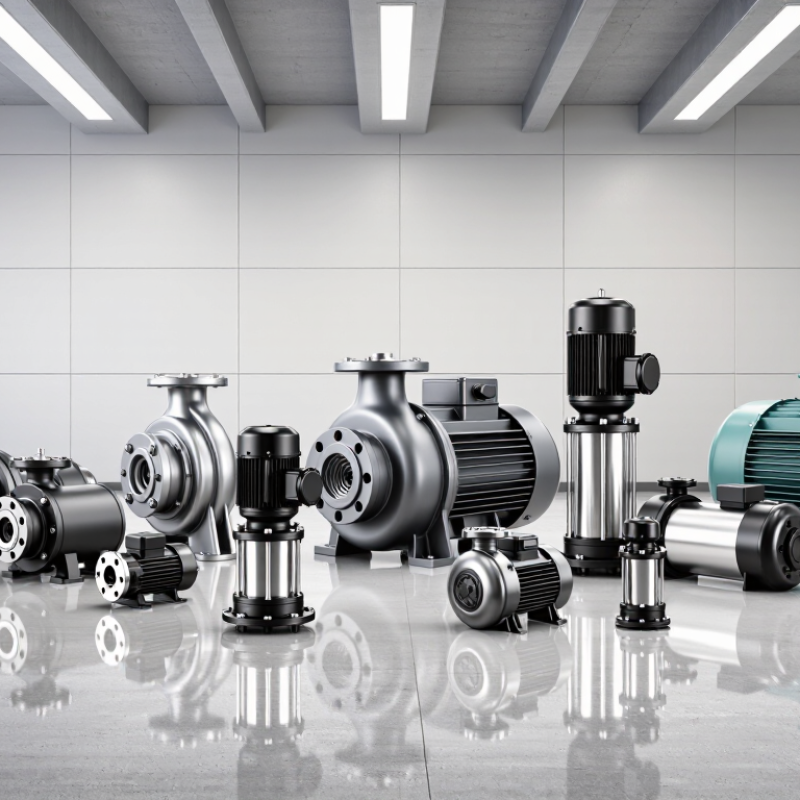
Industrial pump selection starts with the liquid, not the catalogue. Centrifugal pumps suit steady flows of relatively clean liquid. Submersible pumps work below the waterline, where access and cooling matter. Vertical turbine pumps can lift water from deep wells or sumps. Check the required flow, head, temperature, and solids before comparing models. Small details matter.

For thicker fluids, positive-displacement designs may be a better fit. Gear pumps handle viscous oils, while screw pumps move fluids with relatively low pulsation. Progressive cavity pumps can transfer slurries, but abrasive solids may wear their parts. Diaphragm pumps isolate the liquid from moving mechanical components. Piston pumps deliver pressure in measured strokes. Peristaltic pumps move liquid through a replaceable tube, which can simplify cleanup. Metering pumps are designed for controlled dosing. Each type has limits.

Ask suppliers for performance curves at your actual operating conditions, not just maximum ratings. Confirm material compatibility, seal options, spare-part access, and local service availability. A pump that fits the process may still be difficult to maintain. It sounds simple, but site conditions change. Temperature swings, air in the line, or an unexpected solids load can affect performance. Leave room to question an attractive specification.

Comparing Pump Performance, Materials, and Operating Costs

A pump’s nameplate flow is only a starting point. Buyers should compare each model at the actual duty point: required flow, total head, fluid temperature, and expected operating hours. The U.S. Department of Energy’s Improving Pumping System Performance sourcebook estimates that pumping systems use nearly 20% of global electricity, and 25–50% of energy in some industrial plants. Even a small efficiency gap can therefore matter over thousands of operating hours. Check the full performance curve, not just the best-efficiency figure. Small details matter.

Materials shape reliability and maintenance costs. Stainless steel may suit corrosive or hygienic duties, while cast iron can be a practical choice for compatible, less aggressive fluids. Abrasive particles, chemical concentration, and temperature can change that decision. The wrong seal or impeller material may mean leaks, wear, and unplanned downtime. A material chart helps, but it cannot replace fluid-specific review.

Operating cost should include energy, maintenance, installation, and downtime—not only purchase price. The Hydraulic Institute and Europump’s Pump Life Cycle Costs guide recommends evaluating costs across a pump’s service life. Ask suppliers for efficiency data at your operating point and clarify maintenance intervals. A ranking can still mislead: the most efficient pump on paper may not fit a fluctuating process. I would question any comparison that leaves out real operating conditions.

How to Match a Pump to Industry, Fluid, and Site Conditions

Choosing an industrial pump starts with the process, not a catalog ranking. A food plant moving warm syrup needs different hydraulics from a mine dewatering muddy water. Record flow rate, total head, temperature, viscosity, and solids size. Small details matter. A fluid that looks thin at room temperature may thicken during a cold start.

For clean, low-viscosity water, centrifugal pumps often suit steady, high-flow duties. Abrasive slurries may need slower operation and replaceable wear parts. For viscous fluids, positive-displacement pumps can provide steady flow, but require suitable pressure-relief protection. Check chemical compatibility for every wetted component, including seals and elastomers. A stainless-steel casing alone does not guarantee compatibility.

Then match the pump to the site. Verify suction conditions, available NPSH, pipe losses, elevation, and power supply. Operating too near a pump’s limits can cause cavitation or overheating. Maintenance access matters: can technicians remove a seal without moving nearby pipework? Request a performance curve for the actual speed and fluid conditions, not just a maximum-flow figure. Commissioning measurements may challenge the original assumptions. They often reveal mismatches.

10 Best Industrial Pumps for Global Buyers in 2026 - How to Match a Pump to Industry, Fluid, and Site Conditions

This comparison ranks pump types by common industrial use cases, not by manufacturer. Actual capacity, pressure, temperature, and materials must be confirmed against the duty point, fluid data, applicable standards, and site conditions.

No. Pump Type Best-Fit Industries and Duties Suitable Fluids Key Advantages Important Selection Checks
1 End-Suction Centrifugal General process transfer, building services, water supply, and cooling-water circulation Clean or lightly contaminated, low-viscosity liquids compatible with wetted materials Common, straightforward design; widely available in many sizes; suitable for continuous transfer Confirm flow and total dynamic head at the actual duty point, NPSH available, solids content, seal arrangement, and motor supply.
2 Multistage Centrifugal Boiler feed, reverse-osmosis feed, pressure boosting, and high-pressure water transfer Typically clean, low-viscosity liquids; material options depend on chemistry and temperature Develops higher head than a comparable single-stage arrangement; can serve compact high-pressure systems Check required discharge pressure, inlet pressure, NPSH, water quality, temperature, and whether the pump can tolerate the fluid’s solids or gas content.
3 Submersible Wastewater Municipal sewage, industrial wastewater, drainage, and wet-well transfer Wastewater containing suspended solids or fibrous material, within the pump’s specified passage and material limits Installed below the liquid level; avoids a separate suction-lift arrangement and can simplify wet-well layouts Verify solids-passage size, impeller design, wet-well dimensions, motor cooling, cable and seal requirements, and access for lifting and maintenance.
4 Air-Operated Double-Diaphragm Batch transfer, chemical handling, tank emptying, and services where compressed air is available Many corrosive, viscous, or solids-bearing liquids, subject to diaphragm and valve material compatibility Can self-prime in many installations; air-driven models can run dry temporarily and have no rotating mechanical seal Check air supply pressure and consumption, pulsation, fluid compatibility, solids size, discharge pressure, and the cost of compressed air.
5 Progressive Cavity Sludge handling, wastewater treatment, food processing, and controlled transfer of thick products Viscous liquids and some liquids containing suspended solids; stator elastomer must suit the fluid Positive-displacement action supports steady flow at a given speed and can handle many shear-sensitive products Assess viscosity, abrasiveness, elastomer compatibility, dry-running risk, pressure, speed, and whether a dry-run protection device is needed.
6 Rotary Lobe Food and beverage, biotechnology, cosmetics, and hygienic product transfer Viscous or shear-sensitive liquids; hygienic designs are available for suitable cleaning and process requirements Gentle pumping action; can handle some soft solids; many designs allow cleaning-in-place or disassembly for cleaning Confirm hygienic standards, cleaning method, temperature, solids characteristics, seal design, and allowable differential pressure.
7 Peristaltic (Hose) Pump Mining, water treatment, chemical dosing, and transfer of abrasive or shear-sensitive products Abrasive slurries, viscous liquids, and selected corrosive fluids, subject to hose compatibility Fluid contacts the hose rather than internal valves or seals; can handle solids and is suited to metering at lower flow rates Hose life depends on pressure, speed, temperature, and abrasiveness. Check pulsation, hose replacement access, and chemical compatibility.
8 Gear Pump Lubrication systems, fuel transfer, hydraulic service, and metering of compatible oils Clean, lubricating liquids of low to high viscosity, depending on design and operating conditions Compact positive-displacement design; provides predictable delivery when operating conditions and fluid properties are controlled Usually unsuitable for hard solids. Check viscosity over the full temperature range, inlet conditions, relief protection, wear, and seal compatibility.
9 Vertical Turbine Deep wells, raw-water intake, irrigation, cooling-water systems, and large water-supply installations Water and other compatible, relatively low-viscosity liquids with solids limited by the bowl design Designed for submerged bowl assemblies with a driver typically installed above the liquid source; suitable for deep-source applications Check well diameter and straightness, water level variation, submergence, column length, corrosion, and alignment of the driver and shaft.
10 Metering (Dosing) Pump Water and wastewater treatment, chemical processing, and precise additive injection Clean or mildly contaminated dosing chemicals, subject to head, valve, diaphragm, and wetted-material limits Designed to deliver a controlled, adjustable dose; diaphragm and plunger designs serve different pressure and chemical duties Verify dose accuracy at actual backpressure, turndown, chemical compatibility, suction conditions, pulsation control, and calibration requirements.