
What Are the Best Velcro Abrasive Disc Suppliers in China?
Choosing the best Velcro Abrasive Disc suppliers in China requires more than comparing catalog prices. A reliable supplier should prove consistent grain distribution, strong hook-and-loop backing, accurate disc dimensions, and stable delivery performance. In practical testing, these details become visible quickly. A disc may cut aggressively for the first minute, then clog, shed abrasive grains, or lose adhesion under heat.
Abrasive industry specialist Dr. Brian Cook has stated, “Abrasives are cutting tools, not merely polishing materials.” This principle matters when evaluating Chinese manufacturers. The right supplier should explain its abrasive grain type, backing material, bonding system, production controls, and recommended operating speed. Factory photographs are useful, but batch records, sample testing, and customer references carry greater weight. Ask for discs tested on your actual material, such as stainless steel, painted panels, wood, or composite surfaces.
Look beyond impressive websites. Some suppliers offer low prices but provide limited technical data. Others communicate well yet struggle with repeat quality. That weakness deserves attention. A careful buyer should compare sample performance, dust loading, edge wear, packaging strength, and delivery consistency before signing a long-term agreement. Certifications can support credibility, but they do not replace independent inspection.
This guide examines leading Velcro Abrasive Disc suppliers in China through product quality, customization capability, factory experience, export reliability, and after-sales support. No supplier is perfect. The strongest choice is the manufacturer that identifies limitations honestly and improves them with evidence.
What Are Velcro Abrasive Discs and How Do They Work?
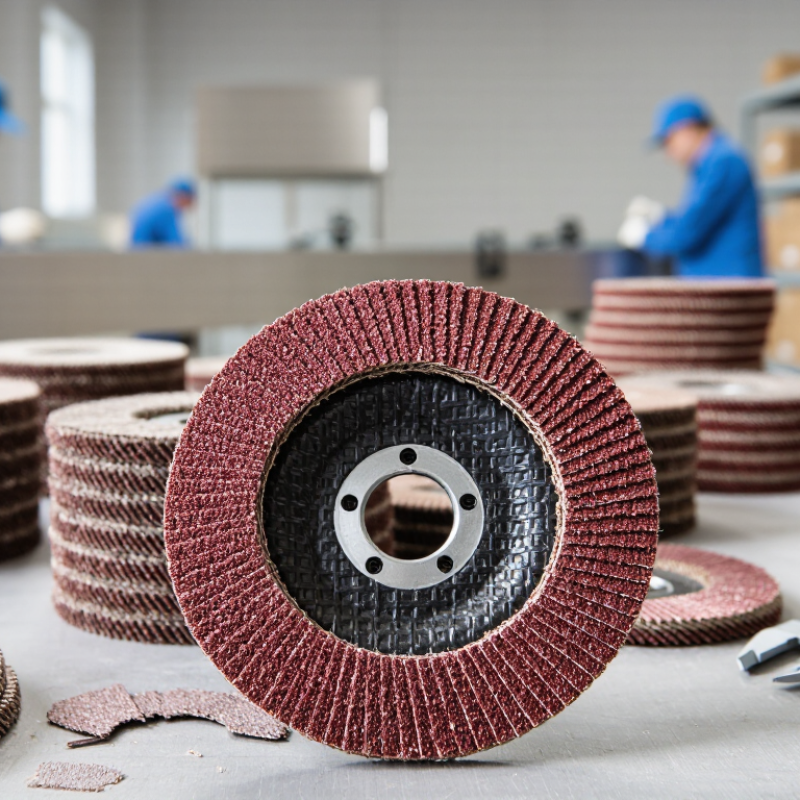
Velcro abrasive discs are sanding discs with a hook-and-loop backing. Small hooks on the disc attach to a fabric-like pad on the backing plate. This design allows quick changes without adhesive or special tools. It also helps operators select different grits during one repair or finishing task.
The disc spins with the machine’s pad. Abrasive grains remove paint, rust, wood fibers, or uneven filler from the surface. Perforated discs can improve dust extraction, while dense patterns may support smoother finishing. Common grits range from coarse material removal to fine polishing work. The backing must match the sander’s diameter and hole layout. A poor fit can cause vibration.
In workshop testing, firm pressure often creates heat and shortens disc life. Light, even pressure usually gives a cleaner cut. The disc should sit flat, not tilted. I have noticed that cheap-looking backing is not always weak, but inconsistent hook placement is a warning sign. It may reduce grip after several changes. When evaluating Chinese suppliers, request sample discs, backing specifications, grit standards, and batch inspection records. Ask how they test adhesion, balance, and dust holes. A reliable supplier should answer clearly, not only quote a low price. Mistakes still happen. Sample testing remains essential.
What Are Velcro Abrasive Discs and How Do They Work?
Approximate abrasive particle size by commonly used FEPA P-grade for hook-and-loop sanding discs
Hook-and-loop abrasive discs use a backing covered with small hooks that attach to a matching loop surface on the sanding pad. This allows fast disc changes while keeping the abrasive securely positioned during sanding. Lower grit numbers contain larger particles for faster material removal, while higher grit numbers use smaller particles for smoother finishing.
Particle sizes are approximate reference values for commonly used FEPA P-grades; actual ranges may vary by abrasive material and manufacturer specification.
Key Factors for Evaluating Chinese Velcro Abrasive Disc Suppliers
Choosing a Velcro abrasive disc supplier in China requires more than comparing prices. Production experience matters because small backing defects can cause disc lifting, uneven sanding, or premature wear. Ask how the supplier controls hook-and-loop bonding, abrasive grain distribution, resin curing, and hole alignment.
Request samples from different grit sizes and test them on your actual materials. Check cutting speed, dust removal, edge wear, and disc stability after several minutes of use. A reliable supplier should provide clear specifications, inspection records, batch traceability, and safety documentation. Third-party test reports can strengthen credibility, but they should match the current production line.
Look closely at manufacturing consistency. Measure disc diameter, thickness, and hole position across several samples. Even slight variation can affect balance on a power tool. Packaging also deserves attention. Moisture-resistant cartons and protective separators help prevent curled edges during transport. Communication is another practical test. Can the supplier explain tolerance limits without vague promises?
Do not trust polished photographs alone. A factory visit, video audit, or independent inspection may reveal important details. I have found that low quotations sometimes hide weaker adhesives or inconsistent grit bonding. That is not always true, but it deserves investigation. Trial orders should include agreed acceptance standards, production lead times, and procedures for handling defects. A supplier that welcomes technical questions usually shows stronger professional confidence.
Leading Types of Chinese Velcro Abrasive Disc Suppliers
Chinese Velcro abrasive disc suppliers usually fall into several practical categories. Abrasive manufacturers produce discs in-house and often control grain coating, backing, and hook strength more closely. Converting factories purchase jumbo abrasive rolls, then cut, punch, and package finished discs. They may offer faster customization for hole patterns and diameters. Trading companies connect buyers with multiple factories. Their advantage is product range, but quality control can vary between orders.
OEM-focused suppliers are useful for private packaging, custom grit sequences, and repeated production. Export-oriented suppliers may understand documentation, packaging protection, and overseas shipping requirements better. However, polished sales communication does not always prove stable manufacturing. I have seen samples perform well while later batches showed weaker hook adhesion. That gap deserves attention.
Tips: Request samples from the actual production line, not only catalog pieces. Test sanding performance on painted metal or hardwood. Check disc flexibility, dust-hole accuracy, edge cutting, and hook attachment after several changes. Ask for grain type, backing material, adhesive details, and batch inspection records. A reliable supplier should explain these points clearly and accept reasonable testing. If answers remain vague, pause the order. Price matters, but an inexpensive disc that sheds abrasive quickly can increase labor and waste. Supplier evaluation is never perfect; even experienced buyers should review each new batch.
What Are the Best Velcro Abrasive Disc Suppliers in China? - Leading Types of Chinese Velcro Abrasive Disc Suppliers
| Supplier Type | Typical Product Range | Common Abrasive Materials | Common Disc Sizes | Typical Grit Range | Customization Capability | Best Suited For | Key Evaluation Factors |
|---|---|---|---|---|---|---|---|
| Abrasive Material Manufacturer | Hook-and-loop sanding discs, abrasive rolls, sheets, and related coated abrasives | Aluminium oxide, silicon carbide, zirconia alumina, ceramic alumina | Typically 2–8 inches; larger industrial diameters may also be available | Commonly P40–P1200, depending on abrasive construction | High; can often adjust backing, abrasive grain, coating, hole pattern, and packaging | Importers, distributors, private-label programs, and high-volume industrial buyers | Grain consistency, coating uniformity, backing strength, testing records, and production capacity |
| Coated Abrasive Converting Factory | Die-cut or converted hook-and-loop discs made from abrasive jumbo rolls | Aluminium oxide, silicon carbide, garnet, zirconia alumina, ceramic blends | Commonly 2, 3, 4, 5, 6, and 8 inches | Usually P40–P1000; finer grades depend on the supplied abrasive roll | High for diameter, hole layout, hook backing, label, carton, and set configuration | Automotive refinishing, woodworking, metal preparation, and general workshop use | Cutting accuracy, edge quality, dust-hole alignment, hook adhesion, and order flexibility |
| OEM and Private-Label Supplier | Customized discs, multi-grit kits, printed packaging, and branded product programs | Aluminium oxide, silicon carbide, zirconia alumina, ceramic alumina | Most frequently 2–8 inches, with size availability dependent on tooling | Generally P40–P1200 across different product series | Very high; packaging, labels, grit combinations, backing, hole patterns, and cartons can be specified | Distributors, retail chains, tool brands, and companies building a product line | Sample approval, color and print consistency, intellectual-property control, lead time, and quality inspection |
| Industrial Abrasive Distributor | Ready-stock discs from multiple abrasive grades and performance categories | Primarily aluminium oxide and silicon carbide; higher-performance options may include zirconia or ceramic grain | Common workshop sizes such as 3, 4, 5, 6, and 8 inches | Often P40–P600 for stocked ranges, with finer grades available by request | Low to medium; standard sizes and specifications are normally supplied | Small and medium buyers needing mixed products, technical support, or short lead times | Stock availability, traceability, technical advice, delivery reliability, and return policy |
| Export-Oriented Trading Supplier | Sourced sanding discs, abrasive accessories, and consolidated workshop-product orders | Usually aluminium oxide and silicon carbide, with selected zirconia or ceramic products | Commonly 2–8 inches, depending on the manufacturing partner | Frequently P40–P1000 across standard product lines | Medium to high; packaging and product combinations are often negotiable | Buyers seeking multiple product categories, consolidated shipping, or export documentation | Factory verification, sample consistency, communication, inspection arrangements, and shipping terms |
| Online Stock and Small-Order Supplier | Standard hook-and-loop discs, assorted grit packs, and small workshop quantities | Most commonly aluminium oxide; silicon carbide and premium grains may be offered | Usually 2–6 inches, with popular random-orbital-sander sizes widely available | Commonly P40–P800, depending on the product listing | Low; products are generally sold in predefined sizes, grits, and pack quantities | Trial orders, maintenance teams, hobby users, and buyers testing product performance | Product reviews, specification accuracy, packaging protection, shipping time, and after-sales service |
How to Compare Product Quality, Pricing, and Customization Options
When comparing Chinese suppliers of hook-and-loop abrasive discs, inspect more than grit numbers. Check grain type, backing strength, hook density, disc runout, and dust extraction holes. ISO 6344 and FEPA grading help verify abrasive grain consistency. In factory purchasing reviews, I also request test discs after heat exposure and repeated removal. Samples reveal the truth. A disc that sheds grains early can increase labor costs, even when its invoice price looks attractive.
Pricing should be compared by usable disc life, not unit price alone. Request quotations showing grit, diameter, backing material, adhesive type, packaging, minimum order quantity, and shipping terms. The IMARC Group reported that the global abrasives market reached about USD 47.4 billion in 2023, with continued growth expected through 2032. This expansion can increase material demand, but it does not guarantee stable prices. A supplier offering unusually low pricing deserves closer review. Ask for batch records and abrasion test results.
Customization may include hole patterns, printed labels, backing stiffness, edge shape, and mixed-grit cartons. Confirm whether tooling fees are one-time charges or repeated costs. Independent inspection is useful before large shipments. I would compare three suppliers using the same test conditions: sanding pressure, surface material, operating speed, and replacement interval. My own preference is not always perfect; a stiffer disc may last longer but feel less comfortable on curved surfaces. That trade-off should be measured, not assumed.
What to Check Before Choosing a Supplier in China
Choosing a Chinese supplier for hook-and-loop abrasive discs requires more than comparing prices. In production, disc performance depends on grain type, backing strength, hook density, and adhesive stability. Ask for samples matching your workpiece, grit range, diameter, and operating speed. Test them on real material, not only on a polished sample. A disc that cuts quickly may wear unevenly after ten minutes. That detail matters.
Tips: Request a written specification sheet and a recent quality-control report. Check whether the supplier can trace raw materials by batch. Ask about minimum order quantities, sample fees, packaging, and realistic lead times. Factory photos help, but a live video inspection is stronger evidence. Confirm how defects are handled. A vague replacement policy should concern you. I once trusted an attractive test result too quickly; the backing failed under heat. My mistake was skipping a longer trial.
Reliable suppliers explain limitations instead of promising perfect results. Look for consistent replies from technical staff, clear inspection steps, and measurable data on cutting efficiency, disc life, and dust behavior. Review their export experience and production capacity, but verify claims with documents and references. A small trial order can reveal packing quality, label accuracy, and communication speed. Check every claim. Do not choose the cheapest quote automatically. It may become the most expensive option after rework and delays.