What Is a Chemical Pump and How Does It Work?

A chemical pump is more than a device that moves liquid from one vessel to another. It controls flow, pressure, and chemical exposure inside demanding industrial systems. The liquid may be clear like water, thick like syrup, or corrosive enough to damage ordinary metal within hours. Understanding how a chemical pump works helps engineers choose safer materials, suitable seals, and accurate control methods.

Industry data shows why this equipment matters. The U.S. Department of Energy reports that pumping systems can represent a significant share of industrial electricity use, often reaching 25% of total facility consumption. Efficient pump selection can therefore reduce operating costs and unnecessary energy loss. Meanwhile, Grand View Research identifies steady growth in the global chemical pumps market, driven by water treatment, pharmaceuticals, petrochemicals, and specialty manufacturing. These figures indicate demand, but they do not guarantee that one pump design fits every application.

The working principle is practical. A centrifugal chemical pump uses a rotating impeller to add velocity, then converts that velocity into pressure. A diaphragm or metering pump moves precise volumes through controlled reciprocating motion. Magnetic-drive models transmit power without a conventional shaft seal, reducing leak risks in suitable services. Material compatibility remains critical. PTFE, polypropylene, PVDF, stainless steel, and ceramic components each tolerate different chemicals and temperatures.

Small details matter. A wrong elastomer can swell. An undersized motor can overheat. A careless installation can introduce air or vibration. This article explains the main pump types, internal components, operating principles, selection factors, and maintenance practices. Some applications remain difficult to simplify, because real fluids change with temperature, concentration, and contamination.
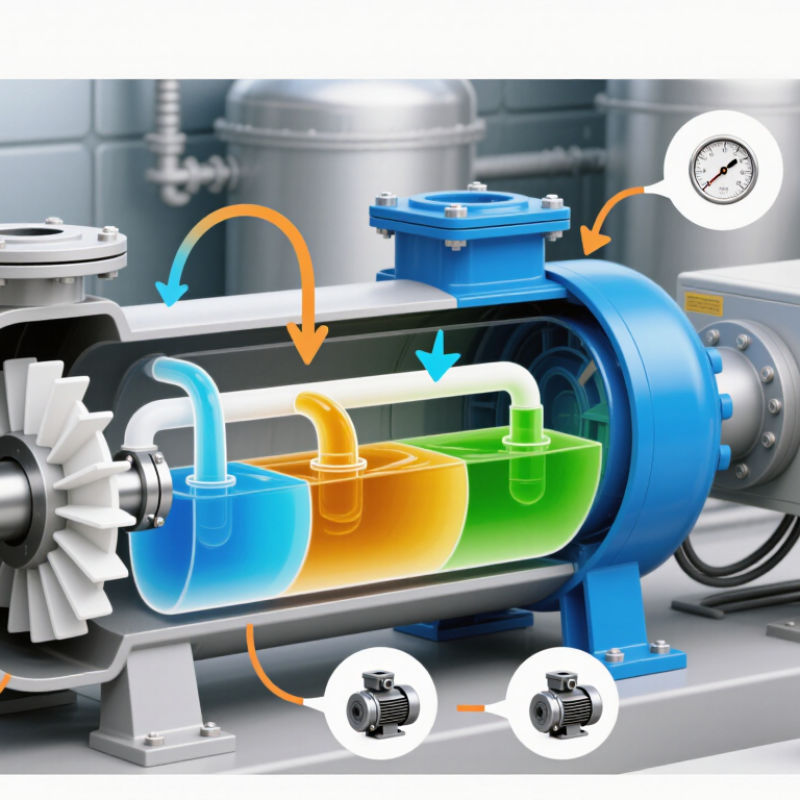
What Is a Chemical Pump and How Does It Work?

What Is a Chemical Pump?

A chemical pump is a mechanical device that moves corrosive, toxic, reactive, or high-purity liquids through pipes. Unlike a standard water pump, it must match the liquid’s chemistry, temperature, concentration, and viscosity. Common designs include centrifugal, diaphragm, peristaltic, and magnetic-drive pumps. Materials such as fluoropolymers, ceramics, and corrosion-resistant alloys help protect wetted parts. Yet material selection is not automatic. A small change in concentration can damage a seal or reduce operating life.

The pump creates flow by adding mechanical energy to the liquid. A centrifugal model uses a rotating impeller, while a diaphragm model uses repeated membrane movement. Magnetic-drive designs transfer motion without a conventional shaft seal, which can reduce leakage risk. Operators still need correct sizing. Excessive pressure may overheat the pump, while low flow can cause vibration or premature wear. In practice, many failures begin with poor installation, not poor equipment.

The Hydraulic Institute’s Pump Life Cycle Cost program states that energy can represent up to 40% of total pump life-cycle cost. This figure makes efficiency important beyond the purchase price. The U.S. Department of Energy also provides pumping-system assessment tools for evaluating flow, pressure, and energy performance. These tools are useful, but field conditions are messier. A clean calculation may miss blocked filters, changing fluid properties, or careless maintenance. A chemical pump works reliably only when engineering data and operating habits remain aligned.

Key Components and Operating Principles

What Is a Chemical Pump and How Does It Work?

Key Components and Operating Principles

A chemical pump transfers corrosive, toxic, or high-purity liquids through controlled mechanical energy. Its main components include the casing, impeller or diaphragm, shaft, motor, seals, valves, and sensors. Each wetted part must match the fluid’s chemistry. A material that survives water may fail quickly in strong acids. The U.S. Department of Energy reports that pumping systems can consume 25% to 50% of electricity in some industrial facilities, making component selection important for safety and efficiency.

Centrifugal pumps use rotating impellers to increase liquid velocity and pressure. They suit continuous flow and relatively stable viscosity. Positive-displacement pumps trap a fixed volume, then discharge it with each cycle. Diaphragm and metering pumps provide better control when dosage accuracy matters. Pressure relief devices are essential because blocked discharge lines can create dangerous pressure. Small details matter.

During commissioning, technicians check flow, pressure, temperature, vibration, and seal leakage. Hydraulic Institute guidance emphasizes operating pumps near their best efficiency point, rather than forcing them far outside the design range. One commonly cited industry estimate places pumping systems near 20% of global motor energy use. That figure varies by sector, but it reveals the scale of wasted energy. A clean datasheet is not enough. Viscosity changes, trapped air, and poor suction conditions can still reduce performance. The most reliable design combines chemical compatibility, accurate controls, proper maintenance, and realistic operating data.

What Is a Chemical Pump and How Does It Work? - Key Components and Operating Principles

Dimension Key Information Operating Principle or Design Consideration Typical Chemical-Service Application
Definition A chemical pump is a mechanical device used to transfer, meter, circulate, or inject liquids that may be corrosive, toxic, flammable, abrasive, or chemically reactive. The pump converts mechanical energy into fluid flow and pressure while maintaining compatibility with the liquid and the process conditions. Acid transfer, water treatment, chemical dosing, process circulation, and industrial liquid handling.
Main Pump Categories Common categories include centrifugal pumps, diaphragm metering pumps, peristaltic pumps, gear pumps, progressing-cavity pumps, and magnetic-drive pumps. Dynamic pumps use rotating impellers to add velocity to the liquid. Positive-displacement pumps move a defined volume during each cycle or revolution. Centrifugal pumps suit continuous transfer; positive-displacement pumps are often selected for accurate dosing or high-viscosity liquids.
Energy-Transfer Component The primary energy-transfer component may be an impeller, diaphragm, gear set, screw, rotor, or flexible hose. Its movement creates pressure differences or enclosed chambers that drive the liquid from the suction side to the discharge side. Impellers are common in high-flow circulation, while diaphragms and gears are used for controlled or repeatable displacement.
Wetted Parts Wetted parts are components that contact the pumped liquid, including the casing, head, valves, impeller, diaphragm, shaft sleeve, and seals. Materials must resist chemical attack, permeation, swelling, embrittlement, and temperature-related degradation. Materials may include stainless steel, polypropylene, polyethylene, fluoropolymers, ceramic, or other chemically compatible engineering materials.
Sealing Arrangement Typical sealing options include mechanical seals, packing, static gaskets, diaphragm isolation, and sealless magnetic coupling. The sealing method limits leakage along the shaft or between stationary and moving parts. Diaphragm and sealless designs can reduce direct leakage paths. Sealless or diaphragm-isolated designs are frequently considered for hazardous, volatile, toxic, or highly corrosive fluids.
Flow-Control Method Flow may be controlled by pump speed, stroke length, stroke frequency, a control valve, bypass regulation, or a variable-frequency drive. Positive-displacement pumps are commonly adjusted by stroke or speed. Centrifugal pump flow is often influenced by speed, system resistance, and throttling. Accurate chemical injection generally requires controlled displacement and calibration against actual process conditions.
Pressure and Flow Relationship Centrifugal pump flow varies with system resistance and pump speed, whereas positive-displacement pumps deliver a nearly fixed volume per cycle or revolution. A centrifugal pump normally develops less flow as discharge pressure rises. A positive-displacement pump can continue building pressure unless flow is limited by a relief device or control system. System pressure, required flow rate, pipe losses, static head, and discharge restrictions must be evaluated during pump selection.
Priming and Suction Conditions Some pumps require a flooded suction or manual priming before operation, while others can self-prime within specified limits. Insufficient suction pressure can cause cavitation in centrifugal pumps. Excessive suction lift can reduce capacity and increase the risk of vapor formation. The installation should minimize suction-line restrictions and maintain suitable net positive suction head where applicable.
Temperature Considerations Temperature affects liquid viscosity, vapor pressure, seal performance, material strength, and chemical aggressiveness. All wetted materials, elastomers, bearings, and seals must be rated for the minimum and maximum operating temperatures. Hot acids, solvents, oxidizers, and crystallizing solutions may require specialized materials, insulation, heating, or cooling.
Safety Features Common protective measures include pressure-relief valves, leak detection, double containment, dry-run protection, overload protection, and emergency shutoff controls. Protection systems help prevent overpressure, overheating, loss of containment, diaphragm rupture, and operation without sufficient liquid. Safety requirements depend on toxicity, flammability, reactivity, operating pressure, temperature, and applicable process regulations.
Common Failure Causes Typical causes include incompatible materials, blocked suction lines, dry running, cavitation, excessive pressure, worn seals, incorrect alignment, and inadequate maintenance. Correct chemical compatibility, proper installation, filtration where appropriate, routine inspection, and operation within design limits reduce failure risk. Preventive maintenance should include checking leakage, vibration, noise, flow, pressure, seal condition, and motor load.
Selection Criteria Important selection data includes chemical composition, concentration, viscosity, temperature, specific gravity, vapor pressure, flow rate, discharge pressure, suction conditions, and required accuracy. The selected pump must match hydraulic duty, material compatibility, control requirements, environmental conditions, and safety needs. A complete process specification is preferable to choosing a pump based only on nominal flow or motor power.
Basic Operating Sequence Liquid enters through the suction connection, receives energy from the moving pump element, and exits through the discharge connection. Valves, seals, bearings, couplings, and controls support stable flow while containing the chemical and protecting the equipment. Before startup, verify valve positions, priming, compatibility, rotation direction, lubrication requirements, and the availability of required safeguards.

Note: Actual operating limits depend on the pump design, materials, chemical properties, installation conditions, and manufacturer’s technical documentation.

How a Chemical Pump Moves and Controls Fluids

A chemical pump moves liquid by creating a controlled pressure difference. Its working principle is simple, but the details are not. A centrifugal pump uses a rotating impeller to increase velocity, then converts that velocity into pressure. A diaphragm pump uses repeated membrane movement to displace measured volumes. Metering pumps add precise stroke control.

Flow control depends on more than motor speed. Operators adjust speed, stroke length, discharge pressure, valves, and sometimes bypass lines. Sensors can monitor flow, pressure, temperature, and leakage. The U.S. Department of Energy reports that pumping systems may consume 25–50% of industrial facility electricity. Poor control wastes energy quickly. A throttled valve may reduce flow, but it can also create heat, noise, and unnecessary pressure loss.

Material selection is equally important. Engineers compare chemical compatibility, viscosity, temperature, concentration, and seal performance. Hydraulic Institute guidance stresses correct sizing and adequate suction conditions. Insufficient suction pressure can cause cavitation, producing a harsh rattling sound and damaging internal surfaces. Real installations are rarely perfect. A pump selected from average data may struggle during cold starts or concentration changes. That assumption deserves review. Small details matter: a blocked strainer, air in the suction line, or a worn diaphragm can change the entire flow pattern.

Common Types of Chemical Pumps

What Is a Chemical Pump and How Does It Work?

Common Types of Chemical Pumps

Chemical pumps transfer corrosive, toxic, abrasive, or temperature-sensitive liquids through controlled pressure and flow. Their wetted parts must resist the fluid, not merely contain it. A practical selection checks concentration, viscosity, temperature, vapor pressure, and required flow rate. It also examines seals, gaskets, valves, and piping connections. Small errors matter.

Centrifugal pumps use a rotating impeller to create velocity and pressure. They suit continuous flow, low-to-moderate viscosity liquids, and larger transfer duties. Positive displacement pumps move fixed volumes through gears, screws, pistons, or lobes. They provide steady dosing and handle thicker fluids, but pressure relief protection is essential. Diaphragm pumps use a flexible membrane and check valves. They are useful for aggressive chemicals and metering applications. Magnetic-drive pumps remove the traditional shaft seal, reducing leakage risk. Peristaltic pumps compress flexible tubing, making them practical for abrasive slurries and sensitive fluids.

Energy deserves attention. The U.S. Department of Energy states that pumping systems can represent 25% to 50% of industrial electricity use. Oversizing a pump can therefore waste power and increase chemical stress. Industry reports from the International Energy Agency also emphasize efficiency as a major industrial decarbonization opportunity. Yet no selection chart is perfect. A pump that performs well in clean water may fail quickly with crystals, gas pockets, or fluctuating viscosity. Operators should verify actual site conditions, inspect wear patterns, and compare measured flow with the design point. The uncomfortable lesson is simple: laboratory data rarely tells the whole story.

Safety, Materials, and Selection Factors

A chemical pump moves corrosive, toxic, or reactive liquids through controlled industrial systems.

Its safety depends on containment, pressure control, and correct installation, not flow rate alone. A small seal leak can spread fumes across a poorly ventilated work area. Use secondary containment, guarded couplings, and emergency shutoff access. Keep it visible. Operators should verify chemical compatibility from current technical data, rather than relying on appearance or smell.

Material selection begins with the liquid’s concentration, temperature, viscosity, and suspended particles.

Polymer components may resist acids, while some solvents can soften them unexpectedly. Metal alloys can provide strength, but corrosion may develop inside threads or narrow passages.

Inspect wetted parts, gaskets, diaphragms, and shaft seals as one system. Not separately.

A practical field check records fluid temperature during startup and peak demand. That detail often exposes conditions missed by a catalog specification.

Selection should match required flow, discharge pressure, suction conditions, and duty cycle.

A pump rated for the chemical may still fail if it cavitates or runs dry. Confirm materials, temperature limits, pressure ratings, and maintenance access with qualified personnel. Ask for test data when the application is unusual or consequences are serious.

Do not oversize automatically. Excess capacity can increase heat, wear, and operating instability. Assumptions about “normal” conditions deserve review, because real processes drift. A clean installation today may face crystals, vibration, or changing concentration tomorrow.