
China Best 12 Volt Sprayer Pump Supplier?
Choosing the China best 12 volt sprayer pump supplier requires more than comparing online prices. A reliable supplier must connect pump performance with field conditions, vehicle power, chemical compatibility, and after-sales support. In practical spraying, a pump may operate beside a dusty tractor, draw liquid from a 50-litre tank, and face repeated pressure changes. Small details matter.
The Food and Agriculture Organization reports that agriculture accounts for roughly 70% of global freshwater withdrawals. This figure increases the importance of controlled application and dependable equipment. A suitable 12 volt sprayer pump can support stable flow, reduce unnecessary liquid use, and simplify mobile spraying tasks. However, pump selection should not rely on marketing claims alone. Buyers should request flow-rate curves, maximum pressure data, diaphragm materials, duty-cycle limits, and electrical protection specifications.
Mordor Intelligence’s agricultural sprayer market research identifies rising demand for efficient and mechanized spraying equipment across farming operations. Yet market growth does not automatically prove product quality. That is an important distinction. Experienced buyers should inspect factory testing records, ISO 9001 certification, sample performance, packaging quality, and replacement-part availability. They should also confirm whether the supplier understands regional voltage standards and transport requirements.
No supplier is perfect. Some product pages look impressive but provide limited technical evidence. A careful comparison may reveal inconsistent flow, weak connectors, or unclear warranty terms. The best China supplier is therefore not simply the cheapest manufacturer. It is the partner that offers verified performance, honest communication, responsive engineering support, and consistent production. Field testing remains essential. Reports guide the decision, but real water, real hoses, and real working conditions reveal the truth.
What Is a 12 Volt Sprayer Pump?
What Is a 12 Volt Sprayer Pump?
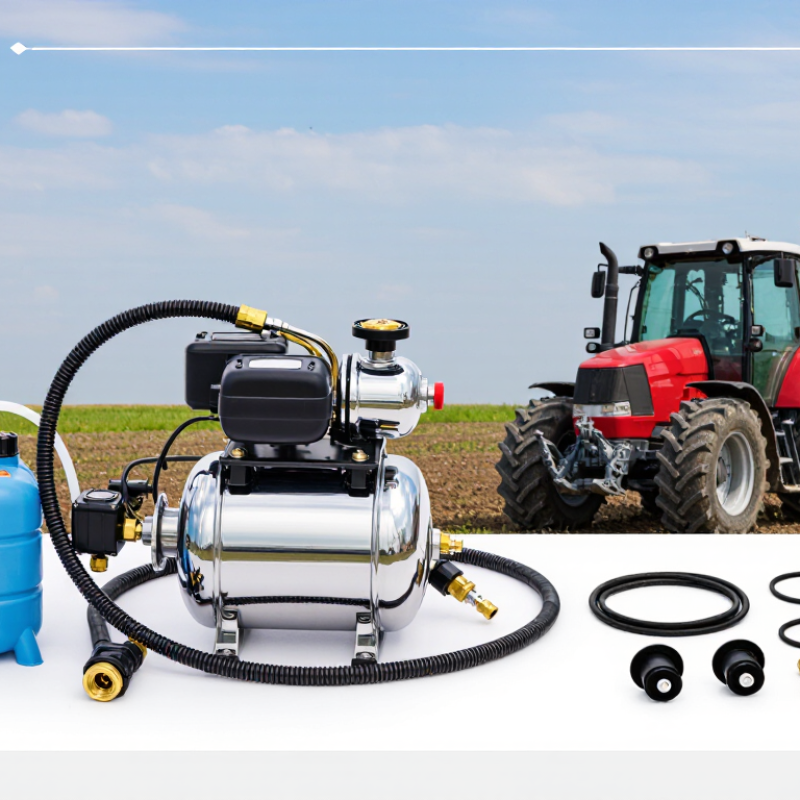
A 12 volt sprayer pump is a compact DC-powered device for moving liquid through a spray system. It usually uses a diaphragm, motor, pressure switch, and inlet filter. Power comes from a vehicle battery or a rechargeable battery pack. When switched on, the motor drives the diaphragm and pushes liquid through the hose and nozzle. Many models deliver roughly 2 to 6 gallons per minute, depending on pressure, plumbing, and liquid thickness. It is practical for small farms, gardens, trailers, and cleaning equipment. Real use is messier.
The FAO AQUASTAT database reports that agriculture accounts for about 70% of global freshwater withdrawals. Accurate application therefore matters. A suitable pump should match the nozzle flow, working pressure, tank size, and expected duty cycle. A 2024 agricultural sprayer market report from MarketsandMarkets describes steady market growth, supported by improved application efficiency and mechanization. However, broad market figures do not measure every 12 volt pump. That limitation deserves attention.
Tips: Check the pump’s rated flow at your actual pressure, not its maximum headline figure. Use a clean inlet filter. Confirm chemical compatibility with seals and housing materials. Avoid running the pump dry for long periods. Inspect wiring for heat, moisture, and loose terminals. A pressure gauge can reveal blocked nozzles or restricted hoses early. Some specifications look impressive, but field performance may still vary.
China Best 12 Volt Sprayer Pump Supplier? - What Is a 12 Volt Sprayer Pump?
Typical technical specifications and selection criteria for 12 volt diaphragm sprayer pumps
| Specification | Typical Value or Range | What It Means | Recommended Selection Point |
|---|---|---|---|
| Rated Voltage | 12 V DC | The pump is designed to operate from a nominal 12-volt direct-current electrical system. | Confirm compatibility with the battery, vehicle, agricultural sprayer, or portable power supply. |
| Operating Voltage | 10.5–14.4 V DC | This is a common practical operating range for pumps used with 12-volt battery systems. | Use wiring and protection suitable for the actual voltage range of the power source. |
| Maximum Flow Rate | 3.8–17 L/min | Flow rate indicates the volume of liquid the pump can deliver per minute under specified test conditions. | Choose a higher flow rate for boom spraying and a lower flow rate for spot spraying or hand-lance applications. |
| Maximum Pressure | 2.8–8.3 bar | Maximum pressure is the highest pressure the pump can normally develop before the pressure switch or bypass system acts. | Select pressure according to nozzle requirements, spray pattern, and hose length. |
| Typical Current Draw | 3–15 A | Current consumption increases with pressure, flow, fluid viscosity, and operating load. | Size the fuse, switch, connector, and cable according to the pump's rated current and starting current. |
| Pump Design | Electric diaphragm pump | A motor drives flexible diaphragms to produce a pulsating positive-displacement flow. | Diaphragm construction is commonly selected for reliable intermittent spraying and chemical resistance. |
| Self-Priming Capability | Approximately 1.5–3 m | Self-priming height is the approximate vertical distance from the liquid surface to the pump inlet under suitable conditions. | Keep the suction hose short, airtight, and properly supported for easier priming. |
| Port Sizes | Commonly 3/8 in or 1/2 in | Inlet and outlet ports are often supplied with barbed, threaded, or quick-connect fittings. | Match the port size and fitting type to the hose inner diameter and spray system connections. |
| Wetted Materials | Polypropylene, nylon, EPDM, Santoprene, or Viton-type elastomers | These materials contact the pumped liquid and influence chemical compatibility and service life. | Check chemical compatibility before using fertilizers, herbicides, disinfectants, solvents, or corrosive liquids. |
| Liquid Temperature | Typically 5–60 °C | The permitted liquid temperature depends on the diaphragm, valve, housing, and seal materials. | Follow the pump's tested temperature limit rather than relying only on the motor rating. |
| Duty Cycle | Intermittent or continuous, depending on model | Some pumps are designed for short spraying cycles, while others can operate continuously within specified pressure limits. | For long operating periods, select a continuous-duty model and provide adequate ventilation. |
| Pressure Control | Automatic pressure switch or bypass control | The control system may stop the motor or recirculate liquid when the outlet is closed or pressure reaches a set point. | Verify the pressure-switch setting and ensure it matches the nozzle and plumbing system. |
| Filtration Requirement | Inlet strainer commonly 40–100 mesh | A suction-side filter helps prevent particles from damaging valves or blocking nozzles. | Use a cleanable strainer and select the mesh size according to the nozzle orifice and liquid cleanliness. |
| Noise Level | Approximately 55–75 dB(A) | Noise varies with motor speed, mounting surface, pressure, and fluid pulsation. | Use rubber mounting feet and flexible hose sections to reduce vibration and transmitted noise. |
| Common Applications | Agricultural spraying, garden spraying, vehicle washing, dust suppression, and liquid transfer | 12-volt pumps are suitable for mobile and low-voltage spraying systems. | Choose the pump from the required flow, pressure, chemical compatibility, and operating duration. |
Note: The figures above are typical industry ranges for 12 volt diaphragm sprayer pumps. Actual performance depends on pump design, liquid properties, hose length, nozzle size, inlet conditions, temperature, and electrical supply.
Related Posts
-
Best 12 Volt Sprayer Pump for Efficient Gardening and Cleaning?
-
2026 Best Sprayer Pump Reviews and Buying Guide?
-
2026 Best 12 Volt Sprayer Pump Reviews and Buying Guide?
-

Top 10 Industrial Pumps: Choosing the Right One for Your Needs
-
How to Select the Best High Pressure Diaphragm Pump for Your Needs?
-
Best Water Pump for Water Tank How to Choose the Right One?