
How to Choose the Right 3D Print Filament for Your Needs
Choosing the right 3d Print Filament starts with the job, not the color on the spool. A small desk ornament has different needs from a bracket that faces heat, repeated pressure, or outdoor weather. PLA is often a practical choice for easy-to-print models, while PETG can offer a useful balance of toughness and flexibility. TPU bends under pressure, but its softness may make precise feeding and printing more demanding. Material names alone do not guarantee results. Formulas and print settings vary between brands.
Compatibility matters just as much. Check your printer’s recommended nozzle temperature, heated-bed limits, and extruder type before buying. A spool labeled “high strength” cannot compensate for poor layer bonding or a loose fit. For example, a clip designed around a 0.4-millimeter nozzle may need testing before it fits a real part. Small details matter. Filament also absorbs moisture, which can cause popping sounds, rough surfaces, or weak prints; dry storage helps, though the right method depends on the material. Some plastics need an enclosure or good ventilation, so consult the manufacturer’s guidance and your printer manual.
This guide compares common filament properties, printability, durability, and cost to help match materials to real projects. It also points out trade-offs that product charts can hide. No choice is perfect. A filament that performs well in one printer may disappoint in another, and test prints can reveal limits before a full spool is used. Think of recommendations as a starting point, not a promise.
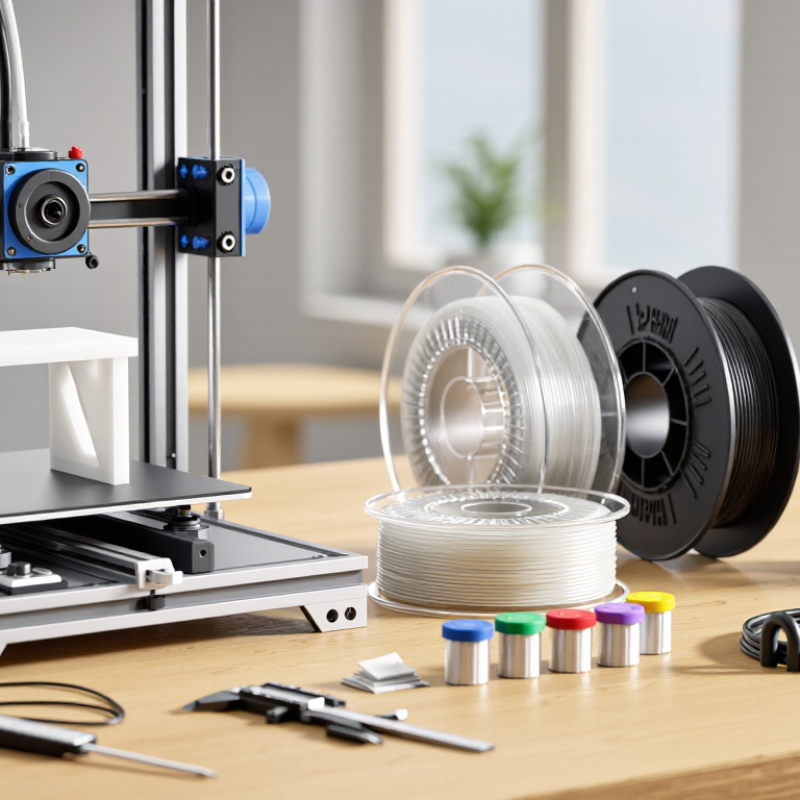
Define the Printing Requirements and Intended Use
Before comparing filament types, write down what the printed part must do. A desk organizer has different demands from a bracket that carries repeated loads. Note the expected force, movement, surface contact, and whether the part will sit near a sunny window or warm appliance. Be specific. “It should be sturdy” is not a useful requirement; a measured load or fit is better.
Printer conditions matter too. Check the machine’s nozzle and bed temperature ranges, build volume, and whether an enclosure is available. A tall, thin component may warp even when a small test cube looks perfect. If dimensions matter, print a short fit test before committing to a long job. Keep notes on layer height, cooling, and observed shrinkage; those details can explain a poor fit better than the material label.
Think about the finished part and its surroundings. Will it be handled often, flexed, exposed to moisture, or left outdoors? Match those needs to documented material properties, then confirm the filament runs reliably on your setup. I once treated appearance as the main goal and overlooked a clip’s repeated bending. It looked right, but cracked early. That was my mistake. Requirements can change after a prototype, so record what failed and revise the next test.
How to Choose the Right 3D Print Filament for Your Needs
Define your printing requirements and intended use. Nozzle temperature is one practical requirement to check against your printer’s capabilities.
These approximate nozzle-temperature ranges are common starting points, not universal settings. Check the filament maker’s guidance and consider your printer, print speed, and part requirements before printing.
Compare Filament Properties, Strength, and Flexibility
How to Choose the Right 3D Print Filament for Your Needs
Choosing filament starts with the part’s job, not its color. A small desk hook may need stiffness, while a phone-case corner needs to flex without cracking. PLA is easy to print and holds its shape well, but heat can soften it in a warm car. PETG offers more impact resistance and some give, though strings can form around fine details. No material is best at everything.
Compare strength, flexibility, and print conditions together. A strong filament can still fail if layers bond poorly or the part is oriented badly. Nylon can handle repeated movement, but it may absorb moisture and print inconsistently when damp. Flexible filament suits grips and bumpers, yet thin walls may stretch more than expected. A quick bend test helps, but it does not replace checking the part under its real load. Results vary.
Tips: Match the filament to the part’s temperature and expected force. Store moisture-sensitive spools sealed, and print a small test piece before committing to a large model. Keep notes on nozzle temperature, layer height, and failures; one setting rarely works equally well for every spool.
Check Printer Compatibility and Recommended Settings
Before choosing a spool, check your printer’s supported filament diameter, usually listed in its manual or specifications. A mismatch can cause uneven feeding or failed prints. Confirm that the hotend can reach the filament’s recommended temperature, and that the build plate can provide suitable heat. Some materials also need an enclosed printer to reduce warping. Don’t assume a setting that worked for one material will suit another. Even similar-looking spools can behave differently.
Tips: Check the spool label and printer manual together. Start within the recommended temperature range. Change one setting at a time.
Use the filament maker’s temperature and speed recommendations as a starting point, not a guarantee. Room drafts, nozzle wear, and printer calibration can affect results. Try a small test print before committing to a large part. If layers look weak, adjust temperature gradually; if fine hairs appear between features, lower it slightly or tune retraction. Keep filament dry and note the settings that work. It’s easy to blame the printer too soon. Sometimes the test itself needs a closer look.
Assess Environmental Conditions, Safety, and Storage Needs
A filament choice should match the room and the part’s working environment. PLA can soften in a hot car or beside a heater, while PETG may suit parts that need more toughness. Nylon absorbs moisture readily, so it needs especially careful storage. Moisture matters. A damp spool may produce popping sounds, rough surfaces, or brittle strands, even when it looks normal.
Consider safety before printing, not after a smell appears. Some materials release more noticeable fumes than others, and ventilation needs vary with the filament, printer, and room. Check the filament’s safety information, keep airflow moving, and avoid printing in a bedroom or poorly ventilated closet. An enclosure can help control drafts, but it does not replace ventilation. I may be overly cautious here, yet a small room can hold odors longer than expected.
Store spools in sealed bags or containers with fresh desiccant, away from sunlight, radiators, and damp basements. A simple humidity meter can reveal whether your storage spot is actually dry. If filament turns brittle or prints inconsistently, drying it according to its material guidance may help. Still, not every failed print is caused by moisture; temperature, a clogged nozzle, or poor bed adhesion can look similar. Keep notes on storage and print conditions, even if the routine is not perfect.
How to Choose the Right 3D Print Filament for Your Needs - Assess Environmental Conditions, Safety, and Storage Needs
| Filament | Environmental Conditions and Typical Use | Heat and Outdoor Considerations | Safety and Ventilation | Storage Needs |
|---|---|---|---|---|
| PLA | Suitable for decorative objects, prototypes, and parts used in cool, dry indoor settings. Can become brittle with age or prolonged exposure to sunlight. | Can soften in a hot car or other warm environment. Generally a poor choice for parts exposed to sustained heat or weather. | Use in a well-ventilated area. Printing can release ultrafine particles and gases, so avoid placing a printer in an occupied space without suitable ventilation. | Keep sealed with desiccant in a cool, dry place. Dry the spool if it has absorbed moisture or prints show signs such as popping or a rough surface. |
| PETG | A useful option for tougher functional parts that may encounter occasional moisture. Often chosen for household items and protective covers. | Typically more heat-resistant than PLA, but performance depends on the specific filament and part design. Standard PETG is not automatically suitable for prolonged outdoor exposure. | Provide good room ventilation during printing. Do not assume that a printed part is food-safe or suitable for direct food contact without checking the material and applicable regulations. | Store in a sealed bag or container with desiccant. Moisture can cause bubbles, stringing, and inconsistent extrusion. |
| ABS | Used for durable functional parts, but printing is prone to warping and usually benefits from a stable, enclosed build environment. | Often selected when greater heat resistance than PLA is needed. Outdoor durability is limited by formulation and can be affected by ultraviolet exposure. | Use an enclosure and effective ventilation that exhausts emissions away from people. ABS printing can release styrene and ultrafine particles; avoid printing in an unventilated occupied room. | Keep dry and sealed with desiccant. Follow the filament supplier's drying guidance if the spool has been exposed to humid air. |
| ASA | Designed for functional parts that may face sunlight and outdoor weather, such as exterior brackets or covers. | Generally offers better UV and weather resistance than ABS, though the actual service life depends on the formulation, print quality, and exposure. | Print with an enclosure and effective ventilation. Like ABS, ASA can produce irritating emissions and ultrafine particles during printing. | Store sealed with desiccant in a dry location. Protect the spool from moisture and dust between print jobs. |
| TPU | Flexible filament for grips, bumpers, seals, and other parts that need to bend. Select hardness and flexibility to match the application. | Resistance to sunlight, oils, chemicals, and temperature varies substantially by TPU formulation. Check the technical data for the intended environment. | Use good general ventilation and follow the supplier's safety guidance. Avoid overheating the material and keep hands clear of hot printer components. | Often moisture-sensitive. Keep tightly sealed with desiccant; dry before printing when the spool has absorbed moisture or extrusion quality deteriorates. |
| Nylon (PA) | Suitable for tough, wear-resistant functional parts such as gears and hinges. Moisture absorption can change part dimensions and mechanical behavior. | Can perform well in demanding applications, but heat and chemical resistance vary by nylon type and additives. Consider moisture exposure when dimensional accuracy matters. | Use good ventilation and follow the material supplier's safety instructions. Printing requirements vary by nylon type; some formulations need an enclosure. | Highly moisture-sensitive compared with many common filaments. Store in an airtight container with fresh desiccant and dry before printing when needed. |
| Polycarbonate (PC) | Used for strong, impact-resistant functional parts where demanding print conditions can be managed. A stable, enclosed build environment is often helpful. | Often chosen for higher-temperature applications than PLA or PETG. Exact heat performance depends on the grade and printed part; verify technical data for the intended load and temperature. | Use effective ventilation and follow supplier guidance. Printing can involve high temperatures and emissions; use a printer configured for the material and avoid touching hot surfaces. | Keep sealed with desiccant. PC can absorb moisture, which may lead to poor surface quality and weaker or inconsistent prints. |
Note: Material properties and printing requirements vary by formulation, additives, printer, and part design. Check the filament supplier's technical and safety information, and assess the finished part under its actual service conditions.
Select a Filament and Test Its Print Quality
Choose filament by the part’s job, not by its label. PLA is often a practical starting point for indoor prototypes, while PETG can suit parts needing more flexibility. For heat exposure or repeated loading, check the material’s technical data sheet before selecting it. Those figures describe controlled tests, not guaranteed results on your printer. A useful reminder of the field’s scale: Wohlers Report 2024 valued the global additive manufacturing industry at $20.035 billion in 2023, up 11.1 percent. Growth does not make every spool consistent. Small changes matter.
Test a sample spool before printing the full part. Dry it as directed, then print a small calibration piece and a thin-walled box using the same nozzle, bed, and settings planned for the job. Keep the settings fixed. Record dimensions with calipers, inspect corners for curling, and look for gaps, blobs, or brittle layer lines. Repeat the test if results vary; one attractive print is weak evidence. I would also keep notes on room humidity and spool storage, though these are easy details to forget. Compare results against the part’s actual needs, not a perfect-looking demo. A slightly rough surface may be acceptable; poor layer bonding is not.