How to Choose the Right Water Tank Pump for Your Needs?
Choosing the right water tank pump can significantly enhance water management in your home. Experts highlight the importance of selecting a pump tailored to your specific needs. Dr. Emily Carter, a renowned hydrology specialist, once stated, "A well-chosen water tank pump can transform your experience with water supply systems."
Many factors influence your decision. The size of your tank, water pressure requirements, and intended use all play a critical role. For instance, a small domestic setup may not need a powerful pump. Conversely, agricultural applications often require more robust solutions. It’s essential to reflect on your unique situation.
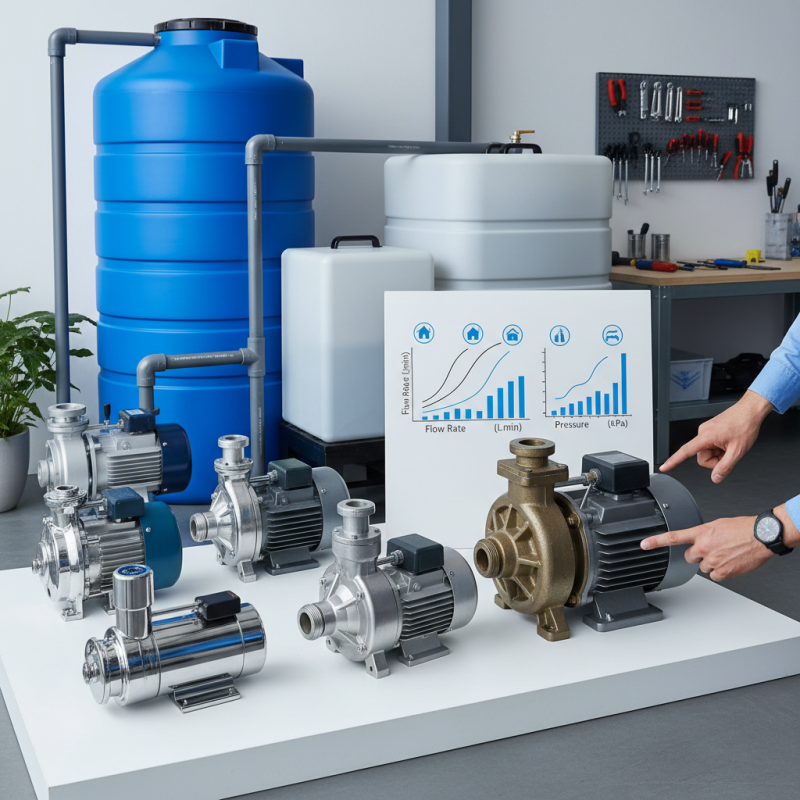
Ignoring details can lead to challenges. You might end up with a pump that doesn’t fit your requirements. Investing time in research saves future headaches. Assessing performance charts and understanding flow rates are crucial steps. A pump should complement, not complicate, your water system. Stay informed, choose wisely, and enjoy a reliable water supply.
Understanding Your Water Needs and Usage Patterns
When selecting a water tank pump, understanding your water needs is crucial. Consider how much water you typically use daily. Do you need it for irrigation, household use, or both? The more specific you are, the better choices you can make. For instance, a garden that requires frequent watering needs a different pump than one for household chores. You might find yourself over or underestimating your needs if you're not paying attention.
Usage patterns can vary significantly. Some families may draw large amounts of water on weekends. Others may need a steady supply throughout the week. Recognizing peak usage times will help you choose a pump with sufficient capacity. If your usage changes seasonally, a flexible pump could better accommodate those fluctuations. Reflecting on past water usage can reveal hidden patterns. Did you run out during a drought? Was there excess when usage was low?
These reflections shouldn’t become overwhelming. Analyzing your habits can lead to better purchasing decisions. However, don't obsess over perfect data. Sometimes, a little guesswork is necessary. Always aim for a balance between your needs and the pump’s capabilities. Knowing when to compromise and adjust your choices can ultimately improve efficiency. When all is considered, this approach will enhance your water management strategy without straining your resources.
Water Usage Patterns and Needs
Types of Water Tank Pumps and Their Features
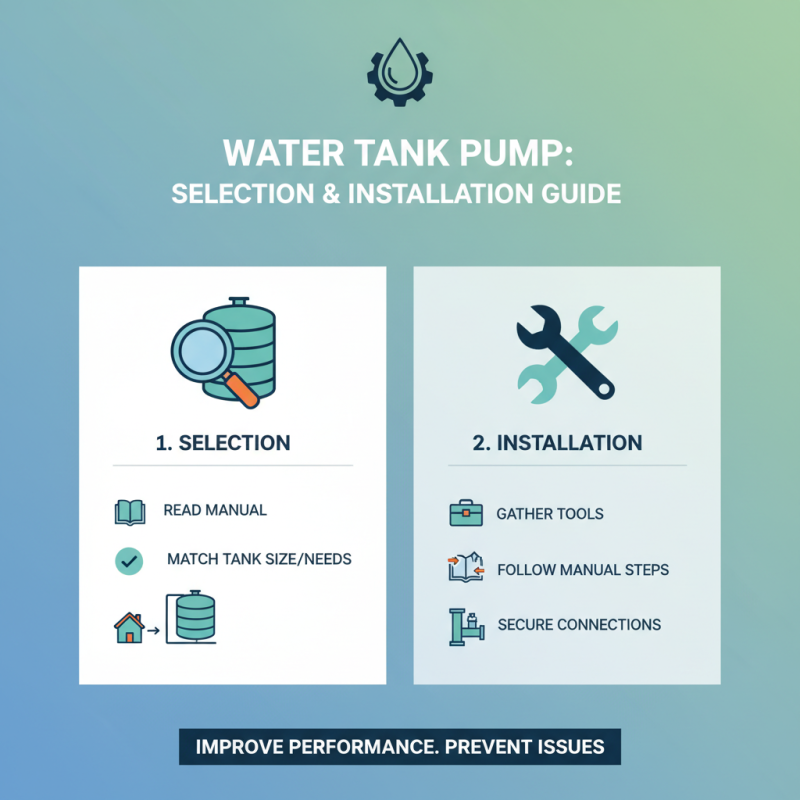
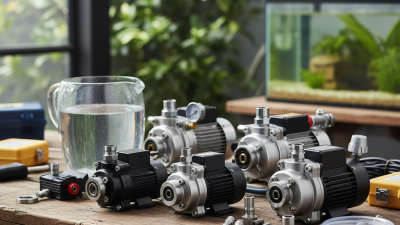
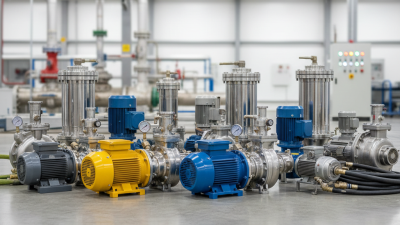
Choosing the right water tank pump requires understanding the various types available. There are several main categories: submersible pumps, jet pumps, and booster pumps.
Submersible pumps sit underwater and push water to the surface. They are efficient and reliable for deep tanks. However, they can be hard to maintain. Jet pumps are more common for shallow applications. They utilize suction to draw water up. Their installation can be straightforward, but they are often noisier.
Booster pumps are perfect for increasing water pressure. They can be used with various sources. They help maintain consistent water flow in larger systems. Yet, they may consume more energy, impacting efficiency. Each type serves different needs.
Consider your specific situation before making a choice. Assess the tank's depth and intended use. Measure the distance water needs to travel. Think about the pump's power and energy usage. Mistakes can lead to wasted resources. Selecting the wrong type can cause future issues. Make sure to weigh the benefits and drawbacks.
Factors to Consider When Selecting a Pump
Choosing the right water tank pump is crucial for efficiency and reliability. Several factors can influence your decision. One key aspect is the pump's flow rate. This metric determines how quickly water will be delivered. Ensure the flow rate matches your needs. If the rate is too low, delays can occur.
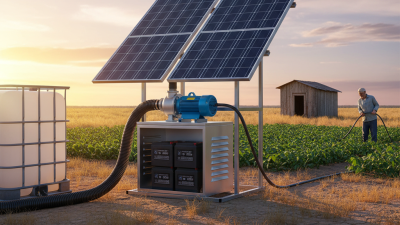
Another factor to consider is the pump’s power supply. Some pumps operate on electricity, while others use solar or gas. Think about what is most accessible for you. If your area faces power outages frequently, a solar option might be more reliable.
**Tip:** Always assess the size of your tank. A pump that’s too powerful can empty the tank quickly, leading to pressure issues.
The material of the pump also plays a role. Stainless steel is durable but may be heavier. Conversely, plastic pumps are lighter but less resilient. Reflect on your environment and the pump's expected lifespan.
**Tip:** Check the pump's warranty. A good warranty can provide peace of mind for potential issues later on.
How to Choose the Right Water Tank Pump for Your Needs?
| Factor |
Description |
Considerations |
| Pump Type |
Choose between submersible and surface pumps. |
Submersible pumps are ideal for deep water tanks; surface pumps are better for above-ground applications. |
| Flow Rate |
The amount of water the pump can deliver per minute. |
Consider your household water usage needs to select an adequate flow rate. |
| Power Source |
Electric or solar-powered pumps. |
Choose based on availability of electricity and sustainability goals. |
| Head Height |
The maximum height the pump can lift water. |
Measure the vertical distance from the water source to the faucet. |
| Material |
Durability of the pump material such as plastic or metal. |
Select a material that suits your environment and expected lifespan. |
| Noise Level |
Operating noise produced by the pump. |
Consider quieter models for residential areas to avoid disturbances. |
Cost Considerations and Budgeting for Your Pump Purchase
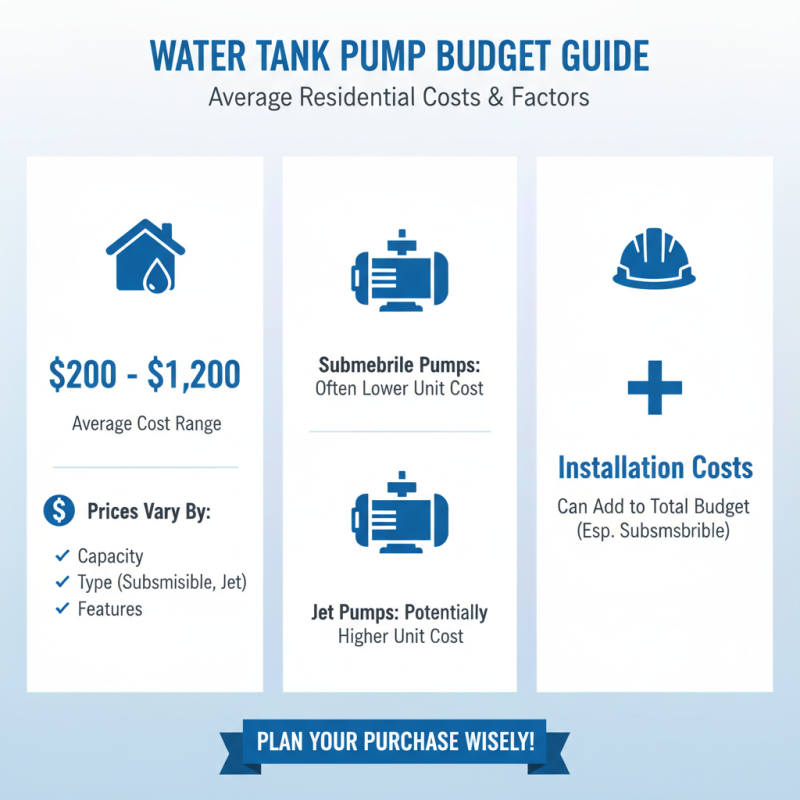
When purchasing a water tank pump, budgeting is crucial. According to industry reports, the average cost of residential water tank pumps ranges from $200 to $1,200. Prices vary based on capacity, type, and features. For instance, submersible pumps may be less expensive than jet pumps. However, their installation can add to your costs.
Consider the long-term expenses too. Energy efficiency is vital. A high-efficiency pump can reduce your electricity bills by up to 30% over time. Evaluate the pump’s horsepower. Selecting a pump with appropriate horsepower can prevent overworking the system. Inadequate strength can lead to early failures, which costs more. Think about maintenance expenses as well. Some pumps require frequent servicing, while others can operate for years without major issues.
Environmental impact is another factor to weigh. Some models use more resources. It's wise to choose one that meets your needs without excessive waste. Review available models carefully. Ensure you understand what you're buying. Write down your priorities. This can help keep your budget in check. Investing thoughtfully today can save you money tomorrow.