
How to Choose a Gas Brick Oven for Your Business?

Choosing a Gas Brick Oven is a business decision, not just a question of flame size or traditional appearance. The National Restaurant Association’s 2025 State of the Restaurant Industry report projected U.S. restaurant sales of $1.5 trillion and employment of 15.7 million. Those figures describe a large, competitive market; they do not guarantee that a brick oven will suit every menu or location. Every purchase still needs to make sense for the service your team actually delivers.

Start with the food. A fast-moving pizza menu may need quick recovery between orders, while bread or roasted dishes place different demands on heat retention and cooking space. Picture a busy Friday: staff are reaching for the peel, tickets are stacking up, and the oven door keeps opening. Can the oven maintain steady heat under that pressure? Consider cooking capacity, temperature control, fuel consumption, footprint, cleaning access, and the cost of installation and maintenance. ENERGY STAR’s commercial oven guidance also offers a useful efficiency benchmark when comparing eligible models. Check the specific product’s certification and test details; labels are not a substitute for operating-cost estimates. A spec sheet cannot recreate a crowded service. That part needs honest planning. This guide explains how to compare oven types, assess site requirements, and ask suppliers practical questions before committing. Some figures may look precise, but your menu, staffing, and local energy costs can change the real result. Start with evidence, then test the assumptions.
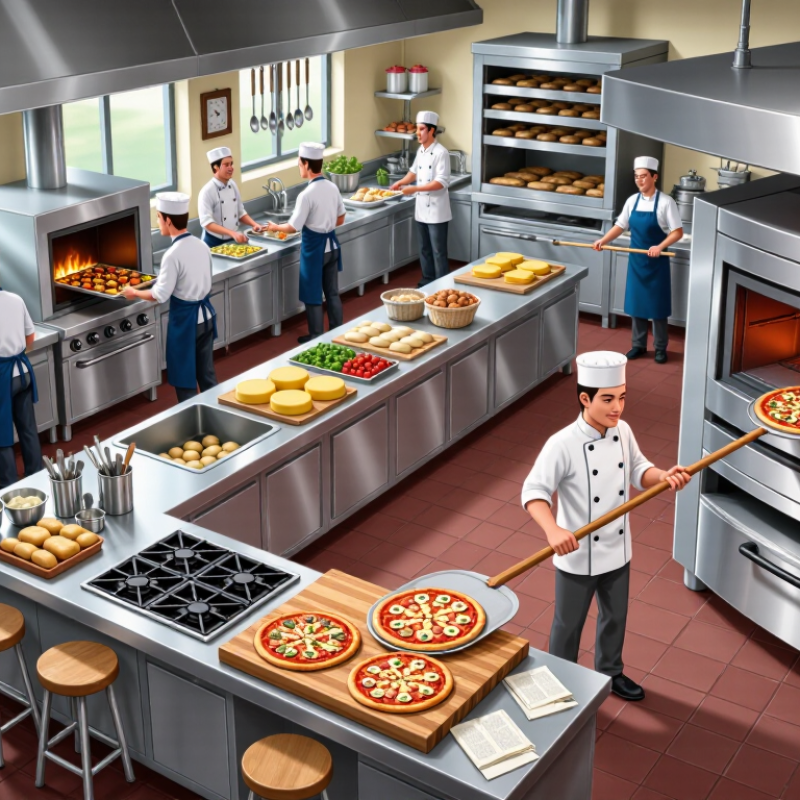
How to Choose a Gas Brick Oven for Your Business?

Assess Your Business Needs, Menu, and Expected Production Volume

Start with the menu, not the oven’s headline capacity. List each item, its bake temperature, and how often it may be ordered during peak service. The National Restaurant Association’s 2024 State of the Restaurant Industry report projected $1.1 trillion in U.S. restaurant sales. That figure signals a large market, not your own workload. PMQ’s 2024 Pizza Power Report estimated U.S. pizza sales at $46.9 billion. Treat both figures as context, not capacity targets.

Track your busiest 30-minute period and estimate how many orders the oven must finish within it. Count pizzas, flatbreads, and other dishes separately; different bake times can create bottlenecks. Compare usable deck area, heat recovery, and staff access. Ask suppliers for documented throughput using products and temperatures close to yours. Then test with your actual dough and toppings. Your spreadsheet may be wrong.

Tip: Run a timed service trial before choosing a size. Note how often staff reload the oven and whether finished food waits for pickup. Leave a little production buffer; real service rarely follows a tidy forecast, and that uncertainty deserves a second look.

Compare Oven Types, Cooking Capacity, and Available Space

Choosing a gas brick oven starts with the menu and the room, not the largest model on the catalogue page. A fixed-deck oven suits steady batches and simple service; a rotating hearth can help keep pizzas moving during busy periods. Compare the usable cooking surface, door opening, and burner layout. A wide deck may look generous, but its full capacity depends on how many pies staff can load and turn safely. Measure the oven footprint, hood area, service access, and walking space before comparing models.

Capacity is about throughput, not just deck size. Estimate your busiest 15-minute period, typical bake time, and the number of staff working the oven. Then ask suppliers for a live demonstration using your dough and toppings. ENERGY STAR’s commercial-oven guidance reports that certified commercial ovens use about 20% less energy than standard models. Treat that as a comparison benchmark, not a guaranteed saving for every gas brick oven. Real results depend on insulation, firing habits, and service volume. I would still leave room for error; demand rarely follows a neat forecast.

Tips: Measure twice. Mark the proposed oven footprint on the floor with tape, then test door swing, loading reach, and staff movement. Check the manufacturer’s stated clearances and installation requirements before ordering. A tight fit can slow service.

Evaluate Brick Quality, Burner Design, and Temperature Control

How to Choose a Gas Brick Oven for Your Business?

Brick quality affects heat retention, durability, and cooking consistency. Look for dense, evenly shaped refractory bricks with tight joints and no visible cracks. Ask how the cooking surface handles repeated heating and cooling. A well-built floor should recover steadily after several pizzas go in. Check the door and insulation, too; heat escaping around the edges can make temperature control harder. Small details matter.

Burner design should suit your menu and working pace. Flames need to spread heat across the oven without creating an intense hot spot near the burner. Ask to see the oven running, then check the floor and dome with a suitable thermometer. Controls should respond predictably, while built-in readings should be compared with an independent thermometer. Watch how quickly the oven recovers after a cold pizza is loaded. I still wouldn’t judge it from one test. Your dough, toppings, and service volume change the result.

Tips: Test the oven with your own recipes during a busy service simulation. Note floor temperature, cooking time, and recovery between batches. Ask about cleaning and burner access before buying. A beautiful flame isn’t enough. Test the controls with someone who will use the oven daily.

Check Fuel Supply, Ventilation, Installation, and Safety Requirements

Before choosing a gas brick oven, confirm the fuel available at your site. Natural gas and propane require different connections and settings. Ask a qualified gas technician to check supply pressure, pipe capacity, and peak demand. An oven that performs well during a quiet test may struggle when several appliances run together. Do not guess. Keep the shutoff valve accessible, not behind stacked flour bins.

Ventilation needs more than a powerful hood. The room must also have enough replacement air to support safe combustion. Check the oven maker’s clearance instructions and your local requirements before planning the exhaust system. A doorway or open window may seem helpful, but it may not provide reliable airflow. Carbon monoxide has no smell. Small details matter.

Plan the installation route, floor strength, and nearby surfaces before delivery. A crated oven may not fit through a doorway that looked wide enough on paper; measure corners and thresholds too. Use heat-resistant materials where specified, and have a qualified installer complete connection and leak checks. Train staff to recognize the emergency shutoff and keep its path clear. Even a careful plan can miss something, so review the site with the installer before the oven arrives.

How to Choose a Gas Brick Oven for Your Business: Fuel, Ventilation, Installation, and Safety Checklist

Decision Area What to Check Practical Requirement Questions to Ask Before Purchase
Fuel type and availability Confirm whether the oven is configured for natural gas or propane (LPG), and whether that fuel is available at the premises. Use only the fuel type specified on the oven’s rating plate and in its installation instructions. A conversion, if permitted, must be completed using approved parts by a qualified technician. Which gas does the oven require? Is a conversion kit approved for this model? Is the site supplied by a utility connection or a properly sized LPG system?
Gas capacity and pressure Compare the oven’s gas input rating and required inlet pressure with the available supply and other appliances on the same system. A licensed gas professional should verify pipe sizing, regulator capacity, operating pressure, and total connected load. Do not assume an existing line can support an additional oven. What is the oven’s maximum gas input? Can the existing supply maintain the specified pressure when other equipment is operating?
Ventilation and exhaust Determine the exhaust arrangement required for the oven, including whether a hood, flue, or other listed system is specified. Follow the oven’s listing and installation manual, plus applicable mechanical, fire, and building codes. Have the ventilation design reviewed by the relevant authority or a qualified ventilation professional. Does this installation require a commercial hood or dedicated flue? Are fire suppression, duct routing, or inspection requirements applicable at this site?
Combustion and make-up air Check how the oven receives combustion air and how replacement air will enter the kitchen when exhaust equipment is running. Provide combustion and make-up air as required by the manufacturer and local code. Poorly balanced ventilation can affect appliance operation and indoor air conditions. Will the planned exhaust system create negative pressure? Is a make-up-air system required for the room?
Location and clearances Review the oven’s dimensions, weight, specified clearances, service access, and the heat resistance of nearby surfaces. Install on a suitable level support and maintain the exact clearances and protective materials stated in the manual. Requirements vary by model and installation type. Can the floor support the oven and stand? Are walls, ceilings, and adjacent equipment compatible with the stated clearances?
Building and site readiness Check delivery access, door and corridor dimensions, floor condition, utility locations, and any landlord or permitting conditions. Confirm access and site preparation before delivery. Obtain required permits and approvals before installation; requirements depend on the jurisdiction and premises. Can the oven reach its final location without dismantling building elements? Which permits or inspections must be completed?
Installation and commissioning Plan for connection, start-up, burner checks, and any required inspection by appropriately qualified personnel. Have gas work performed by a professional authorized under local rules. Commission the oven according to its manual and retain inspection and service records. Who will install and commission the oven? Will the installer document gas pressure, operation, and required safety checks?
Leak detection and shutoff Identify the accessible gas shutoff location and the method used to test connections after installation or service. Install and test shutoff devices as required by the appliance instructions and local code. Leak testing should be carried out by a qualified person using an approved method. Can staff reach the shutoff quickly? What procedure should be followed if gas is suspected?
Fire and staff safety Assess hot surfaces, nearby combustible materials, staff circulation, and the location of appropriate fire-safety equipment. Train staff on normal operation, safe shutdown, cleaning, and emergency procedures. Keep the area around the oven clear and follow local fire-safety requirements. Are operating controls accessible without reaching over hot surfaces? Are staff procedures and emergency contacts documented?
Cleaning and maintenance Review access to burners, flue or exhaust components, and surfaces that require routine cleaning or inspection. Follow the manufacturer’s maintenance schedule. Keep ventilation systems maintained and arrange qualified inspection or service when required. What routine cleaning is required? Which checks must be handled by a qualified service professional?
Business capacity and operating cost Compare oven capacity and recovery performance with expected peak-hour production, menu needs, and available gas capacity. Use the manufacturer’s published specifications and confirm that the site’s fuel and ventilation systems can support the intended operating load. Does the usable cooking area meet peak demand? What are the stated gas consumption and warm-up requirements?

Important: Gas, ventilation, fire, and building requirements vary by location and oven model. Confirm the current requirements with the manufacturer, a locally authorized gas professional, and the relevant permitting or inspection authority before purchase and installation.

Compare Total Ownership Costs, Warranty, and Maintenance Needs

When comparing gas brick ovens, look beyond the purchase price. Add installation, ventilation, gas-line work, expected fuel use, cleaning, and likely repairs over several years. The U.S. Environmental Protection Agency’s ENERGY STAR guidance notes that restaurants use roughly five to seven times more energy per square foot than most commercial buildings. That figure covers whole restaurants, not brick ovens alone, but it shows why daily operating costs deserve close attention. Ask suppliers for fuel-consumption figures under realistic service conditions, not just ideal test settings.

Read the warranty line by line. Check how long the burner, refractory floor, insulation, and controls are covered, and whether labor or travel costs are excluded. A short parts warranty can still leave a costly repair bill. Ask what routine maintenance requires: cleaning burner ports, inspecting gas connections, and replacing worn door seals, for example. Get recommended service intervals in writing. I would also ask nearby operators what failed first; their answers may be more useful than a polished brochure, though one kitchen’s experience is not a guarantee.

Tips: Compare three to five years of estimated costs, then add a repair reserve. Request a written maintenance schedule and sample service fees. Keep a simple log of fuel use, cleaning time, and downtime; small daily delays can become meaningful costs.

Article Source: