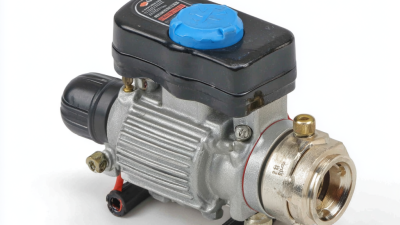
How to Choose an Electric Diaphragm Pump in 2026?
Choosing an electric diaphragm pump in 2026 requires more than comparing flow rates and prices. The right model must match the fluid, pressure, temperature, duty cycle, and installation environment. A pump moving thick coating in a factory faces different demands than one handling clean water in a laboratory.
Igor J. Karassik, a respected pump engineer and author, described the basic purpose clearly: “A pump is a device for transferring energy from a prime mover to a liquid.” That principle still matters. In an electric diaphragm pump, the motor supplies motion, while the diaphragm isolates the fluid from moving mechanical parts. This design can reduce leakage risks and support gentle fluid transfer.
Look beyond the brochure.
Check the required flow at actual discharge pressure. A pump rated at 20 liters per minute may deliver much less through narrow tubing, filters, or elevation changes. Confirm diaphragm and valve materials against chemical compatibility charts. Temperature can change elastomer performance quickly. So can abrasive particles.
Noise, power consumption, control options, and service access also deserve attention. In 2026, smart monitoring may improve maintenance planning, but sensors cannot correct poor sizing. That mistake remains common. I would also question impressive efficiency claims without test conditions, fluid details, and duty-cycle information.
This guide compares practical selection criteria, including self-priming ability, dry-run tolerance, pulsation control, and lifecycle cost. No model is perfect. A slightly oversized pump may waste energy, while an undersized one may run continuously and fail early. Careful selection begins with honest operating data.
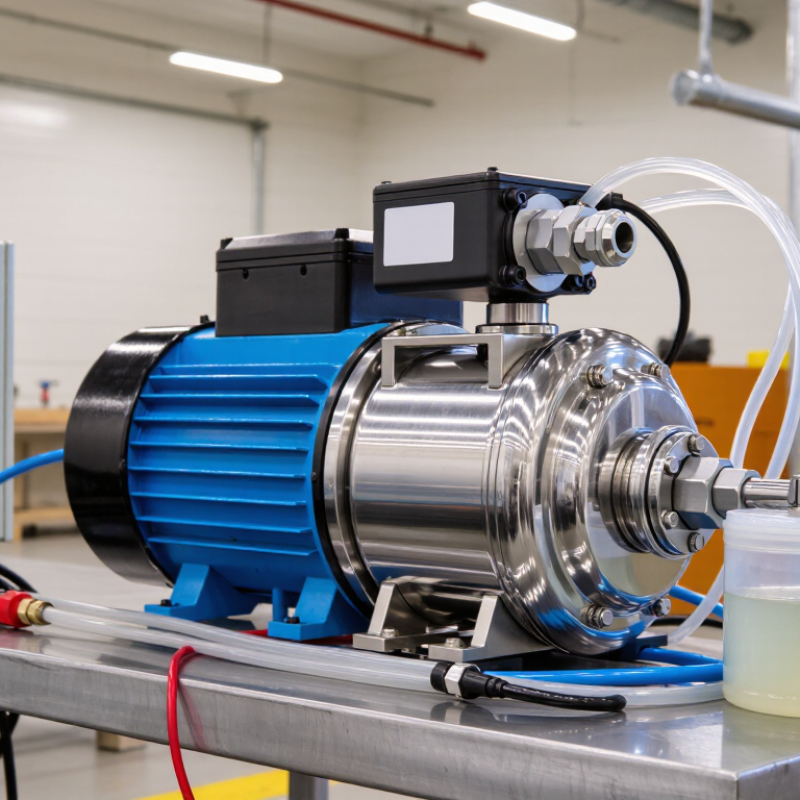
Define the Duty Point: Flow, Pressure, Viscosity, and Solids Content
When choosing an electric diaphragm pump in 2026, start with the actual duty point, not catalog maximums. Record required flow at operating pressure, then check both values together. A pump rated for 40 L/min may deliver far less at 5 bar. Measure suction lift, discharge elevation, pipe length, and fitting losses. Use the liquid’s temperature during normal operation. I once sized a pump from peak flow alone. That assumption was wrong. The motor struggled during thick-fluid transfer.
Viscosity changes diaphragm movement and motor load. Specify viscosity in cP at pumping temperature, not room temperature. Include density, pH, abrasiveness, and solids size and concentration. Soft particles may pass, while sharp grit can shorten diaphragm life. Ask for a pump curve covering your real fluid. If solids settle, review line velocity and suction piping. Keep suction lines short, wide, and free from unnecessary elbows. Leave operating margin, but do not oversize blindly. An oversized pump can cycle poorly and waste energy. Select wetted materials from compatibility data, then verify the choice with a qualified engineer.
Tips: Test the liquid under real conditions when possible. Use a flow meter and pressure gauge during commissioning. Recheck performance after several operating cycles. Small errors in viscosity data can become expensive surprises.
Compare Pump Capacity: 0.5–100 GPM Flow and 7–120 PSI Pressure
Choosing an electric diaphragm pump in 2026 starts with two numbers: flow and pressure. Typical selection ranges run from 0.5 to 100 GPM and 7 to 120 PSI. Do not treat maximum ratings as a working point. At 100 GPM and 120 PSI, hydraulic demand reaches about 7 horsepower before motor and pump losses. A smaller pump may deliver high pressure, but its flow can fall sharply.
The U.S. Department of Energy’s Improving Pumping System Performance sourcebook reports that pumping systems can represent 25–50% of industrial electricity use. It also identifies 20–50% savings opportunities through better sizing and system control. These figures support careful duty-point analysis. Check fluid viscosity, temperature, suction lift, hose length, and valve restrictions. Diaphragm motion can handle many difficult fluids, yet pulsation may affect meters and spray quality. That detail is often underestimated.
Tips: Ask for a verified performance curve, not a single catalog maximum. Measure pressure at the pump outlet. Record flow under real operating conditions. Select a motor with sensible overload margin, but avoid excessive oversizing. The Hydraulic Institute’s system approach also warns against judging pumps independently from piping and controls. A field test may expose an uncomfortable truth: the stated 100 GPM requirement is sometimes only a brief peak, not a continuous duty. Recheck it.
Match Materials to Media: pH 2–12, Temperature, and Abrasive Solids
How to Choose an Electric Diaphragm Pump in 2026?
For corrosive service, pH is only the starting point. A pH 2 liquid may contain oxidizers, salts, or solvents. These can change material performance quickly. Select wetted parts for the complete media profile. PTFE diaphragms resist many acids and bases. However, they may flex less efficiently at low temperatures. EPDM suits many aqueous acids and alkaline liquids. FKM can handle many oils, but strong bases may challenge it. Check compatibility data at the actual concentration and temperature.
Temperature deserves equal attention. A fluid at 80°C behaves differently from the same fluid at 25°C. Heat can reduce elastomer life and increase leakage risk. Confirm the diaphragm, valve seats, seals, and housing lining separately. Do not rely on one material label. Also verify motor insulation and enclosure protection near washdown areas. A pump may survive the liquid while its electrical parts fail.
Abrasive solids require more than a larger port. Measure particle size, hardness, concentration, and settling tendency. Ceramic dust and soft sludge are not equal. Use slower strokes when practical, and select check valves that resist wear. Flush the pump after shutdown if solids can settle. A sample test is worth the delay. Compatibility charts help, but they cannot predict every mixture. Selection becomes imperfect when process data is incomplete. Record changes in temperature, pH, and solids loading before approving the pump.
Verify Safety Standards: ATEX, IEC 60079, NEMA, and IP Ratings
When choosing an electric diaphragm pump in 2026, treat compliance as a design check, not a sales label. The International Labour Organization estimated 2.93 million work-related deaths worldwide each year in its 2023 safety report. That figure makes certification practical, not decorative.
For explosive atmospheres, confirm the complete pump assembly against the required ATEX zone, equipment category, gas or dust group, and temperature class. IEC 60079 documents protection methods, installation rules, and inspection practices for explosive atmospheres.
A certified motor alone may not certify the pump, cable glands, controls, or switching equipment. Check the certificate scope carefully.
Small details matter. I once saw a specification that listed “explosion-proof” without naming the zone. That wording was not useful.
NEMA and IP ratings address enclosure protection, but they are not interchangeable safety approvals. NEMA 4X generally indicates protection against water, corrosion, and dust, while an IP code separately states solid-particle and water protection levels under IEC 60529.
An IP66 enclosure may resist dust and powerful water jets, yet it does not automatically suit a hazardous area.
Select the rating from the washdown pattern, outdoor exposure, and chemical contact. Record the test standard, certificate number, ambient temperature, and maintenance limits.
The U.S. Bureau of Labor Statistics reported 5,283 fatal occupational injuries in 2023, reminding engineers that paperwork and field conditions must agree.
Calculate 2026 Total Cost: Energy Use, Diaphragm Life, and Maintenance
Choosing an electric diaphragm pump in 2026 requires more than comparing purchase prices. Calculate its total cost over twelve months. Include energy, diaphragm replacement, labor, spare parts, and planned downtime. A lower-priced pump can become expensive when it runs inefficiently.
For example, a 0.75-kilowatt pump operating eight hours daily for 300 days uses about 1,800 kilowatt-hours. At $0.15 per kilowatt-hour, electricity costs approximately $270. Check the real input power, not only the motor rating. Pressure, viscosity, and restricted piping can increase consumption. Small details matter.
Diaphragm life needs practical testing. A diaphragm handling abrasive liquid may last 2,000 hours, while a cleaner process may exceed 5,000 hours. Divide annual operating hours by expected life, then multiply by replacement cost and service labor. Add inspection time for valves, fasteners, and air leaks. My first estimate often ignored lost production during maintenance. That was a mistake. A spreadsheet can still lie. Record actual cycle rates, temperature, pressure, and repair minutes during the first three months. Use those readings to revise the 2026 forecast before approving the final pump.
How to Choose an Electric Diaphragm Pump in 2026?
Five-year total cost comparison: energy use, diaphragm life, maintenance, and initial purchase
The planning model assumes an electricity rate of $0.12/kWh and 300 operating days per year. The light-duty case uses a 0.75 kW pump for 1,200 hours per year, the medium-duty case uses a 1.5 kW pump for 1,200 hours per year, and the heavy-duty case uses a 2.2 kW pump for 1,800 hours per year. Diaphragm replacement intervals are estimated at 18, 12, and 9 months respectively. Select the pump with the lowest total cost that still meets the required flow, pressure, chemical compatibility, and duty cycle.
Related Posts
-
2025 Top 10 Small Electric Water Pumps for Home and Garden Use
-
What is a diaphragm water pump and how does it work?
-
2026 How to Choose the Right Small Electric Water Pump for Your Needs?
-
Discovering the Advantages of Electric Diaphragm Pumps: Efficiency, Versatility, and Applications
-
Best High Pressure Water Pumps for Global Buyers in 2026?
-
High Pressure Pump Types and Their Applications Explained