How to Choose the Right Diaphragm Vacuum Pump for Your Needs?
Choosing the right diaphragm vacuum pump can seem daunting. With various options available, it's essential to understand your specific needs. A diaphragm vacuum pump is versatile. It serves many industries, from medical applications to laboratory settings.
When selecting a diaphragm vacuum pump, consider its performance metrics. The pump's capacity, pressure range, and noise level can greatly affect your operations. Think about how often you’ll use it. A higher frequency may require a more robust model.
Sometimes, what seems like a minor detail can lead to issues later. For example, accommodating the size and weight of the pump in your workspace is crucial. A heavy or bulky model can lead to frustration. Overall, being mindful during your selection process can save you from future inconveniences.
Understanding Diaphragm Vacuum Pumps: Types and Mechanisms
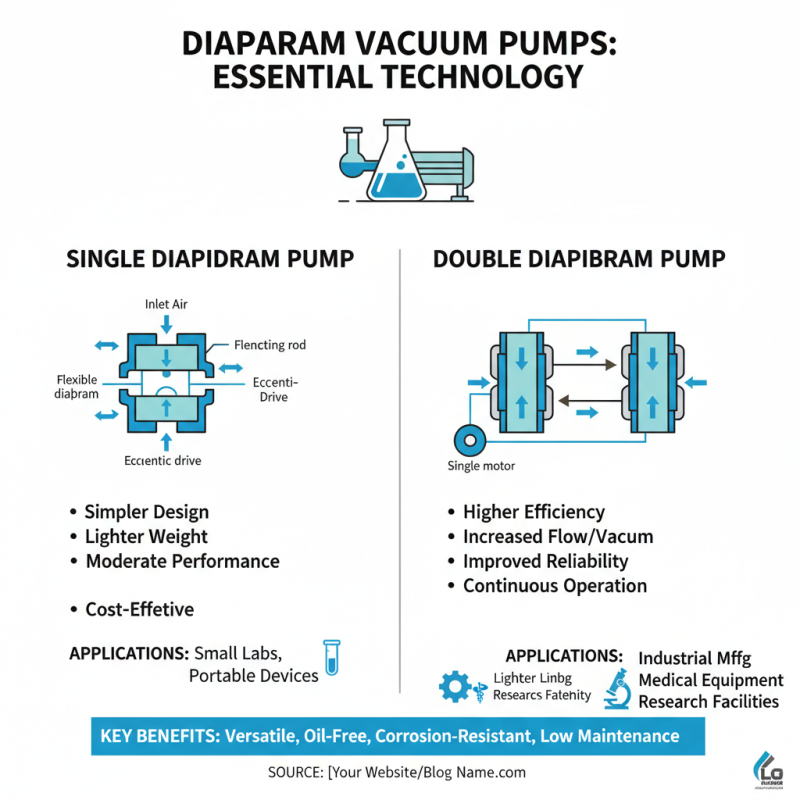
Diaphragm vacuum pumps are essential in various industries, including medical, manufacturing, and research. Understanding the types and mechanisms of these pumps is crucial for selecting the right one. Two primary types exist: single and double diaphragm pumps. Single diaphragm pumps are typically lighter and simpler, while double diaphragm pumps offer better performance with higher efficiency.
The mechanism behind diaphragm pumps involves a flexible diaphragm that creates a vacuum by expanding and contracting. Industry data highlights that diaphragm pumps can achieve vacuum levels down to 1 mbar. Such performance is vital for tasks requiring precise control and contamination-free operation.
**Tip:** Consider the pump's material. Different materials can affect chemical compatibility and durability. Choosing the right material is essential for prolonging the pump's life.
Another factor is the maximum flow rate. Depending on your application, some pumps can handle flow rates exceeding 100 liters per minute. However, it's important to match this rate to your needs; overstating requirements can lead to inefficiency.
**Tip:** Evaluate noise levels. Some diaphragm pumps are quieter than others, which may matter in sensitive environments. Keep noise in mind when making your decision.
Selecting the right diaphragm vacuum pump requires careful consideration. Every detail matters, from the pump's type to its specifications. Take the time to reflect on your specific needs before finalizing.
Key Factors Affecting Diaphragm Vacuum Pump Performance and Selection
Choosing the right diaphragm vacuum pump involves understanding several key factors. One crucial aspect is the intended application. Different processes require varying vacuum levels and flow rates. For example, a pump used in laboratory settings may not perform well in industrial applications. It’s essential to assess your specific needs before making a decision.
Another factor is the pump's materials. Diaphragm pumps come in various materials, affecting their resistance to chemicals and temperature. Selecting the wrong material can lead to quick degradation. Additionally, consider the noise levels. Some pumps operate quietly, while others can be quite loud. This could matter greatly in a workplace where noise control is important.
Maintenance is also a significant consideration. A diaphragm vacuum pump requires regular upkeep to maintain performance. Neglecting this can lead to inefficiencies or breakdowns. It’s easy to overlook simple issues that can cause problems later. Testing and calibrating the pump regularly is wise. This ensures that you are getting the performance you expect. Always plan for these factors to avoid costly mistakes.
Applications of Diaphragm Vacuum Pumps in Various Industries
Diaphragm vacuum pumps are used across various industries for their reliability and precision. In the food industry, they aid in packaging. These pumps help create a vacuum seal that prolongs freshness. Food products remain untouched and safe. However, choosing the correct pump requires an understanding of flow rates and pressure levels.
In the pharmaceutical sector, diaphragm vacuum pumps are crucial for distillation and filtration. They ensure that sensitive samples maintain integrity. Compatibility with aggressive solvents becomes a factor when selecting pumps. Proper maintenance of these pumps can prevent costly downtimes. It's essential to regularly inspect seals and diaphragms, which can wear over time.
In environmental applications, these pumps assist in sampling air and liquids. Collecting accurate data relies on precise vacuum levels. Many operators may overlook the importance of calibration, leading to errors. Choosing a diaphragm vacuum pump involves careful consideration of your specific needs and maintaining awareness of potential pitfalls.
Evaluating Specifications: Flow Rate, Ultimate Vacuum, and Noise Levels
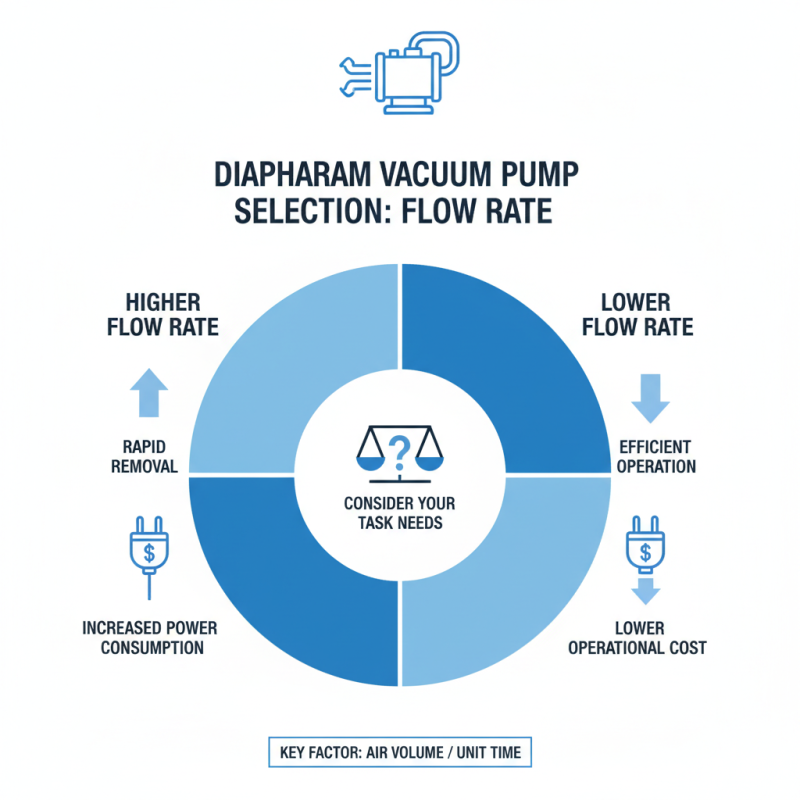
When selecting a diaphragm vacuum pump, it’s essential to evaluate critical specifications. Flow rate is a key factor. This metric shows how much air the pump can move. A higher flow rate is ideal for rapid vapor removal. However, more speed often means higher power consumption. This could increase operational costs. Consider what flow rate fits your specific tasks.
Ultimate vacuum is another crucial specification. It indicates how low the pressure can go. Some applications require a deeper vacuum than others. Understanding your needs can help you avoid over-specifying. If you choose a pump with too high a vacuum rating, it may lead to overspending. It’s easy to overlook this aspect, so double-check your requirements.
Noise levels can greatly impact your work environment. Some diaphragm pumps operate quietly, while others can be quite loud. If noise is a concern, look for pumps rated for low dB levels. However, these models may often cost more or have limited features. Balancing noise reduction with performance can be tricky. Always weigh your priorities before making a decision.
Maintenance Best Practices for Longevity and Efficiency of Vacuum Pumps
Maintaining a diaphragm vacuum pump is crucial for optimal performance and longevity. Regular inspection is key. Check the seals and gaskets for wear. Effective sealing minimizes leaks, which can drastically reduce efficiency. According to a recent industry report, up to 30% of vacuum pump failures stem from seal degradation. This is a significant issue, and taking proactive measures can prevent costly downtimes.
Change the oil in oil-lubricated pumps frequently. Clean oil ensures smooth operation. A dirty oil can lead to overheating and component damage. Studies show that pumps with routinely changed oil last 20% longer than those that do not adhere to this practice. In addition, ensure air filters remain clean. Clogged filters can negatively impact suction power.
Be mindful of the operating conditions. High temperatures and humidity can stress diaphragm pumps. Environmental factors play a massive role in pump efficiency. A well-maintained pump, however, can still face challenges. It's essential to reflect on the impact of usage frequency. Pumps used continuously may require more intensive upkeep. Understanding these factors can lead to better decision-making concerning maintenance schedules.
How to Choose the Right Diaphragm Vacuum Pump for Your Needs? - Maintenance Best Practices for Longevity and Efficiency of Vacuum Pumps
| Dimension |
Description |
Best Practices |
| Pump Size |
Select a pump size that matches your application requirements |
Regularly check compatibility with existing systems |
| Flow Rate |
Choose based on the volume of air you need to remove |
Monitor flow rates to ensure optimal performance |
| Vacuum Level |
Determine the level of vacuum needed for your processes |
Regularly test and calibrate vacuum levels |
| Material Compatibility |
Ensure that pump materials can handle your application media |
Inspect materials to prevent corrosion and contamination |
| Noise Level |
Consider noise levels for workplace comfort |
Use sound dampening equipment where necessary |
| Power Consumption |
Evaluate energy costs for operation |
Optimize settings for reduced energy usage |