How to Choose the Right High Pressure Pump for Your Needs?
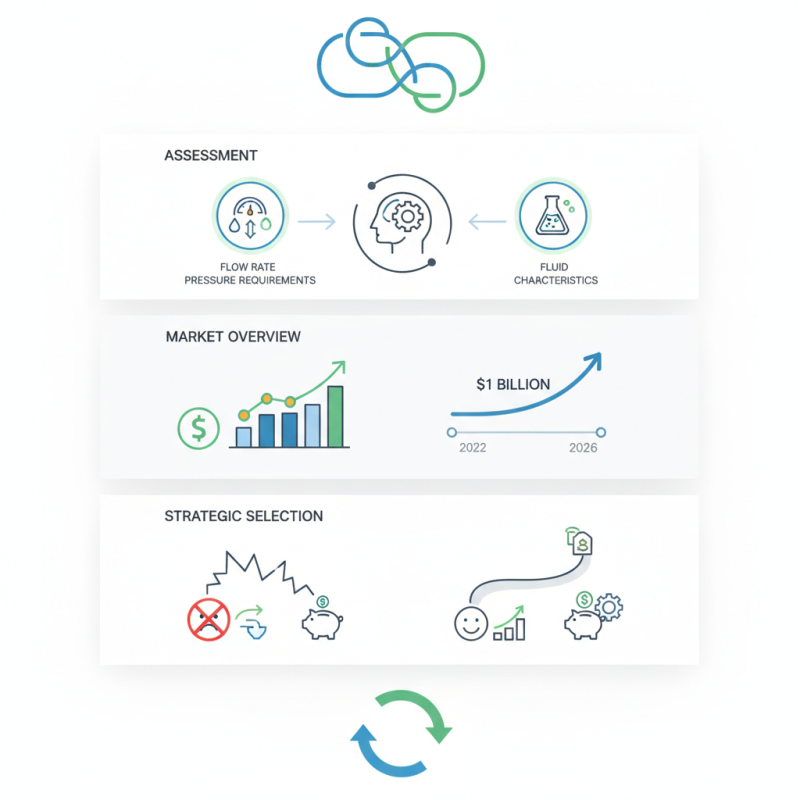
Choosing the right high pressure pump for your specific needs can be a daunting task. Across various industries, the demand for efficient high pressure solutions is on the rise. According to a recent market report by Technavio, the global high pressure pump market is expected to grow by over $1 billion from 2022 to 2026. This signifies the importance of selecting the right model for optimal performance.
As industry expert Alex Thompson states, “Choosing the right high pressure pump can reduce operational costs significantly.” His insight emphasizes the need for a thorough understanding of each application's requirements. Factors such as flow rate, pressure requirements, and fluid characteristics must be carefully evaluated. However, many companies rush into decisions, often overlooking crucial details that affect long-term efficiency.
In the quest for the perfect high pressure pump, one might feel overwhelmed. It's easy to lose sight of the core needs amidst a plethora of options. Reflecting on past choices can lead to better decisions. Future success hinges on making informed, reflective choices that align with the specific operational demands. Thus, careful consideration is vital.
Understanding High Pressure Pumps: Types and Applications
High pressure pumps come in various types, each designed for specific applications. For industrial uses, diaphragm pumps are popular. They can handle abrasive fluids and provide excellent pressure control. Centrifugal pumps are often used for water supply and irrigation. They are efficient but may not handle solids well.
Tips: When choosing a pump, consider your fluid type and viscosity. If it’s thick, a diaphragm pump might be better. For cleaner fluids, centrifugal pumps can work efficiently.
Another important factor is the flow rate. If you need to move large volumes quickly, pick a model that supports high flow rates. However, some high-flow pumps may not reach the same pressure. Balancing flow and pressure is crucial.
Tips: Always check the manufacturer's specifications. Sometimes the reported values are ideal, not real-world. Look for user reviews to see how pumps perform in actual situations. Understanding the application will help you find the right fit. Every job may require different features.
Assessing Your Requirements: Flow Rate and Pressure Needs
When selecting a high-pressure pump, the flow rate and pressure needs are crucial. Flow rate refers to how much liquid the pump can move per unit time, often measured in gallons per minute (GPM) or liters per minute (LPM). Reports indicate that many industrial applications require flow rates between 5 to 500 GPM. Assessing the specific application is vital. For instance, a car wash may need high flow rates, while a laboratory might require lower rates.
Pressure needs are equally important. The required pressure can vary significantly based on the application. High-pressure cleaning typically demands anywhere from 1,500 to 4,000 psi (pounds per square inch). Survey data suggests that pumps operating below 2,000 psi may be insufficient for heavy-duty tasks. A common mistake is underestimating pressure requirements, leading to inefficiency or equipment failure. Users should take time to analyze their needs carefully.
Understand that adjustments may be necessary. Matching flow rate and pressure is often a delicate balance. Overestimating either can lead to costly downtime. A high-pressure pump that exceeds your needs wastes energy and may even cause safety issues. Ensure you consider not only current requirements but also future applications. Regular reassessment can prevent operational missteps.
Evaluating Material Compatibility for Your Pump Selection
When selecting a high-pressure pump, evaluating material compatibility is crucial. The materials in the pump must resist the fluids being handled. For instance, acidic substances require corrosion-resistant materials. Likewise, abrasives might necessitate more robust compositions.
Tip: Always check the chemical properties of the fluid. It’s essential to consult safety data sheets. Materials can behave unexpectedly under pressure. A pump may seem ideal, but improper materials could lead to frequent failures.
Compatibility extends beyond just the fluid. Temperature matters, too. High temperatures can degrade certain materials. Additionally, vibrations from the pump should not affect the connected piping.
Tip: Test materials in real conditions before full implementation. A slight oversight can lead to significant issues. Gather feedback from trials to make informed choices. Incompatibility can lead to downtime, which is costly. Remember, not all shiny options are the best fit. Rethink your choices carefully.
Identifying Operational Conditions: Environment and Usage
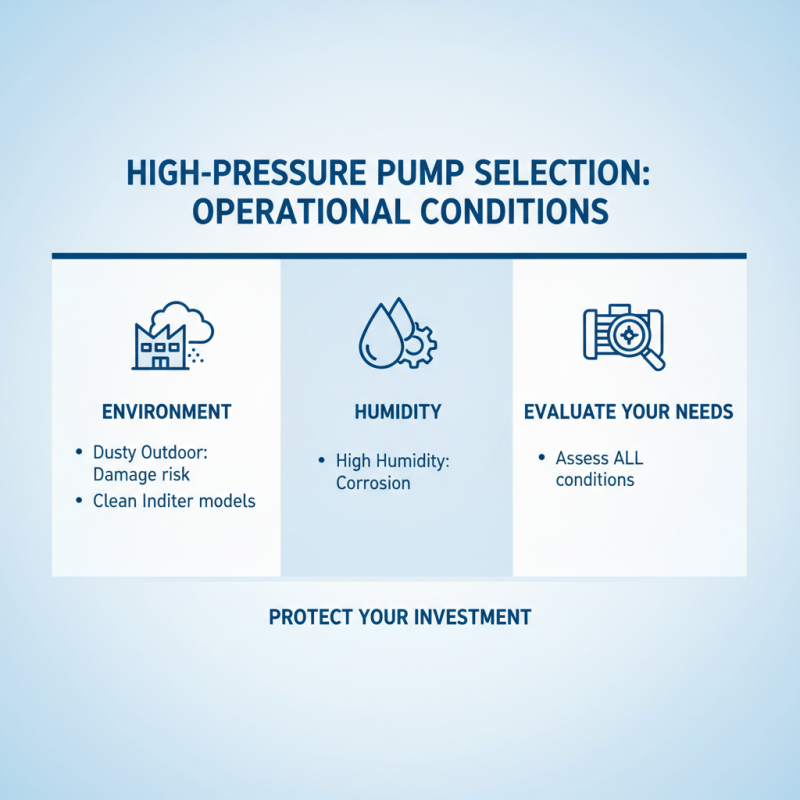
When selecting a high pressure pump, understanding your operational conditions is crucial. Evaluate the environment where the pump will be used. Are you in a dusty outdoor area or a clean indoor space? Dusty environments can damage pumps over time. Indoor spaces may require quieter models. Also, consider humidity levels. High humidity can lead to corrosion.
Next, think about the intended usage. Will the pump handle water, chemicals, or sludge? Each type of fluid requires different materials. For instance, chemicals might need a pump with special seals. Consider the pressure requirements too. Insufficient pressure can lead to inefficiency, while too much can damage the system.
Reflect on potential issues. You might encounter unexpected downtime during peak hours due to an ill-fitted pump. Regular maintenance can prevent this, but it requires planning. It's easy to overlook these details in the excitement of selecting a new pump. Take time to think about your specific needs. Without careful consideration, you may end up with a pump that underperforms.
Analyzing Maintenance and Cost Considerations for Longevity
When considering a high-pressure pump, maintenance is crucial for longevity. Regular checks on seals and fittings can prevent costly leaks. Over time, wear on parts is inevitable. It’s vital to replace parts before they cause failures.
Cost considerations also play a significant role. A cheaper pump may save money upfront but could lead to higher maintenance costs. Investing in quality ensures fewer repairs. However, it's also essential to evaluate your usage. Some high-pressure tasks may not require the highest tier of equipment.
Don't overlook the operational environment. Dust, humidity, and temperature fluctuations can affect performance. Creating a maintenance schedule helps keep track of necessary checks and repairs. But honestly, sticking to the schedule can be challenging. Many neglect routine maintenance, leading to unexpected breakdowns. Reflecting on this can guide better practices in the future.