How to Choose the Right Water Tank Pump for Your Needs?
Choosing the right water tank pump can be challenging. Various factors influence your decision. You need a reliable pump that suits your specific needs.
Consider factors like flow rate and horsepower. A pump that is too powerful might cause damage. On the other hand, a weak pump may not deliver enough water. Understanding your requirements is crucial.
Research different types of water tank pumps. Some are designed for specific applications. Read reviews and consult experts. Gathering information helps you make an informed decision. Reflect on your choices carefully. A wrong selection may lead to inefficiency and frustration. Take your time in this important process.
Understanding Your Water Needs and Usage Patterns
Understanding your water needs and usage patterns is crucial when selecting a water tank pump. According to the Water Quality Association, an average household uses around 300 gallons of water daily. This figure varies based on factors like family size and lifestyle, emphasizing the need for a tailored approach in choosing a pump.
Consider your peak usage hours. Understanding when you consume the most water can impact the pump's specifications. If your family tends to shower and do laundry simultaneously, the pump must handle increased demand. The U.S. Environmental Protection Agency estimates that nearly 80% of indoor water use goes to appliances and fixtures. Thus, selecting a pump that can support multiple outputs at once is vital for efficiency.
Think about the source of your water. Is it coming from a well or a municipal supply? Each source presents different challenges. For instance, wells typically require more robust pumps to combat sediment and pressure changes. Additionally, studies indicate that users often underestimate maintenance needs, leading to pump failures. Regular checks and a clear understanding of your water usage can help prolong the pump’s lifespan and maintain efficiency.
Water Usage Patterns by Household Size
Types of Water Tank Pumps and Their Features
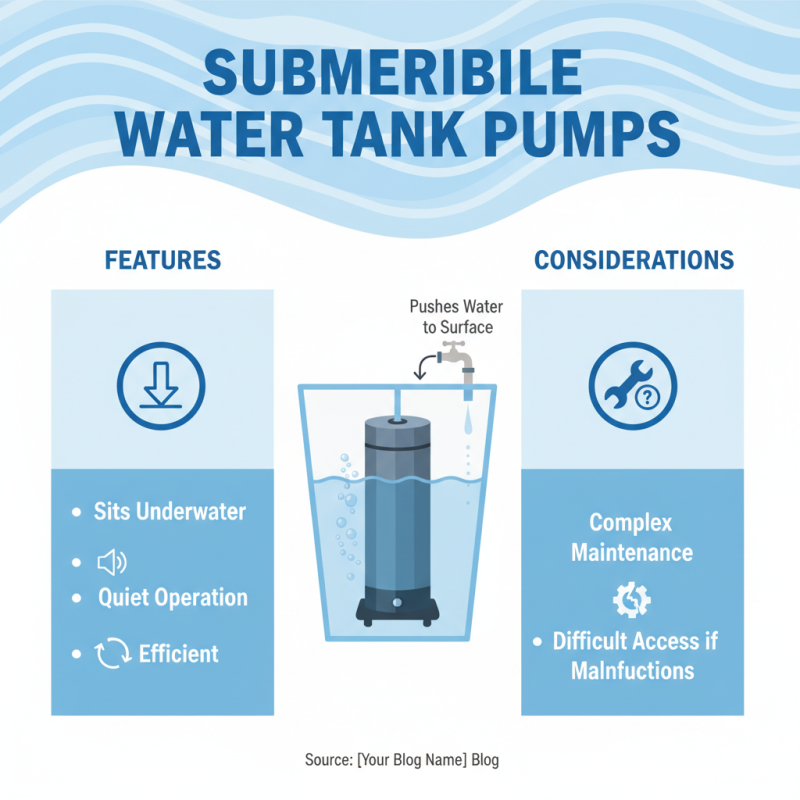
When selecting a water tank pump, understanding the various types and their features is essential. Submersible pumps are common. They sit underwater, pushing water to the surface. These pumps are often quiet and efficient. However, they can be complicated to maintain. It's important to know that if they malfunction, accessing them can be difficult.
Another type is the jet pump. Jet pumps are above ground and suck water from the tank, making them easier to service. They work well for shallow wells and are generally more powerful. But, their noise level may not be ideal for residential areas. Remember, each pump has its pros and cons.
**Tips:** Always consider your water needs. Do you require a high flow rate or maximum pressure? The size of your tank matters, too. For bigger tanks, a more powerful pump is necessary. Ensure proper installation and consider regular maintenance. This can greatly extend the life of your pump. Don’t ignore signs of wear; these can indicate deeper issues. Constantly reassess your needs as they may change over time.
Factors to Consider When Selecting a Pump
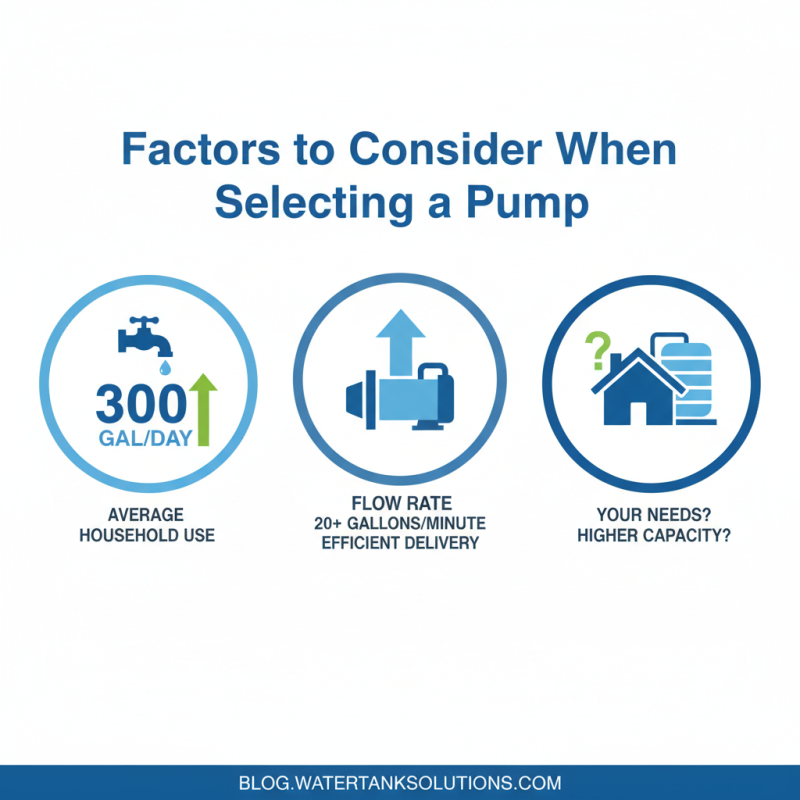
When selecting a water tank pump, several crucial factors come into play. First, assess the pump's flow rate. The average household uses about 300 gallons of water daily. If your needs are higher, opt for a pump with a higher flow rate. The best pumps can deliver over 20 gallons per minute, ensuring efficient water delivery.
Pump size is another vital consideration. A compact pump is suitable for small tanks, while larger reservoirs may need heavy-duty models. In fact, a standard tank might require a pump with a horsepower rating of at least 1 HP for optimal performance.
**Tip:** Consider your power source. Some pumps require electrical power, while others may operate on solar energy or battery systems. Understanding this will help you choose a pump that aligns with your energy infrastructure.
Lastly, tank depth impacts pump selection. Pumps can struggle if the water source is deeper than expected. A submersible model might be necessary for tanks exceeding 25 feet in depth. Remember, while price can be tempting, investing in a reliable pump can save costs over time due to less frequent replacements. Always review installation and maintenance requirements, as improper setup can lead to performance issues and increased wear.
Assessing Your Budget and Long-term Costs
When selecting a water tank pump, budget considerations are crucial.
A study by the American Society of Plumbing Engineers indicates that over 60% of homeowners under-budget for pump installation and maintenance. Initial costs can be enticing, but long-term expenses often surprise users.
Energy consumption, for instance, can contribute significantly to your electricity bill. According to the U.S. Department of Energy, inefficient pumps can increase energy costs by up to 30%.
It’s important to assess performance and durability as well. While a lower-priced option may seem appealing, it may lead to higher repair and replacement costs. A survey found that 40% of users spent more than expected on maintenance due to choosing the wrong pump.
Investing in a reliable pump can reduce these costs over time. Sometimes, users overlook the importance of warranties and service packages, which can provide invaluable long-term savings.
Finding the right balance between upfront and ongoing expenses requires careful analysis. Users often focus solely on the initial price tag, neglecting efficiency ratings and reliability. This oversight can lead to unforeseen costs.
Ultimately, understanding your budget in relation to long-term costs is essential for making an informed decision.
Maintenance Tips for Ensuring Optimal Pump Performance
Maintaining your water tank pump is crucial for optimal performance. Regular maintenance ensures that your system runs efficiently and lasts longer. Here are some essential tips to keep in mind.
Check the pump regularly for signs of wear. Look for leaks or unusual noises. These could indicate a problem that needs immediate attention.
Clean the intake filter to prevent clogs. A dirty filter will lead to reduced water flow. This can strain your pump and decrease its efficiency.
Don’t forget to lubricate moving parts. Use the recommended lubricant to avoid damage. This small step can significantly enhance the pump's lifespan.
Test the pressure settings periodically. Incorrect settings can lead to overworking the pump, causing premature failure. Stay aware of your pump's operating conditions. Sometimes, even minor adjustments can save you from major headaches.