10 Essential Tips for Choosing the Best Small Water Pump
Choosing the right small water pump can feel overwhelming. There are numerous options available, each with different specifications. A small water pump is essential for various applications, from gardening to aquariums.
Understanding your specific needs is crucial. Not all pumps are created equal. Some are designed for efficiency, while others focus on high pressure. It’s important to consider your unique situation. For instance, if you need to move water quickly, a high-capacity pump may be necessary.
Reflect on your budget and the pump's longevity too. Sometimes, cheaper options may lead to frequent replacements. This can be frustrating and costly in the long run. Dive into the details of your project. Every circumstance has nuances that might influence your choice. A well-informed decision can save time and effort. Ultimately, finding the best small water pump requires careful consideration and self-reflection.
Understanding the Different Types of Small Water Pumps
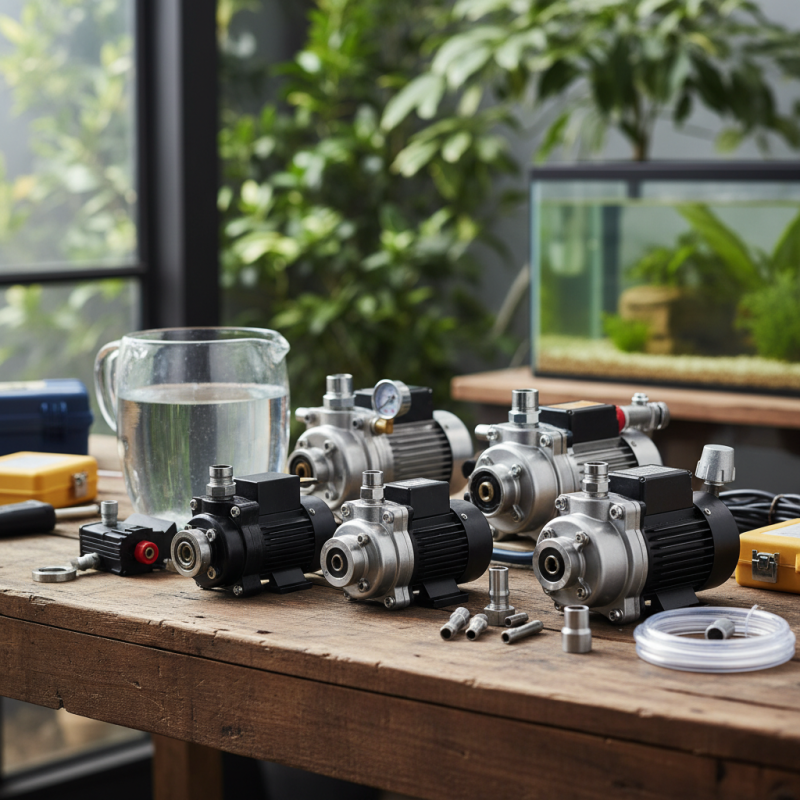
When selecting a small water pump, understanding the different types available is essential. There are primarily three categories: submersible pumps, surface pumps, and hand pumps. Submersible pumps are ideal for deep wells or flooded areas. These pumps operate underwater, making them efficient in transferring water. They can be powerful, but their setup can be tricky. You may need extra tools to manage them effectively.
Surface pumps are commonly used for irrigation or transferring water over short distances. They are placed above ground and can be easier to maintain. However, they don't work well for deep water sources. Lastly, hand pumps are perfect for remote or emergency situations. They're simple and reliable but require physical effort. Each type has its pros and cons, and sometimes it’s hard to choose the right one without experience.
Consider your specific needs. Determine the water source and required flow rate. Don't ignore the power source; it affects performance. You may realize that the easiest solution isn't always the best for your situation. Taking time to reflect on these factors can greatly optimize your choice.
10 Essential Tips for Choosing the Best Small Water Pump
| Tip No. | Tip Description | Type of Pump | Application | Power Source |
|---|---|---|---|---|
| 1 | Identify the flow rate you need. | Submersible Pump | Aquariums & Water Features | Electric |
| 2 | Determine the head height required. | Inline Pump | Irrigation Systems | Gas or Electric |
| 3 | Choose the right material for pump housing. | Centrifugal Pump | Domestic Water Supply | Electric |
| 4 | Look for energy efficiency ratings. | Submersible Pump | Sump Draining | Electric |
| 5 | Check for noise levels. | Diaphragm Pump | Chemical Transfer | Electric |
| 6 | Assess the durability and warranties. | Positive Displacement Pump | Food Processing | Electric |
| 7 | Consider ease of maintenance. | Submersible Pump | Drainage | Electric |
| 8 | Check for compatible inlet and outlet sizes. | Centrifugal Pump | Irrigation | Gas or Electric |
| 9 | Research customer reviews and ratings. | Inline Pump | Aquaculture | Electric |
| 10 | Make sure to consult an expert or dealer. | Positive Displacement Pump | Wastewater Treatment | Electric or Gas |
Key Factors to Consider When Selecting a Small Water Pump
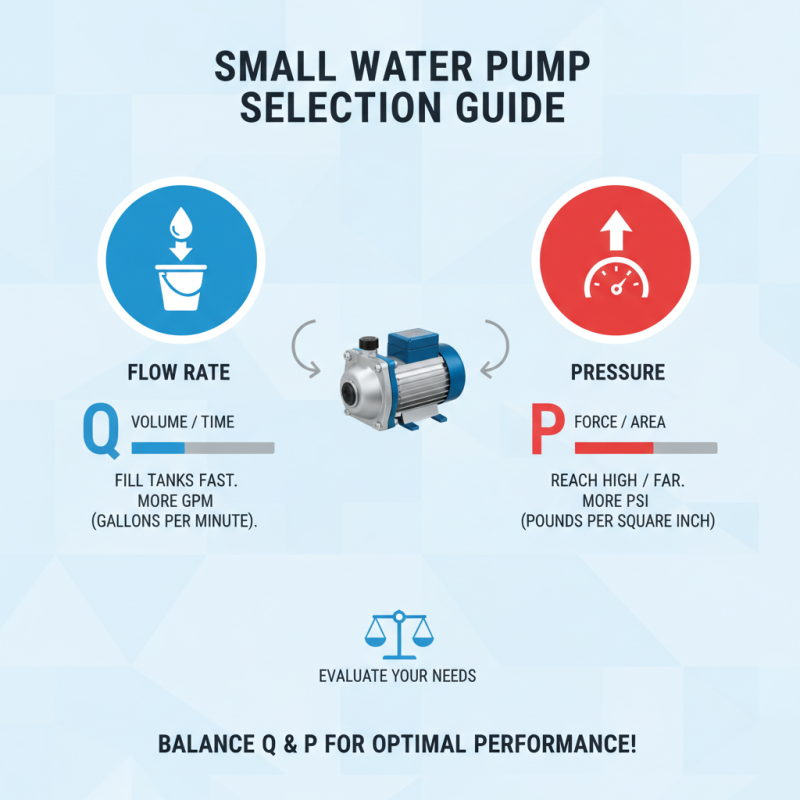
Selecting the right small water pump involves several key factors. First, consider the pump's intended use. Will it serve a garden, pool, or a construction site? Each application requires different specifications. Check the flow rate and pressure needed for your specific task. A pump with low pressure may not be effective in high-demand situations.
Durability is another important aspect. Look for materials that withstand environmental wear and tear. A poorly constructed pump can lead to frustration and waste. Size matters too; ensure the pump fits in your chosen space. Oversized pumps can be cumbersome, while too-small ones might not perform adequately.
Noise levels are often overlooked. A pump that operates quietly is a great choice for residential settings. It’s generally a good idea to read user reviews. They can reveal potential downsides that you might not initially consider. Reflection on your needs may also help. Think realistically about your frequency of use and maintenance capabilities. Taking the time to weigh these factors can lead to better long-term satisfaction.
Evaluating Pump Performance: Flow Rate and Pressure Requirements
Choosing the right small water pump requires a careful evaluation of its performance, especially its flow rate and pressure. Flow rate is crucial. It determines how much water your pump can move over time. If you need to fill a large tank quickly, a high flow rate is necessary. However, don't ignore pressure requirements. A pump with inadequate pressure may struggle to deliver water to higher elevations or distant locations.
Consider your specific needs. If you're using the pump for a garden, ensure it has enough pressure to distribute water effectively across your plants. This is not just a matter of convenience; it's essential for healthy growth. Look for pumps that provide clear specifications on both flow rate and pressure.
Tip one: Measure your needed flow rate before making a purchase. Understand how much water your system requires. Tip two: Assess the distance and elevation you need. Higher elevations will mean needing a pump with greater pressure. If you’re unsure, consulting with a professional can save you from making an impractical choice. These steps can help you avoid common pitfalls when selecting a small water pump.
Assessing Energy Efficiency and Operating Costs of Water Pumps
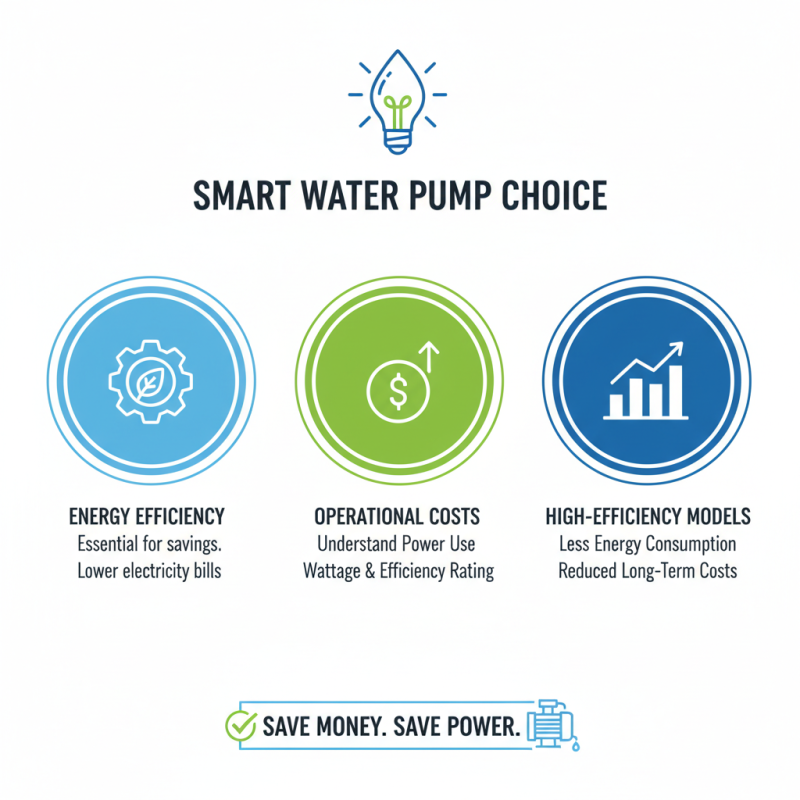
When choosing a small water pump, energy efficiency is essential. Pumps consume varying amounts of power. Understanding operational costs helps in making informed decisions. Assess the wattage and efficiency rating of the pump. Look for models with a high efficiency, as they use less energy. This translates to lower electricity bills over time.
Operating costs include maintenance and lifespan as well. Some pumps may be cheaper upfront but costly to run. Regular maintenance can enhance performance and reduce future expenses. For example, cleaning filters and checking seals are simple tasks that can save money. Be mindful of the pump's materials; they affect durability and the long-term costs involved.
Many users overlook these factors. A seemingly small detail can lead to bigger issues. Reflecting on your needs before purchasing is crucial. Choosing wisely can prevent frequent replacements. Balancing initial costs with energy savings is a thoughtful approach. Energy efficiency impacts both pockets and the environment. Consider the long-term picture instead of just an immediate solution.
Common Applications and Uses for Small Water Pumps
Small water pumps are versatile tools with numerous applications. They are commonly used in residential settings for tasks like draining flooded basements or irrigating gardens. According to market research, the global water pump market is projected to grow by 5% annually over the next five years. This highlights the increasing reliance on efficient water management solutions.
Construction sites frequently utilize small water pumps for dewatering. They help ensure safety by preventing water accumulation. Agriculture also benefits significantly; small pumps can deliver water to crops efficiently in remote areas. A study from the Agricultural Water Management journal indicates that small pumps can improve yield by up to 30% by optimizing irrigation efforts.
However, choosing the right pump is not always easy. Many overlook critical factors like flow rate and total head. It's easy to assume that bigger equals better, but this isn't always correct. Oversized pumps can waste energy and lead to increased operational costs. Understanding specific needs is essential, yet many users remain unaware of their unique requirements and end up with unsuitable models.
Comparison of Common Applications for Small Water Pumps
Related Posts
-
Ultimate Guide to Choosing the Best Small Water Pump for Your Home Garden
-
Ultimate Guide to Choosing the Right Water Pump for Your Needs
-
Top 10 Pressure Pumps for Water That You Need for Your Home and Garden
-
How to Choose the Best Electric Transfer Pump for Your Needs
-
Unlocking Efficiency: How Submersible Pumps Are Transforming Water Management in Agriculture
-
Ultimate Guide to Choosing the Best 12 Volt Sprayer Pump for Your Agricultural Needs