Essential Voltage Load Switch Tips for Global Buyers?
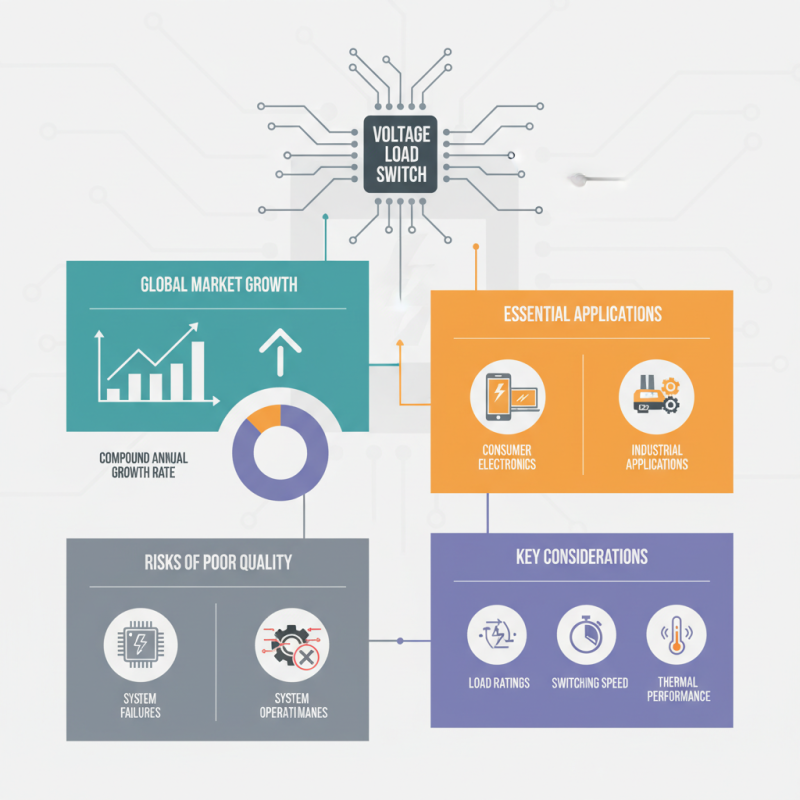
In the rapidly evolving landscape of electrical components, the importance of Voltage Load Switches cannot be overstated. According to a recent report by MarketsandMarkets, the global market for these devices is projected to grow from $1.2 billion in 2022 to $1.8 billion by 2027, reflecting a compound annual growth rate (CAGR) of 8.4%. This growth is driven by the demand for efficient power management in various sectors, including consumer electronics and industrial applications.
Voltage Load Switches serve critical roles in controlling the power flow while ensuring safety and reliability. They are particularly essential in applications where power management is paramount. However, several factors complicate their selection. Buyers often face challenges in understanding the specifications and compatibility of different models. Misunderstandings can lead to significant operational issues or system inefficiencies.
Ensuring an informed purchase decision requires attention to detail. Key considerations include load ratings, switching speed, and thermal performance. Additionally, industry experts emphasize the importance of reliability and quality in these components. A poor-quality switch can lead to system failures, proving detrimental to long-term operations. Therefore, potential buyers must critically assess their needs and evaluate options carefully, balancing cost with performance to avoid regrettable choices.
Understanding Voltage Load Switches: Basics and Applications
Voltage load switches are critical components in various electrical systems. They control the flow of electricity to devices, ensuring safety and efficiency. Understanding their basics and applications can significantly impact the decision-making process for buyers globally.
Here are a few essential tips for considering voltage load switches. First, evaluate the current and voltage ratings. Knowing the specifications ensures compatibility with your system. Second, consider the switching mechanism. Mechanical, solid-state, or opto-isolator technologies each offer unique benefits, influencing performance and longevity. Third, think about the environment. Temperature extremes, humidity levels, and exposure to dust can affect switch durability.
In terms of applications, voltage load switches are found in consumer electronics, automotive systems, and industrial machinery. They ensure that devices operate only when safe and necessary. This minimizes the risk of damage and enhances energy efficiency. Understanding these applications helps buyers make informed choices that align with their project's requirements. Reflecting on the specific needs of your system is essential for optimal performance.
Key Considerations for Selecting Voltage Load Switches
When selecting voltage load switches, several key considerations arise. Understanding the specifications helps ensure optimal performance. Voltage ratings, for example, should align with the application's requirements. Reports indicate that over 30% of device failures stem from mismatched voltage ratings. Buying decisions must reflect a clear understanding of these figures.
Temperature ratings also play a crucial role. As temperatures rise, materials may degrade, leading to failures. It’s essential to select switches rated for the expected thermal environment. Studies have demonstrated that devices operating above their rated temperatures can reduce lifespan by 50%.
Moreover, consider the switch's footprint and integration capabilities. Compact designs can enhance circuit efficiency but may limit heat dissipation. Real-world projects sometimes underestimate space requirements, leading to installation challenges. Awareness of these factors can prevent costly errors and ensure reliability in the final product.
Comparing Different Types of Voltage Load Switches
When considering voltage load switches, buyers face various choices. Understanding the types is crucial for effective selection. Each type has unique attributes and applications. For example, electromechanical switches offer reliability in high-current applications. They excel in environments with fluctuating voltage levels. However, they can be prone to wear over time, which necessitates periodic replacements.
In contrast, solid-state switches provide faster response times and longer lifespans. They have no moving parts, reducing mechanical failure risks. Yet, their sensitivity to voltage spikes can be a drawback. Users in industrial settings should weigh these pros and cons carefully. Assessing how often you face these voltage fluctuations is essential. The right switch ensures continuous operation and longer equipment life.
Not all switches are created equal. Some might not handle the required current efficiently. A miscalculation here can lead to equipment damage. Look for switches with clear specifications. Consider the mounting options available too. Ensuring compatibility with your existing systems is vital for smooth installation. Your choice should reflect both immediate needs and future scalability.
Essential Voltage Load Switches: Performance Comparison
Best Practices for Installing Voltage Load Switches
When installing voltage load switches, attention to detail is crucial. Different applications require unique installation approaches. Always assess the environment and the electrical specifications before installation. Proper mounting can enhance performance and safety. Ensure that the switch is rated for the voltage and current it will handle. An underestimated rating can lead to failures.
Wiring requires precision. Use appropriate gauge wires to match the load requirements. Tighten all connections to prevent arcing or overheating. Check for insulation damage during installation. This factor often goes overlooked but is vital for reliable operation. Protect the switch from moisture and contaminants. Use enclosures when necessary.
Testing the installation is important, but many overlook this step. Conduct voltage and current tests to ensure functionality. If issues arise, re-evaluate the wiring and components used. Remember, every installation is a learning opportunity. By analyzing what worked and what didn't, you can improve future practices.
Common Mistakes to Avoid When Buying Voltage Load Switches
When purchasing voltage load switches, many buyers overlook critical aspects that can lead to inefficient designs. According to industry reports, approximately 30% of voltage load switch failures stem from inadequate specifications. Understanding the voltage, current, and load characteristics is vital. For instance, selecting a switch with an inadequate voltage rating can lead to catastrophic failures.
Another common mistake involves underestimating the importance of thermal management. Inadequate heat dissipation can reduce the switch's lifespan significantly. Research indicates that devices operating above their safe temperature range can experience up to a 50% decrease in performance. Buyers should prioritize switches with built-in protection features and appropriate heat sinks.
Buyers often focus on price over quality. While finding a cost-effective solution is essential, opting for low-cost providers can lead to poor performance. A survey revealed that 40% of respondents experienced issues with cheaper units, affecting operational efficiency. It's essential to balance cost with reliability to ensure long-term success in applications.
Essential Voltage Load Switch Tips for Global Buyers - Common Mistakes to Avoid When Buying Voltage Load Switches
| Dimension | Value | Common Mistakes |
| Voltage Rating | 5V, 12V, 24V | Ignoring voltage fluctuations |
| Current Rating | 1A, 10A, 20A | Underestimating load requirements |
| Switching Type | Automatic, Manual | Choosing the wrong type for application |
| Size | Mini, Standard, Large | Not considering physical space constraints |
| Material | Plastic, Metal | Neglecting environmental factors |
| Temperature Range | -40°C to 85°C | Overlooking operating temperature limits |