
How to Choose a Water Pump for a Water Tank?
Choosing a water pump for water tank applications is not simply a matter of selecting the largest motor. Tank height, pipe length, water demand, power supply, and water quality all influence performance. A pump that looks powerful in a catalogue may deliver weak flow after friction losses and elevation changes.
The need for dependable water systems is substantial. WHO and UNICEF’s 2023 Joint Monitoring Programme reported that 2.2 billion people lacked safely managed drinking water at home. The United Nations World Water Development Report 2024 also linked water security with reliable infrastructure and efficient management. These findings make pump selection more than a technical purchase. It affects daily access, operating costs, and system resilience.
Dr. Peter Gleick, a leading water-sector expert, has said, “The world’s water crisis is not a crisis of scarcity, but a crisis of management.” That principle applies directly to tank pumping. Good management begins with accurate calculations. Measure the required flow. Confirm total dynamic head. Check whether the pump can run dry safely. Inspect the inlet, float switch, pressure controller, and non-return valve.
Small details matter.
A narrow pipe can increase resistance. A poorly placed inlet can pull sediment into the pump. Oversizing can cause short cycling, noise, and unnecessary electricity use. I have seen “extra capacity” become extra maintenance. It sounds reassuring, but it is not always efficient.
This guide explains how to compare pump types, calculate capacity, review materials, and avoid common installation mistakes. It also highlights where manufacturer data should be verified, because a specification sheet is not the same as real-world performance.
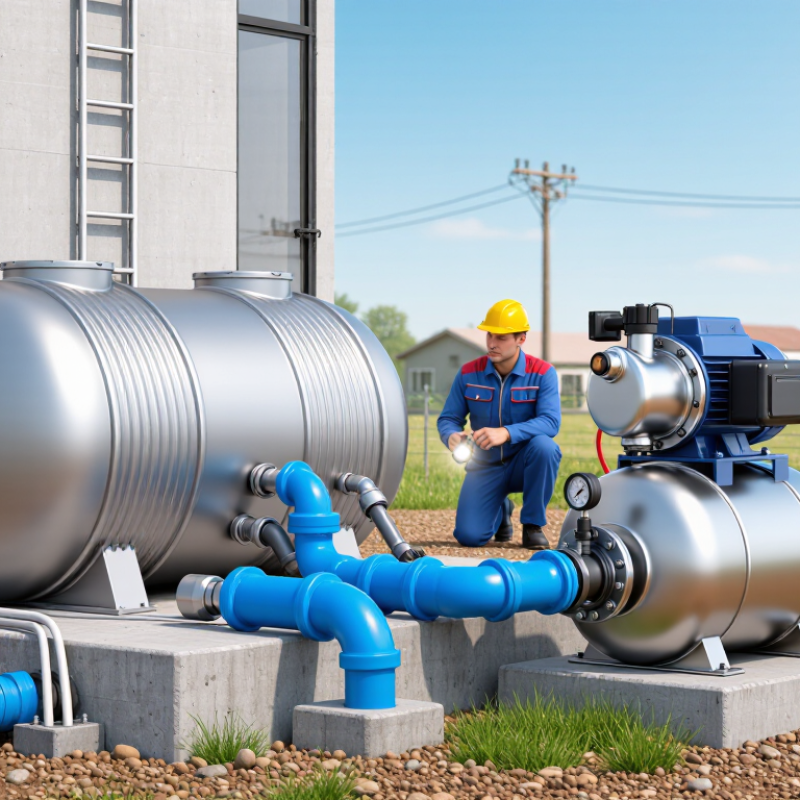
Identify the Water Tank Pumping Requirements
How to Choose a Water Pump for a Water Tank?
Identify the Water Tank Pumping Requirements
Begin by measuring the required flow, lifting height, and operating schedule. A household tank may need only 20 liters per minute, while irrigation can demand several times more. WHO guidance indicates that basic domestic needs generally require 50–100 liters per person daily. This figure helps estimate storage demand, but it does not define pump capacity. Peak use matters more.
Calculate total dynamic head, not just vertical height. Include tank elevation, pipe length, elbows, filters, valves, and the pressure needed at each outlet. The U.S. Department of Energy reports that pumping systems can consume 25–50% of industrial facility electricity. An oversized pump may therefore waste energy through throttling and frequent cycling. A smaller pump can also fail if it runs continuously against excessive resistance.
Check the water quality and pump duty carefully. Clean rainwater, sediment-rich groundwater, and treated water may require different materials and filtration. Record the tank’s minimum water level, because suction conditions change as the level falls. Confirm whether the pump must run intermittently or for long periods. Hydraulic Institute guidance stresses matching pump selection with the system curve and operating point. A rough calculation is useful, but not enough. Real pipe friction often surprises people. Test the actual pressure after installation, then adjust the control settings instead of trusting assumptions.
How to Choose a Water Pump for a Water Tank? - Identify the Water Tank Pumping Requirements
| Application | Typical Tank Volume | Recommended Flow Rate | Typical Total Dynamic Head | Suitable Pump Type | Typical Motor Power | Common Outlet Size | Key Selection Considerations |
|---|---|---|---|---|---|---|---|
| Rainwater Collection for Garden Irrigation | 1,000–5,000 L | 20–40 L/min | 15–30 m | Self-priming surface pump or submersible pump | 0.55–1.1 kW | 25–32 mm | Allow for filter pressure loss, hose friction, and the elevation of sprinklers or outlets. |
| Household Non-Potable Water Supply | 2,000–10,000 L | 25–50 L/min | 20–40 m | Automatic pressure-boosting pump | 0.75–1.5 kW | 25–40 mm | Choose a controller that starts the pump when a tap opens and stops it when demand ends. |
| Toilet Flushing and Laundry Supply | 2,000–10,000 L | 20–40 L/min | 20–35 m | Multistage booster pump or submersible pressure pump | 0.55–1.1 kW | 25–32 mm | Use a clean-water filter and verify that the pump can maintain stable pressure during simultaneous use. |
| Small Farm or Greenhouse Irrigation | 5,000–50,000 L | 50–150 L/min | 25–50 m | Surface centrifugal pump or submersible pump | 1.1–4.0 kW | 40–65 mm | Calculate the combined flow of all irrigation zones and size the pump for the zone with the highest demand. |
| Drip Irrigation System | 1,000–20,000 L | 10–60 L/min | 15–35 m | Low-flow centrifugal pump or pressure-controlled pump | 0.37–1.1 kW | 25–40 mm | Prioritize steady pressure and install filtration to prevent emitters from clogging. |
| Livestock Watering | 2,000–20,000 L | 30–100 L/min | 15–40 m | Submersible pump or automatic booster pump | 0.75–2.2 kW | 32–50 mm | Base the flow rate on peak simultaneous demand and protect the intake from sediment and floating debris. |
| Filling an Elevated Storage Tank | 1,000–10,000 L | 20–80 L/min | 25–60 m | Multistage centrifugal pump or deep-well submersible pump | 1.1–3.0 kW | 25–50 mm | Include the vertical lift, pipe friction, fittings, and the inlet pressure required by the receiving tank. |
| Basement or Tank Drainage | Temporary or variable volume | 50–200 L/min | 5–20 m | Drainage submersible pump | 0.55–2.2 kW | 32–75 mm | Select a model suitable for the expected solids, use a float switch, and avoid running the pump dry. |
| Emergency Water Transfer | 1,000–20,000 L | 50–150 L/min | 10–35 m | Portable self-priming pump or submersible pump | 0.75–3.0 kW | 40–65 mm | Check the available electrical supply, discharge distance, priming requirements, and expected operating duration. |
Related Posts
-

What is the Functionality of a Water Tank Pump in Modern Water Systems
-
Why Investing in a Water Tank Pump is Essential for Efficient Water Management
-
10 Best Water Tank Pumps Which One Is Right for You?
-
Top 10 Pressure Pumps for Water That You Need for Your Home and Garden
-
2026 How to Choose the Right Small Electric Water Pump for Your Needs?
-
2026 Top Bleach Pump Buying Guide for Global Buyers