2026 How to Choose the Best Diaphragm Pump for Your Needs?
Choosing the right diaphragm pump can be challenging. The variety of options available may confuse buyers. Renowned industry expert John Smith once said, "Selecting a diaphragm pump is about understanding your unique needs." This statement captures the essence of finding the best fit for your application.
Diaphragm pumps are versatile. They are widely used in industrial, agricultural, and chemical applications. However, factors like flow rate, materials, and pressure ratings must be considered. Each application has specific requirements that a diaphragm pump must meet. Failing to account for these factors could lead to inefficiencies.
Moreover, many buyers overlook maintenance needs. Regular upkeep is crucial for optimal performance. A mismatch in pump selection may result in costly repairs or downtime. Thus, understanding your environment and application is key. Making an informed decision is not only wise, but essential.
Understanding Diaphragm Pumps: Types and Applications
Diaphragm pumps are versatile tools essential for various industries. They excel in applications involving slurries, chemicals, and viscous fluids. Selecting the right type requires an understanding of your specific needs. For instance, consider whether you need a single or double diaphragm pump. Single diaphragm pumps are great for low-pressure applications, while double diaphragm pumps handle higher pressures and more demanding tasks.
When looking at applications, think about the material compatibility. Some pumps work well with corrosive substances, while others are better for food-grade materials. This decision greatly impacts efficiency. Noise levels also matter; some pumps operate quietly, while others generate noise during use.
There’s no one-size-fits-all solution. It often takes time to find the right match for your requirements. You may discover that what works in one situation fails in another. Testing various models can provide insights. Feedback from users can uncover hidden issues. Don’t rush the process; choosing the wrong pump can lead to costly mistakes. It's all about understanding the unique needs of your application.
2026 Diaphragm Pump Performance Comparison
This chart illustrates the flow rates and pressures of different types of diaphragm pumps commonly used in various applications. Understanding these metrics helps in selecting the best diaphragm pump based on specific operational needs.
Key Factors to Consider When Choosing a Diaphragm Pump
When choosing a diaphragm pump, several key factors come into play. The pump's flow rate is crucial. It determines how much liquid can be moved within a given timeframe. If the flow rate is too low, you might face delays. Conversely, excessive flow can lead to system stress. It’s vital to match the pump’s capability with your needs.
Another important aspect is the materials used in the pump. Different applications require different materials. For instance, corrosive substances need a pump made from resistant materials. A mismatch here can lead to damage and costly repairs. Always consider the chemical compatibility of the pump components.
Lastly, the pump's size and portability should be addressed. A large pump may not fit in compact spaces. A lightweight design helps in mobile applications. However, smaller can mean less capacity. Evaluate your space and transport needs critically. A thoughtful selection can prevent future regrets.
2026 How to Choose the Best Diaphragm Pump for Your Needs? - Key Factors to Consider When Choosing a Diaphragm Pump
| Factor |
Description |
Importance |
| Flow Rate |
The volume of fluid the pump can deliver per unit of time. |
Critical for matching pump output to system requirements. |
| Material Compatibility |
The materials used in the pump's construction must be compatible with the fluid being pumped. |
Essential to prevent chemical reactions and equipment degradation. |
| Pressure Rating |
The maximum pressure the pump can handle safely. |
Important for applications requiring high-pressure systems. |
| Size and Portability |
The physical dimensions and weight of the pump. |
Significant for applications where space and mobility are concerns. |
| Power Source |
Type of energy source (electric, pneumatic, hydraulic) that powers the pump. |
Determines installation and operational efficiency in various environments. |
| Maintenance Needs |
Frequency and ease of maintenance required to keep the pump functioning. |
Direct impact on total cost of ownership and operational downtime. |
Comparing Performance Specifications of Diaphragm Pumps
When choosing a diaphragm pump, performance specifications are crucial. The flow rate is one key factor. It indicates how much fluid the pump can move over time. Higher flow rates mean faster operations, but they may not suit all applications. Also, consider the pressure rating. This shows how much pressure the pump can handle. A pump with low pressure may fail in demanding situations.
Another important aspect is the materials used in the pump. The construction determines its durability and compatibility with different fluids. For instance, a pump designed for corrosive substances needs robust materials. However, not every pump fits every need. Sometimes, the right choice is not so clear cut.
Additionally, check the pump's noise level. Some models operate quietly, which is a plus in certain environments. Others might be too loud for indoor use. Performance specifications give you a clearer picture. Yet, real-world testing can reveal unexpected challenges. Remember, not all specifications are equal; how they perform in your specific scenario may differ widely.
Maintenance and Longevity: Ensuring Your Pump Lasts
Maintaining a diaphragm pump is crucial for its longevity. Regular inspections help identify wear and tear before they escalate. Checking seals and valves often reduces the risk of leaks, which can lead to significant damage. Keeping the pump clean is also essential. Dirt and debris can cause clogs, affecting performance.
Use the right lubricants and fluids for your specific model. Using incorrect substances may shorten its lifespan. Schedule routine maintenance to catch potential problems in advance. You might overlook minor issues, but they can accumulate. That's a mistake you want to avoid.
Record the pump's performance over time. Are there irregularities? If so, dive deeper into the cause. Sometimes, simple changes can drastically improve performance. Staying proactive about maintenance ensures you get the most out of your investment. It’s not always easy, but being diligent pays off.
Cost Analysis: Budgeting for Your Diaphragm Pump Purchase
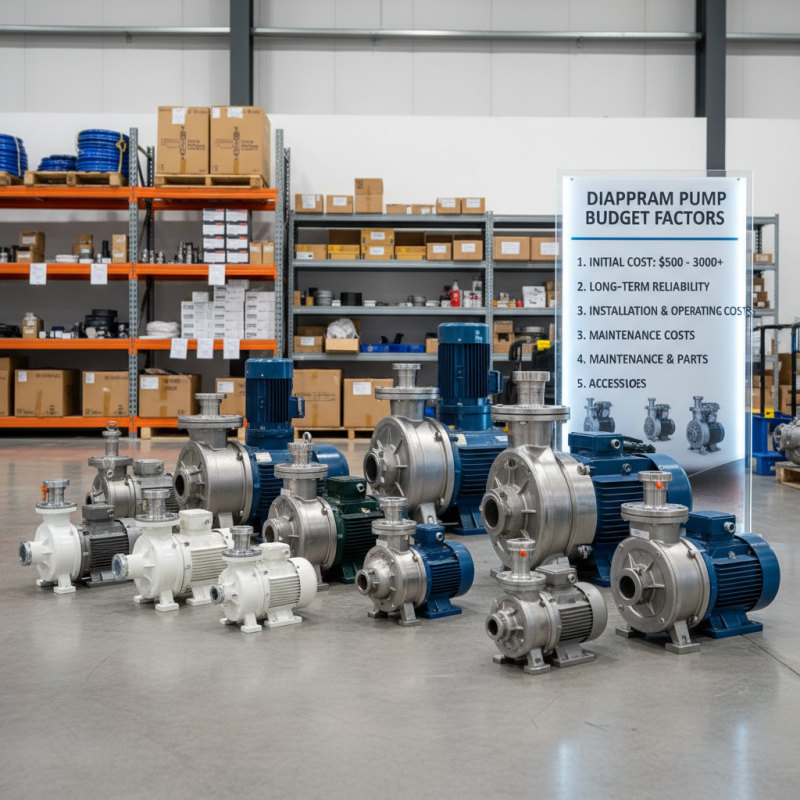
Budgeting for a diaphragm pump requires careful consideration of various factors. The initial purchase cost is just one part of the equation. According to industry reports, diaphragm pumps can range from $500 to $3,000, depending on specifications and features. This price variance influences not just affordability but also the long-term reliability of the pump you choose.
Maintenance costs are often underestimated. Regular checks and part replacements can add an extra $100 to $500 annually. Understanding this can drive more informed purchasing decisions. Additionally, energy consumption is an ongoing expense that shouldn’t be overlooked. Some diaphragm pumps can lead to higher operational costs, typically around 15% more than their alternatives, due to inefficiencies in energy use.
Hidden expenses may also arise from the need for compatible accessories and installation. Many users find themselves spending more due to inadequate planning. It’s essential to account for these aspects in your budget to avoid unexpected financial strain later on. Reflecting on these costs before making any commitments can lead to a more satisfying and economical purchase.