
China Top 10 18650 Battery Manufacturers for Global Buyers?
Choosing among China’s top 10 18650 Battery manufacturers requires more than comparing factory prices. Buyers need evidence of cell consistency, safety testing, production scale, and traceable quality controls.
The International Energy Agency reported that global battery demand exceeded 750 GWh in 2023. Electric vehicles created most of that demand, but 18650 Battery cells remain important in power tools, medical devices, backup systems, and industrial equipment. BloombergNEF recorded an average lithium-ion battery pack price of $139 per kWh in 2023, down 14% from the previous year. However, pack-level figures do not directly represent individual 18650 cell prices. That distinction is often overlooked.
Battery researcher Jeff Dahn has stated, “The best battery is the one that meets the application’s requirements.” His point matters for global sourcing. A high-capacity cell may perform poorly in a high-drain tool. A cheaper cell may show wider voltage variation after repeated cycles. Small differences become visible when hundreds of cells operate together.
This guide examines ten Chinese manufacturers through practical buyer criteria. These include verified capacity, cycle-life testing, thermal behavior, certifications, minimum order quantities, and after-sales support. Factory photographs can help, but they are not proof. Independent test reports are stronger. Supplier rankings are also imperfect, because production data and defect rates are rarely fully public. Readers should treat this list as a starting point, not a final purchasing decision.
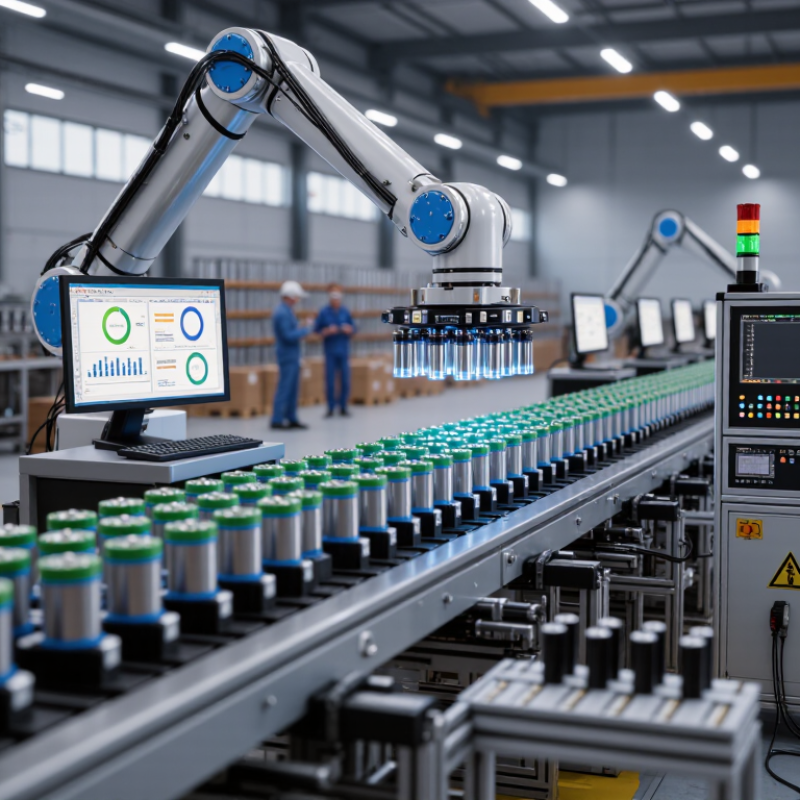
What Are 18650 Batteries and Why Do Global Buyers Choose China?
An 18650 battery is a cylindrical rechargeable lithium-ion cell, measuring about 18 millimeters wide and 65 millimeters long. Its compact shape, stable output, and useful energy density suit power tools, portable equipment, backup systems, and battery packs. The number describes its dimensions, not its chemistry or performance. That difference matters.
In practical sourcing, global buyers often choose China because its battery supply chain is extensive and connected. Cell materials, protection components, pack assembly, testing, and packaging can be coordinated within one region. This may reduce lead times and support custom voltage, capacity, connector, and casing requirements.
Yet low pricing alone is a weak purchasing reason. Quality can vary between production batches, even when specifications look identical. Buyers should request capacity curves, cycle-life data, safety test records, and traceable batch codes. A sample may perform well while larger production needs closer monitoring. This is easy to underestimate.
Factory audits, incoming inspection, and independent testing add cost, but they reveal issues before shipment. Reliable manufacturers should explain their quality controls clearly and provide documents that match the actual cell. Proper transport and storage conditions also matter, since lithium-ion cells can be damaged by heat, moisture, or rough handling. China offers scale and flexibility, but careful verification remains the buyer’s responsibility.
How to Evaluate China’s Top 10 18650 Battery Manufacturers
Evaluating China’s top ten 18650 battery manufacturers requires more than comparing prices. The International Energy Agency reported that China produced about 80% of global battery cells in 2023. Capacity is large, but factory scale does not guarantee consistent 18650 performance. Request recent test records for capacity, internal resistance, cycle life, and discharge temperature. A serious supplier should provide batch numbers, sampling rules, and traceable production records.
Check certifications carefully. UN 38.3 testing supports transport safety, while IEC 62133-2 addresses portable lithium battery safety. Ask whether certificates match the exact cell model, not a similar product. Test samples independently at different charge levels. Small voltage differences matter. For example, a 50 mV imbalance can affect pack efficiency and protection settings. Also inspect welding quality, separator condition, and electrolyte leakage after storage.
Cost needs context. BloombergNEF reported an average global lithium-ion pack price of 115 dollars per kWh in 2024, but individual 18650 cells vary by chemistry, volume, and grade. Compare quoted prices with warranty terms, replacement procedures, and documented rejection rates. The IEA also noted global battery manufacturing capacity reached roughly 2.6 TWh in 2023, far above demand. Buyers therefore have negotiation power. Still, low prices may hide mixed cells or weak process control. A spreadsheet helps, but it can mislead. Factory audits and independent testing remain necessary.
How to Evaluate China’s Top 10 18650 Battery Manufacturers
This screening framework uses objective buyer-side criteria commonly applied to lithium-ion cell suppliers. The percentages are recommended evaluation weights rather than rankings or performance claims about any specific company.
Safety and regulatory compliance receive the highest weighting because 18650 cells are subject to transport, product-safety, and application-specific requirements. Buyers should verify current test reports, UN 38.3 transport compliance, IEC 62133-2 or equivalent safety documentation, production traceability, capacity consistency, DC internal resistance data, quality-system evidence, and logistics support before placing an order.
China’s Leading 18650 Battery Manufacturers by Product Strengths
China Top 10 18650 Battery Manufacturers for Global Buyers
China’s Leading 18650 Battery Manufacturers by Product Strengths
China’s 18650 battery manufacturers differ more by product strength than factory size. Some focus on high-drain cells for power tools and compact mobility devices. Others specialize in stable energy output for backup systems, lighting equipment, and industrial electronics. During supplier evaluations, I look beyond capacity labels. Cell consistency, internal resistance, welding quality, and protection design matter more in daily operation.
Experienced manufacturers usually provide traceable production records, batch samples, and clear test reports. Their laboratories may measure cycle life, discharge curves, thermal behavior, and storage performance. Reliable suppliers also explain how they manage aging, sorting, and shipment inspection. Small details matter. A clean welding point can reduce connection failure. Accurate labeling can prevent costly assembly mistakes.
Customization is another practical strength. Some factories support nickel-strip layouts, holder designs, capacity matching, and packaging for different equipment. Strong technical teams can recommend suitable discharge rates instead of simply offering the highest number. That approach feels more dependable. Still, published cycle figures may not match field results. Temperature, charging habits, and load changes affect performance significantly. Buyers should request independent verification and test samples under real working conditions. A lower-cost cell may appear attractive, but inconsistent batches can increase maintenance and replacement expenses.
What Certifications and Quality Standards Should Buyers Verify?
For global buyers comparing China’s top 18650 battery manufacturers, certification scope matters more than a logo on a PDF. The International Energy Agency reported that global electric-vehicle battery demand exceeded 750 GWh in 2023, rising about 40% year on year. That growth increases pressure on cell consistency, traceability, and safety controls.
Request current reports for IEC 62133-2 and UL 1642, where applicable. IEC 62133-2 evaluates portable lithium-cell safety, while UL 1642 covers lithium batteries under defined test conditions. For shipping, verify the UN 38.3 test summary for the exact 18650 model, chemistry, and revision. Do not accept a certificate issued for another cell. Check the manufacturer, production site, rated capacity, nominal voltage, and test laboratory. The laboratory should show ISO/IEC 17025 competence.
Look beyond certificates. Ask for batch-level capacity data, internal-resistance limits, cycle-life results, abuse-test records, and a clear date-code system. ISO 9001 can support process control, but it does not prove a cell’s capacity or safety. During sampling, compare ten cells from one lot, not one impressive sample. A certificate can be genuine yet irrelevant. I have found that supplier documents often explain pass results better than failure handling. That gap deserves questions. Require corrective-action records, retained samples, and independent pre-shipment testing before approving large orders. Reference: IEA, Global EV Outlook 2024; IEC 62133-2:2017+A1:2021; UN Manual of Tests and Criteria, Part III, subsection 38.3.
China Top 10 18650 Battery Manufacturers for Global Buyers? - What Certifications and Quality Standards Should Buyers Verify?
| No. | Verification Area | Relevant Standard or Regulation | Evidence Buyers Should Request | Key Acceptance Checkpoint | Why It Matters for 18650 Cells or Packs |
|---|---|---|---|---|---|
| 1 | Cell and battery performance | IEC 61960-3, where applicable | Recent third-party test report covering capacity, discharge performance, internal resistance, cycle life, dimensions, and marking. | Confirm that the report identifies the exact cell model, chemistry, rated capacity, test conditions, and sample configuration. | Helps verify whether the advertised capacity and operating performance are supported by a recognized test method. |
| 2 | Lithium battery safety | IEC 62133-2, where applicable | Certificate and laboratory report for the finished cell or battery assembly. | Check that the certificate scope covers the same chemistry, model, protection circuit, enclosure, and configuration being purchased. | Addresses safety tests for portable sealed secondary lithium cells and batteries, including abuse and electrical safety conditions. |
| 3 | Transport qualification | UN Manual of Tests and Criteria, Part III, Subsection 38.3 | UN 38.3 test summary issued for the exact cell or battery type. | Verify that the test summary includes the manufacturer or responsible party, test report reference, cell or battery type, and revision status. | UN 38.3 qualification is generally required for lithium cells and batteries offered for transport, subject to applicable transport rules and exemptions. |
| 4 | International product safety listing | UL 1642 for lithium cells; UL 2054 for household and commercial battery packs, where applicable | A valid certification record or report from an accepted certification body. | Distinguish between a cell-level evaluation and a complete battery-pack certification; do not treat one as a substitute for the other. | Provides additional safety evidence for North American applications, especially where customers or regulators specify UL requirements. |
| 5 | China domestic safety compliance | GB 31241, where applicable to the intended product category | Test report or certification documentation issued against the applicable current edition. | Check the standard edition, product category, rated energy, battery structure, and whether the report covers the finished pack rather than loose cells. | Supports compliance assessment for secondary lithium cells and batteries used in covered portable electronic products in China. |
| 6 | Quality management system | ISO 9001 | Certificate from an accredited certification body, including site address and scope. | Confirm certificate validity, manufacturing-site coverage, audit status, and whether battery-cell production is within the stated scope. | Indicates that documented processes exist for production control, corrective action, supplier management, and continual improvement; it does not by itself certify cell safety. |
| 7 | Material and chemical restrictions | EU RoHS Directive 2011/65/EU and amendment (EU) 2015/863; REACH Regulation (EC) No 1907/2006, where applicable | Declaration of conformity, restricted-substance test report, and supplier material declarations. | Ensure the documentation covers the cell, casing, terminals, insulation, PCB, solder, and other supplied components. | Helps buyers meet substance restrictions and information obligations for products entering regulated markets. |
| 8 | Factory process controls | Documented manufacturing controls aligned with the supplier’s quality system | Process flow chart, incoming inspection plan, in-process control records, final inspection plan, and change-control procedure. | Verify controls for electrode coating, winding, welding, electrolyte filling, formation, aging, grading, insulation, and pack assembly. | Consistent process control reduces variation in capacity, voltage, internal resistance, leakage, and safety performance. |
| 9 | Traceability and authenticity | Supplier-specific traceability procedure; align with applicable customer and regulatory requirements | Lot coding policy, production records, certificate-of-analysis samples, shipment labels, and recall procedure. | Confirm that each shipment can be linked to production date, raw-material lots, cell grade, test results, and factory location. | Allows investigation of field failures, prevents mixed lots, and helps identify unauthorized relabeling or specification changes. |
| 10 | Battery-pack engineering and validation | Applicable end-product standards, customer specifications, and battery-management requirements | Electrical schematic, BMS specifications, protection thresholds, cell-matching data, thermal design, validation plan, and sample test results. | Check overcharge, over-discharge, overcurrent, short-circuit, temperature, balancing, insulation, and abnormal-operation protections. | A certified loose cell does not automatically make a complete multi-cell pack safe; pack design and system integration require separate validation. |
How Global Buyers Can Compare Prices, Capacity, and Supply Reliability
China’s leading 18650 battery manufacturers can differ widely in price, capacity, and supply reliability. Global buyers should compare identical specifications, not attractive headline prices. Request cell chemistry, rated capacity, nominal voltage, cycle-life data, and tested internal resistance. A 2,500 mAh cell may appear cheaper, but unstable resistance can reduce performance in real devices.
Ask each supplier for recent test reports, sample results, monthly production capacity, and minimum order quantities. Check whether quoted capacity is rated or typical. Also compare lead times, packaging standards, payment terms, and shipping documents. A reliable supplier should explain production schedules clearly and report delays early. Factory audits and third-party inspections add useful evidence, although they cannot remove every risk.
Tips: Build a comparison sheet with price per cell, usable capacity, defect rate, and delivery days. Test samples at low and normal temperatures. Keep one backup supplier. Small details matter. Do not judge reliability from one successful shipment. A supplier may perform well during a quiet month, then struggle when demand rises. This is where many purchasing plans look stronger than they are. Recheck forecasts, communication speed, and batch consistency before signing a long-term agreement.