Top 10 Fountain Water Pump Features You Should Know?
Fountain water pumps play a crucial role in enhancing outdoor aesthetics and creating tranquil water displays. According to a report by the National Association of Home Builders, water features increase property value by up to 15%. They emphasize the appeal of gardens and landscapes, making them vibrant. Expert Mark Reynolds of Aquatic Solutions stated, “A high-quality fountain water pump is essential for maintaining a beautiful fountain.”
Understanding the features of fountain water pumps can significantly impact your satisfaction. These devices come with various aspects, from flow rate to energy efficiency. Research from the Water Pump Manufacturers Association shows that 70% of pump failures are due to improper maintenance. Regular maintenance can extend the pump's lifespan and efficiency.
While many enjoy the beauty of water features, they often overlook the crucial details required for optimal performance. Choosing the right pump requires careful consideration of factors, such as size and power. Many buyers miss these items, leading to dissatisfaction. A well-informed choice is key to creating that perfect outdoor oasis.
Essential Specifications for Fountain Water Pumps
When selecting a fountain water pump, understanding essential specifications is crucial. Power output is a key feature. You need to consider how many gallons per hour the pump can move. A higher output is often needed for larger fountains. Noise level must also be evaluated. Some pumps run very quietly, while others create a noticeable hum, which can disrupt the ambiance.
Another important specification is the pump's head height. This denotes how high the pump can push water, ensuring the water reaches the required height for visual effects. Additionally, energy efficiency plays a significant role. Pumps that consume too much energy can lead to increased electricity bills.
Durability is worth reflecting on, too. Materials used in construction can make a big difference. Plastic pumps may be cheaper but might not last as long as metal options. Lastly, consider maintenance needs. Some pumps are easy to clean, while others require more time and effort. Balancing these features can help in choosing the right pump for your fountain.
Key Types of Fountain Water Pumps and Their Functions
Fountain water pumps come in various types, each designed for specific functions. Submersible pumps are a popular choice. They are submerged in water, providing quiet operation. Ideal for small to medium fountains, they can efficiently circulate water. However, maintenance can be tricky. Accessing the pump when it's underwater may pose challenges.
Another type is the external pump. These pumps sit above the water, making maintenance easier. They handle larger fountains well. However, their operation can be noisier compared to submersibles. It's essential to keep noise levels in mind when selecting a pump. Solar-powered options are also gaining popularity. They harness sunlight, offering an eco-friendly option. Yet, their efficiency may drop on cloudy days.
Choosing the right fountain pump involves careful consideration. Pay attention to the flow rate. A mismatch can lead to an underwhelming fountain display. Ensure the pump’s height and flow match your fountain’s design. Regular maintenance is crucial for optimal performance. Neglecting this can lead to clogs and water quality issues. Ultimately, understanding these types will guide your decision significantly.
Understanding Pump Power and Flow Rate Requirements
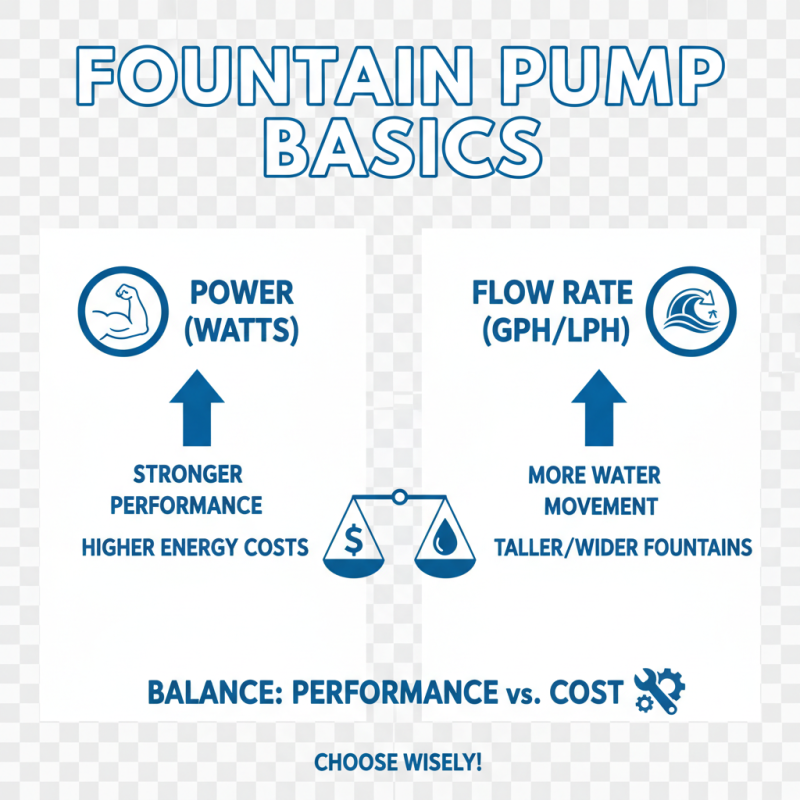
When choosing a fountain water pump, understanding power and flow rate is crucial. The pump's power determines how effectively it can move water. A higher power rating often means stronger performance. However, this can lead to higher energy costs. You must balance power requirements with your budget constraints.
Flow rate, measured in gallons per hour or liters per minute, is equally important. It indicates how fast water circulates through the fountain. A low flow rate can cause stagnant water, promoting algae growth. Conversely, excessive flow can disrupt the design and create unwanted splashes. Always consider the specific needs of your fountain.
Selecting the right combination of power and flow rate encourages a harmonious water feature. A pump with a mismatched power level will lead to disappointment. This requires careful planning and sometimes trial and error. Understanding these aspects can enhance the fountain's performance, but even small miscalculations can have significant consequences. Consider all factors before making your choice.
Durability and Material Considerations for Outdoor Use
When selecting a fountain water pump for outdoor use, consider durability and material carefully. Many pumps fail due to exposure to harsh weather. According to industry reports, over 30% of outdoor pumps break down within the first two years. This statistic highlights the importance of choosing materials that can withstand UV rays and temperature fluctuations.
A robust pump typically features corrosion-resistant materials. Stainless steel and reinforced plastics are good options. They not only last longer but also maintain performance. In contrast, cheaper materials may save money initially but lead to frequent replacements. Reports indicate that investing in high-quality materials can reduce long-term costs by up to 40%.
Some users overlook maintenance. A simple clean can extend a pump's life significantly. Leaving debris unchecked often reduces efficiency. It's crucial to assess how well a pump holds up against dirt and grime. Many users learn this the hard way after their pumps clog and fail unexpectedly. A meticulous approach to material selection and maintenance can greatly enhance the longevity of outdoor fountain water pumps.
Top 10 Fountain Water Pump Features
This bar chart illustrates the importance of various features of fountain water pumps which are crucial for durability and outdoor usability. The values represent the relative importance of each feature, highlighting aspects such as material quality and warranty period.
Maintenance Tips for Optimizing Fountain Pump Performance
Maintaining a fountain pump is essential for optimal performance. Regularly check the water level to prevent the pump from running dry. A low water level causes strain and can shorten pump life. Clean the filter and intakes every few weeks to avoid clogging. This simple task improves water flow and efficiency.
Inspect the pump for any signs of wear or damage. Small issues can escalate if ignored. Listen for unusual noises that might indicate malfunction. Replace worn parts as needed to ensure longevity. Don't forget to winterize your fountain if you live in a colder climate. Drain the pump and store it properly to avoid freezing damage.
Monitoring the pump's operation helps catch problems early. Develop a routine maintenance schedule that fits your needs. Consider using a water conditioner to reduce scale buildup. This can extend the life of the pump. Observing these simple practices creates a healthy fountain environment. However, there may be times when routine checks are forgotten. Acknowledge those moments and learn from them.
Top 10 Fountain Water Pump Features You Should Know
| Feature |
Description |
Benefits |
| Power Rating |
The wattage of the pump which indicates its efficiency. |
Higher wattage means more power to move water effectively. |
| Flow Rate |
The volume of water that the pump can move per hour. |
A higher flow rate can create a more dynamic water feature. |
| Noise Level |
The sound the pump produces during operation. |
Quieter pumps enhance the tranquility of the fountain. |
| Material |
The construction material of the pump (plastic, metal, etc.). |
Durable materials ensure longevity and resistance to corrosion. |
| Adjustable Flow |
The ability to change the rate of flow easily. |
Customizing water flow allows for different aesthetic effects. |
| Energy Efficiency |
The pump's energy consumption in relation to its output. |
Energy-efficient models reduce operational costs. |
| Self-Priming |
The ability of the pump to remove air and create a vacuum. |
Self-priming pumps are easier to operate and maintain. |
| Size and Portability |
Dimensions of the pump and whether it is easy to move. |
Smaller, portable pumps can be easier to store and install. |
| Warranty |
The manufacturer's guarantee period for the pump. |
A longer warranty provides peace of mind and protection. |
| Protection Features |
Built-in safety features to prevent damage. |
Protective features extend the life of the pump. |