Top 10 Water Pump Motors for Efficient Performance?
The efficiency of water pump motors is crucial in various industries, from agriculture to municipal water supply. As reported by the Global Pump Market Analysis, the demand for energy-efficient motors is expected to rise by 5% annually. This increase reflects a growing awareness of sustainability and cost-saving in operations.
According to industry expert Dr. Sarah McKenzie, "Investing in high-performance water pump motors can drastically reduce energy consumption." Companies are realizing the importance of selecting the right motor for their water systems. The performance of these motors directly affects not only operational costs but also environmental impact.
Many users overlook maintenance and proper motor selection. A poor choice can lead to inefficient operation, resulting in higher energy bills. Moreover, outdated models may not comply with new efficiency standards. Thus, exploring the top water pump motors is essential for anyone looking to optimize performance and ensure reliable operation.
Understanding Water Pump Motors and Their Importance
Water pump motors play a crucial role in various industries, from agriculture to municipal water supply. They are the driving force behind efficient water distribution. According to a report by the U.S. Department of Energy, roughly 20% of total electricity consumption in the United States is dedicated to pumping systems. This number highlights the significant impact that water pump motors have on energy usage and overall efficiency.
Efficient water pump motors can help reduce energy consumption significantly. Research indicates that optimizing these motors can lower energy costs by up to 30%. However, many facilities fail to maintain their systems properly. This oversight can lead to performance drops and increased operational costs. Regular inspections and upgrades are often neglected, yet they are vital for enhancing longevity and efficiency.
Moreover, the selection of appropriate motor size and type is often overlooked. Many users tend to choose based solely on initial costs, ignoring the long-term implications. A motor that is too large can waste energy, causing inefficiencies. Conversely, a motor that is too small may lead to burnout and excessive maintenance. Understanding the specific needs of a system can lead to better decisions and improved performance. An informed choice is essential for both financial and energy efficiency.
Key Features to Consider When Choosing Water Pump Motors
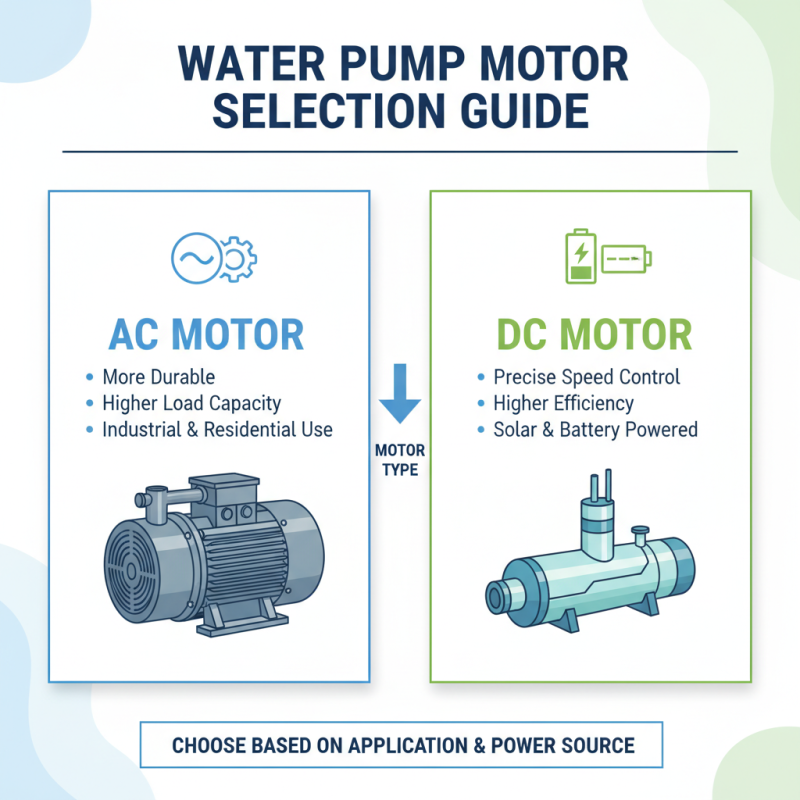
When selecting water pump motors, a few key features are essential to ensure efficient performance. Start by considering the motor type. There are two main types: AC and DC motors. AC motors tend to be more durable and can handle higher loads. However, DC motors offer better control over speed and efficiency. This choice impacts the overall performance of your pump system.
Tip: Always assess the specific needs of your application. It can help you determine the most suitable motor type.
Next, look at the horsepower rating of the motor. This should match the requirements of your pump. Underpowered motors can lead to inefficiencies and premature failure. Likewise, overpowered motors may waste energy and increase costs. Be mindful of the balance needed for optimal operation.
Another crucial aspect is the energy efficiency rating. Motors with high efficiency ratings can save significantly on energy costs over time. However, these may come at a higher upfront cost. Consider the long-term savings versus initial investments.
Tip: Research and estimate your expected usage. It’ll guide you in making a financially sound decision.
Lastly, pay attention to the build quality. Materials used in the construction can affect durability and maintenance needs. A robust design can endure various conditions but may cost more. Balancing quality with budget is necessary for sustainability.
Top 10 Water Pump Motors with High Efficiency Ratings
When selecting a water pump motor, efficiency is key. High efficiency ratings mean less energy consumption and lower utility bills. A motor that can optimize its performance is essential for any water pumping task, whether for agriculture or residential use. These motors often use advanced technology to minimize energy waste, achieving better overall performance.
Consider factors like flow rate and pressure. A motor that matches the specific needs of your system will outperform inefficient options. Sometimes, buyers overlook compatibility. Using a high-efficiency motor might not yield benefits if it doesn’t fit your existing setup. It's a good idea to consult with experts or manufacturers to ensure the best choice. A poorly matched motor can lead to frustration and wasted resources.
Efficiency is not only about numbers. It also involves ongoing maintenance. Regular check-ups can prevent efficiency loss. Some motors could work well for years without attention, while others require more frequent servicing. Reflect on how much upkeep you’re willing to commit to before you invest. Making an informed decision ensures that you have a motor that serves you well in the long run.
Top 10 Water Pump Motors with High Efficiency Ratings
| Model |
Power (HP) |
Efficiency (%) |
Voltage (V) |
Weight (lbs) |
| Model A |
1.5 |
92 |
230 |
45 |
| Model B |
3.0 |
90 |
230 |
60 |
| Model C |
2.0 |
94 |
115 |
50 |
| Model D |
1.0 |
88 |
230 |
40 |
| Model E |
2.5 |
91 |
460 |
55 |
| Model F |
4.0 |
93 |
230 |
65 |
| Model G |
1.5 |
89 |
115 |
48 |
| Model H |
3.5 |
92 |
230 |
62 |
| Model I |
2.0 |
95 |
460 |
58 |
| Model J |
1.0 |
87 |
115 |
42 |
Comparative Analysis of Performance and Durability
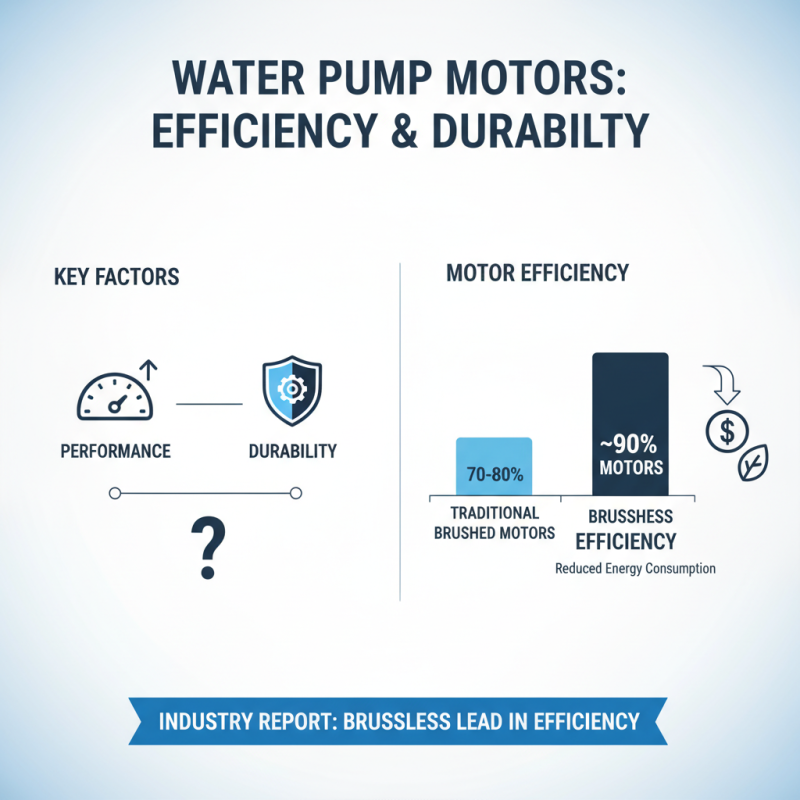
When assessing water pump motors, performance and durability are critical factors. A recent industry report indicates that efficiency can differ significantly among motor types. Brushless motors tend to offer higher efficiency, typically around 90%. This results in reduced energy consumption over time.
Durability varies widely. Many standard motors fail within a few years, especially under heavy use. In contrast, high-efficiency motors can last over a decade with proper maintenance. This longevity often translates to lower long-term costs. Regular maintenance is crucial. Some users neglect this aspect, leading to premature failures. User errors can often go unnoticed until it's too late.
Moreover, environmental factors play a role in motor longevity. Motors placed in extreme conditions often need higher specifications. This can lead to confusion. Users may not know how to choose the right motor for their specific needs. Proper education on selecting motors according to environmental conditions is often overlooked. This gap can result in inefficiencies and increased operational costs.
Maintenance Tips for Optimal Pump Motor Efficiency
Maintaining water pump motors is crucial for their longevity and efficiency. Regular inspections can help identify issues before they escalate. Check for unusual noises or vibration. These can indicate wear or misalignment. Keeping the motor clean and free of debris is essential. Dirt can obstruct cooling and lead to overheating.
Fluid levels should be regularly monitored. Low lubricant levels can cause excessive wear. Ensure that seals are intact to prevent leaks. Dirty filters can also hinder performance. Replace them when necessary to maintain optimal flow.
Don't underestimate the importance of balancing the load. An unbalanced load can lead to overheating and failure. Employees must be trained to operate pumps correctly. Regular training can help reduce human errors. Proper record-keeping about maintenance and repairs offers insight into patterns. Identifying trends can help in planning future maintenance schedules effectively.
Top 10 Water Pump Motors for Efficient Performance
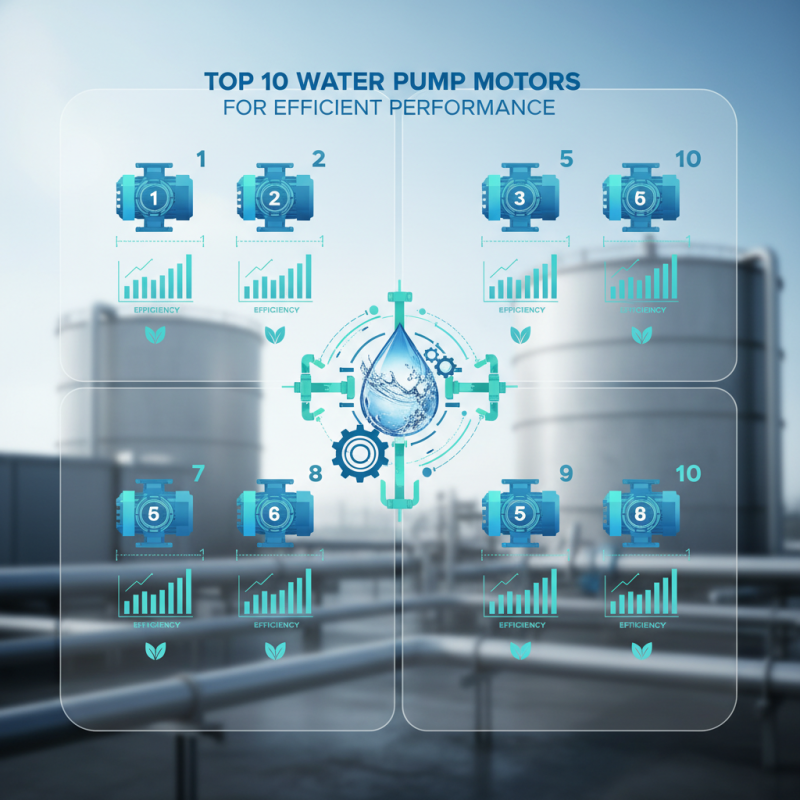
This chart illustrates the efficiency ratings (in percentage) of the top 10 water pump motors based on performance metrics. The data reflects a variety of factors such as energy consumption, flow rate, and operating conditions.