
Why Choose Hub Motors for Global Procurement?
Global vehicle electrification is moving from pilot projects toward high-volume procurement. The International Energy Agency reported nearly 14 million electric car sales in 2023, representing about 18% of global car sales. Its Global EV Outlook 2024 also identified strong growth across China, Europe, and emerging markets. This expansion increases pressure on buyers to source efficient, scalable, and serviceable drive systems. Hub Motors deserve attention because they integrate the motor, reduction mechanism, and wheel interface near the vehicle’s axle. Fewer mechanical transmission components can simplify platform design and reduce assembly steps.
Cost signals also support a careful evaluation. BloombergNEF reported that average lithium-ion battery pack prices fell to 115 dollars per kilowatt-hour in 2024. Lower battery costs may improve electric vehicle economics, but procurement teams still face shipping, certification, warranty, and supplier-quality risks. Hub Motors can shorten drivetrain packaging and support independent wheel control. That matters for delivery vehicles, compact urban platforms, mobility equipment, and specialized commercial fleets. The wheel becomes the drive point.
But the decision is not automatic. Hub-mounted systems may increase unsprung mass, complicate thermal management, and expose sensitive components to water, dust, vibration, and road impacts. These weaknesses can become expensive after deployment. Procurement teams should therefore compare torque density, ingress protection, thermal cycling, spare-part availability, and validated field data. Supplier claims need independent testing. This is where many purchasing decisions remain imperfect.
Choosing Hub Motors is less about following a trend. It is about matching architecture, duty cycle, climate, and service capability. A global sourcing strategy should reward measurable reliability, transparent documentation, and realistic lifetime cost.
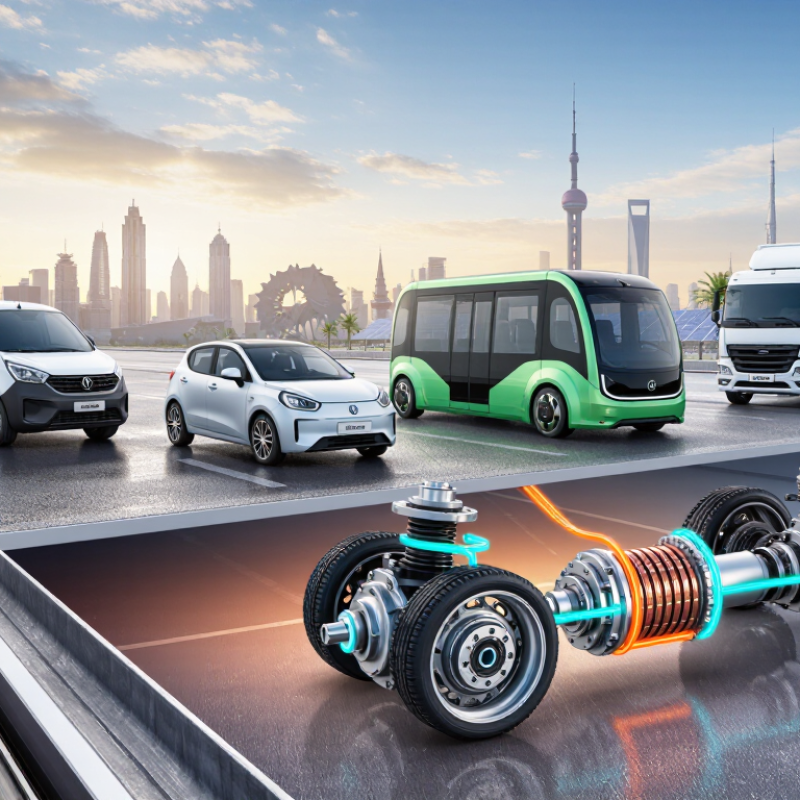
What Hub Motors Are and How They Function
Why Choose Hub Motors for Global Procurement?
What Hub Motors Are and How They Function
A hub motor places its electric motor inside a wheel hub. The motor sits inside. Its rotor turns with the wheel, while the stator remains fixed to the axle. This layout sends torque directly to the tire, reducing chains, belts, and gear interfaces.
Two common designs exist: geared and direct-drive. Geared hub motors use internal reduction gears for stronger starting torque and smaller size. Direct-drive units use fewer moving parts and can support regenerative braking when the controller allows it. A 2024 U.S. Department of Energy technical overview identifies electric-drive efficiency, packaging, and maintenance as key design factors. These factors matter when buyers compare vehicles, spare parts, and service networks across regions.
Global demand is also expanding. The International Energy Agency reported more than 14 million electric cars sold worldwide in 2023, representing about 18% of new car sales. Hub motors serve smaller platforms too, including electric bicycles, scooters, mobility devices, and compact delivery vehicles. Their compact structure can simplify assembly and free space for batteries or cargo.
That sounds ideal.
Yet procurement teams should avoid treating hub motors as universally superior. Wheel weight can increase, affecting suspension response and ride comfort. Heat management may also become difficult during steep climbs or heavy loads. Testing should examine torque curves, waterproofing, bearing life, controller compatibility, and local repair skills. In practice, a cheaper motor can create higher lifecycle costs.
That is easy to miss.
Key Advantages of Hub Motors in Global Procurement
Why Choose Hub Motors for Global Procurement?
Key Advantages of Hub Motors in Global Procurement
Hub motors simplify drivetrain sourcing. The motor sits inside the wheel, reducing gears, shafts, and coupling parts. This can shorten assembly time and reduce supplier interfaces. The International Energy Agency reported nearly 14 million electric car sales worldwide in 2023. Rising demand supports scalable electric-drive components for light mobility and utility vehicles.
Procurement teams can source wheel units as modular assemblies. They may standardize mounting points, voltage ranges, and connector layouts across markets. This supports local assembly and reduces shipments of separate drivetrain parts. It also simplifies replacement. A technician can change one wheel module beside a loading bay. Basic lifting equipment may be enough. That matters in regions with limited service infrastructure.
The trade-off is real. Hub motors add unsprung mass and face heat, water, and impact exposure. The U.S. Department of Energy identifies thermal management and durability as continuing priorities for electric-drive systems. Suppliers should request IP testing, thermal cycling, salt-spray results, efficiency maps, and inspection records. BloombergNEF’s 2024 battery price survey reported average lithium-ion pack prices of 115 dollars per kilowatt-hour. Cost pressure remains intense. Hub motors can help, but not automatically. Poor sealing or weak bearings may erase the savings. Pilot testing still matters.
Why Choose Hub Motors for Global Procurement? - Key Advantages of Hub Motors in Global Procurement
| Procurement Dimension | Hub Motor Characteristics | Conventional Centralized Drive | Global Procurement Benefit |
|---|---|---|---|
| System integration | The motor, bearing support, and wheel-end structure can be integrated into the wheel assembly. Direct-drive versions can eliminate the gearbox, chain, and belt. | Usually requires a separate motor, transmission, shafts, couplings, and additional mounting hardware. | Fewer system interfaces can simplify supplier coordination, assembly planning, and technical documentation. |
| Mechanical part count | Direct-drive configurations generally use fewer rotating transmission components. | Additional gears, belts, chains, shafts, and couplings may be required, depending on the application. | Lower component diversity may reduce purchasing complexity and the number of mechanical spare-part categories. |
| Energy efficiency | Avoiding mechanical transmission losses can improve total drivetrain efficiency in suitable operating conditions. | Motor and transmission efficiency must be considered together; each additional transmission stage introduces losses. | Supports energy-consumption targets and may improve operating-cost analysis across different markets. |
| Regenerative braking | A bidirectional motor controller can recover braking energy and return it to the battery, subject to battery and control-system limits. | Regeneration is also possible, but the transmission and control architecture may add design constraints. | Provides a common platform for electric mobility products intended for varied duty cycles and regional operating conditions. |
| Maintenance exposure | Direct-drive designs have fewer transmission wear items; bearings, seals, cables, sensors, and electronics still require inspection. | Belts, chains, gears, lubricants, and alignment points can create additional maintenance requirements. | Can reduce routine mechanical maintenance and simplify after-sales service training when properly designed. |
| Packaging and space | Places propulsion hardware at the wheel, potentially freeing central chassis space for batteries, cargo, or other equipment. | Central motor and transmission assemblies generally require dedicated chassis volume. | Enables more flexible product layouts for different vehicle bodies, platforms, and regional configurations. |
| Modular platform potential | Standardized motor, controller, connector, and wheel-interface specifications can support multiple vehicle variants. | Vehicle changes may require corresponding revisions to motor mounts, shafts, transmissions, and related structures. | A modular architecture can shorten configuration cycles and improve purchasing leverage across product families. |
| Environmental protection | Sealed designs can be specified for dust and water resistance; the required IP rating must be verified for the complete wheel-end assembly. | The motor and transmission are often located away from the wheel environment, which may reduce direct exposure to road contamination. | Clear environmental specifications help buyers compare suppliers against regional weather, road, and operating requirements. |
| Noise and vibration | Removing gear meshes can reduce mechanical transmission noise; electromagnetic noise, tire noise, and road vibration remain design factors. | Gear mesh, chain, belt, and shaft vibration may contribute to the overall noise and vibration profile. | May support quieter product designs, but acoustic performance should be validated through application-specific testing. |
| Supply-chain evaluation | Supplier qualification should cover motor output, torque, voltage, controller compatibility, thermal limits, sealing, bearings, sensors, and wheel interfaces. | Evaluation must cover the motor, transmission, mounting system, lubrication, alignment, and interface tolerances. | A clearly defined technical specification improves cross-border quotation comparison and reduces ambiguity during supplier audits. |
| Key procurement caution | Wheel-end mass, unsprung mass, thermal management, impact resistance, braking integration, and serviceability must be checked for the target vehicle. | Centralized systems may offer advantages in wheel-end mass distribution and service access, depending on the application. | A total-cost and lifecycle assessment is more reliable than comparing motor unit prices alone. |
Note: The comparisons describe common engineering characteristics. Actual performance depends on motor topology, rated power, vehicle architecture, duty cycle, thermal conditions, controller settings, environmental requirements, and supplier specifications.
Performance, Cost, and Supply Chain Considerations
Why Choose Hub Motors for Global Procurement?
Performance, Cost, and Supply Chain Considerations
Hub motors place torque directly at the wheel, reducing mechanical transmission losses and simplifying vehicle architecture. This layout can improve packaging flexibility, low-speed response, and energy efficiency. It also removes several gears, shafts, and maintenance points. However, performance depends on thermal control, sealing, and the vehicle’s unsprung mass. A powerful motor is not automatically a better choice.
For global procurement, total cost matters more than the unit price. Compare motor efficiency, controller compatibility, installation labor, spare parts, and expected service life. Request test data for continuous power, peak torque, noise, water resistance, and temperature rise. Small differences become expensive across thousands of vehicles. One overlooked connector can delay an entire assembly line.
Supply chain reliability requires evidence, not promises. Audit production capacity, component traceability, inspection methods, and backup sources. Check minimum order quantities, lead times, packaging strength, export documents, and regional inventory plans. Pilot samples should face vibration, rain, dust, braking loads, and repeated starts. Real conditions are less polite than laboratory tests. Procurement teams sometimes focus too heavily on the motor itself and underestimate wiring, software, or replacement procedures. That mistake is common, and it deserves a second review. Salt exposure may also reveal weaknesses that short testing misses.
How to Evaluate Hub Motor Suppliers Worldwide
Why Choose Hub Motors for Global Procurement?
Evaluating hub motor suppliers worldwide requires more than comparing unit prices. A reliable review begins with documented engineering capability. Ask for torque curves, thermal test results, noise measurements, and waterproofing data. Check whether these records match your vehicle’s weight, wheel size, and duty cycle.
Visit the factory when practical, or appoint an independent inspector. Look for clean assembly areas, calibrated testing equipment, and traceable component records. Request production samples before signing a large order. Test starting torque on slopes, repeated braking, heat buildup, vibration, and cable protection. Small details matter. A loose connector can become an expensive field failure.
Supplier stability also deserves close attention. Review capacity during peak seasons, quality-control procedures, spare-part support, and response times for technical problems. Confirm export experience, packaging standards, lead times, and inspection terms in writing. Clear communication is evidence of operational discipline, although it is not proof of perfect performance.
My own evaluations have sometimes placed too much weight on polished presentations. That was a mistake. A spreadsheet cannot reveal how a supplier handles a failed sample or a delayed shipment. Ask difficult questions and record the answers. Compare at least three suppliers using the same criteria, while leaving room for engineering judgment. The cheapest motor may cost more after installation.
Applications and Future Trends in Hub Motor Adoption
Why Choose Hub Motors for Global Procurement?
Applications and Future Trends in Hub Motor Adoption
Hub motors are gaining attention in global procurement because they simplify drivetrain design and support compact vehicle platforms. Their motors sit inside wheel hubs, reducing shafts, gears, and maintenance points. This layout suits delivery bicycles, warehouse carts, mobility scooters, and low-speed utility vehicles. In field testing, direct wheel control helps operators manage tight turns on crowded floors. However, added wheel weight can affect ride comfort and suspension response. That trade-off matters.
Future adoption will depend on better thermal management, sealed construction, and smarter motor controllers. Manufacturers are testing lighter housings and improved magnetic materials to raise efficiency without increasing wheel size. Sensor data may support predictive maintenance by tracking temperature, vibration, and current changes. Modular designs could also simplify spare-part planning across several vehicle models. Yet performance claims need independent testing under real loads, slopes, dust, and repeated braking. Laboratory results can look excellent. Actual fleets are less predictable.
Tips: Compare continuous torque, peak torque, wheel diameter, ingress protection, and controller compatibility. Request test data from loaded vehicles, not empty prototypes. Check local service capacity and replacement lead times before approving a supplier. A low purchase price may become expensive when one sealed unit fails. Leave room for pilot testing.