
Why Choose a Medical Syringe Pump for Accurate Infusion?
When a medication must move slowly and precisely, a Medical Syringe Pump offers control that gravity infusion often cannot provide. Its motor advances the syringe plunger in measured increments. This supports steady delivery for newborns, intensive-care patients, and patients receiving potent medicines.
The need is practical, not merely technical. The U.S. Food and Drug Administration reported more than 56,000 infusion-pump adverse-event reports, 710 deaths, and 87 recalls between 2005 and 2009. These figures show why accuracy, alarms, maintenance, and staff training matter together. A pump can display 2.0 mL per hour, yet the real result still depends on syringe compatibility, tubing condition, occlusion detection, and correct programming. Small details matter.
Infusion-technology researcher Karen A. Giuliano, PhD, RN, FAAN, has emphasized, “Smart pumps are only as smart as the drug library they use.” Her observation remains relevant for Medical Syringe Pump selection. Digital controls may reduce calculation mistakes, but they cannot replace clinical judgment. The World Health Organization also identifies medication errors as a major source of avoidable harm, reinforcing the value of dependable infusion practices.
A suitable Medical Syringe Pump should provide stable low-flow performance, clear pressure alarms, battery backup, and simple operation. IEC 60601-2-24 also provides a recognized framework for infusion-pump safety and essential performance. Still, no device is perfect. Users must verify settings, inspect the syringe, and reassess therapy when conditions change. That human step is easy to overlook. It should not be.
What Is a Medical Syringe Pump?
Why Choose a Medical Syringe Pump for Accurate Infusion?
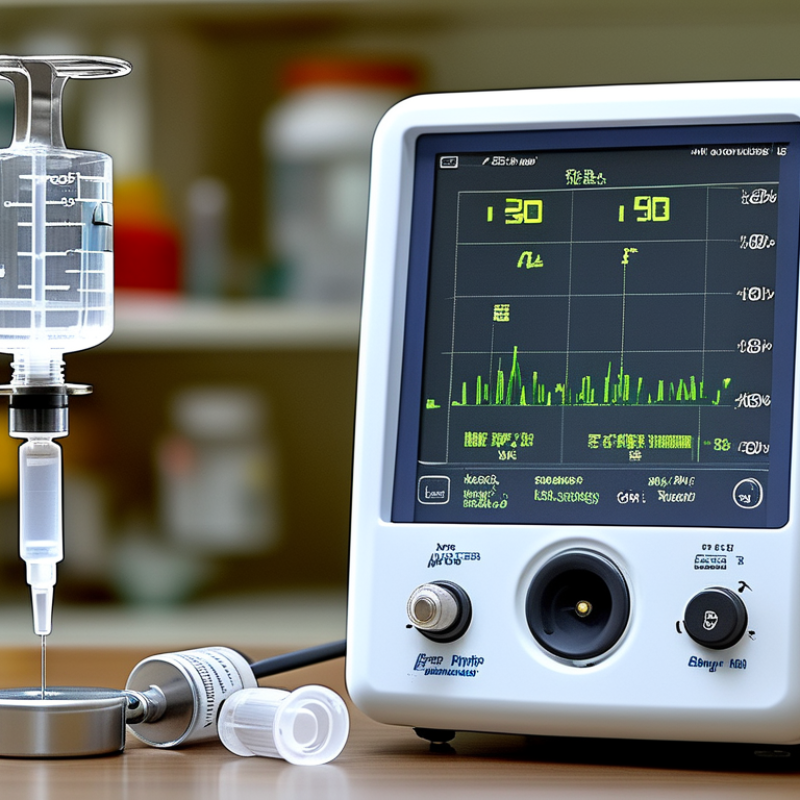
A medical syringe pump is a compact device that delivers medication or fluids through a syringe at a controlled rate. Its motor moves the syringe plunger gradually and evenly. This design supports precise infusion when very small volumes matter. It is often used in critical care, anesthesia, neonatal care, and laboratory procedures.
Unlike manual injection, the pump can maintain a selected flow rate for an extended period. A clinician may set the rate in milliliters per hour and monitor the remaining volume on the display. The system can also provide alerts for occlusion, low battery, or an empty syringe. These alerts are helpful, but they do not replace observation. Incorrect syringe placement, poor connections, or wrong settings can still affect delivery. Small mistakes matter.
Tips: Confirm the prescribed rate and syringe size before starting. Check the tubing for air, leaks, and bends. Secure the syringe firmly, then watch the first few minutes closely. Record the setup and response. Calibration and routine maintenance should follow qualified clinical procedures. A pump improves control, not judgment. That distinction is easy to forget.
How Does a Syringe Pump Deliver Precise Infusions?
A medical syringe pump delivers fluid by moving a syringe plunger at a controlled speed. A motor drives a screw mechanism, translating small rotations into steady linear movement. The programmed rate determines how far the plunger travels each minute. This supports accurate delivery, especially when patients need small volumes or slow infusions. It is useful in critical care, neonatal care, and medication titration.
Precision depends on more than the motor. The pump identifies syringe size and applies calibrated force to the plunger. Pressure sensors can detect resistance from a blocked line or a closed clamp. Alarms then alert clinicians before flow becomes unsafe. Anti-bolus controls may reduce the extra fluid released after an occlusion clears. Small details matter.
At the bedside, staff should inspect the syringe, tubing, connections, and selected settings. Air bubbles, loose fittings, and flexible tubing can affect delivery accuracy. Viscous solutions may create additional resistance. The stated rate is not always the delivered rate. This is easy to overlook. Regular maintenance and calibration support reliable performance, while independent checks help catch programming errors. A syringe pump improves control, but it does not replace clinical judgment or careful observation.
Which Features Ensure Accurate and Safe Medication Delivery?
A medical syringe pump supports precise, controlled medication delivery when small volume changes matter. Its accuracy depends on more than a digital display. The device should provide stable flow, clear rate and dose settings, and reliable occlusion detection. Air-in-line monitoring is also important for intravenous therapy. IEC 60601-2-24 addresses safety requirements for infusion pumps. The FDA reported more than 56,000 infusion-pump adverse event reports and 87 recalls from 2005 to 2009. These figures show why safety features deserve careful attention.
Tips: Check the syringe size, medication concentration, and programmed dose before connection. Use dose-error reduction software when available. Confirm alarm limits during handover. Keep the pump visible beside the patient, not hidden behind bedding. A second check helps, but it cannot replace clinical judgment.
Useful pumps record programming changes, alarm history, and battery status. These records support review after an unexpected interruption. Automatic drug libraries can limit unsafe doses, while pressure monitoring may reveal a blocked line before harm occurs. The World Health Organization estimates medication errors cost about US$42 billion globally each year, according to Medication Without Harm. Still, no pump removes every risk. Alarms may be ignored, and settings can be entered incorrectly. That uncomfortable point needs regular reflection. Staff training, maintenance records, and realistic bedside practice remain essential. Even a highly accurate pump becomes unsafe when the syringe is misidentified or the tubing is kinked.
How to Select and Set Up the Right Syringe Pump?
Choosing and setting up the right syringe pump requires more than checking its flow-rate range. Match the pump with the prescribed syringe size and the medication’s required delivery rate. Confirm compatibility with the syringe manufacturer’s instructions. Review occlusion sensitivity, alarm volume, battery status, and available power options. Clear displays help reduce mistakes during busy clinical work. A pump should also be easy to clean and stable on a pole or bedside surface.
Tips: Inspect the barrel and plunger before use. Use a new, undamaged syringe. Prime the line carefully. Remove visible air. Check the programmed rate twice. Ask another qualified clinician to verify critical settings.
During setup, load the syringe according to the device instructions. Ensure the plunger is fully engaged and the tubing is secured. Enter the prescribed volume and rate slowly. Do not rely on memory or familiar button sequences. A common oversight is forgetting the correct syringe size, which can affect delivery accuracy. Before connecting the line, confirm the patient, medication, concentration, route, and settings against the clinical order. Watch for unusual resistance, repeated alarms, or unexpected changes in the syringe position. These signs require prompt assessment by trained staff. Even experienced users can miss a small detail when interruptions occur. A short pause before starting may prevent a larger problem.
Why Choose a Medical Syringe Pump for Accurate Infusion?
How to Select and Set Up the Right Syringe Pump
Nominal delivery volume over 60 minutes at selected flow rates
A syringe pump delivers fluid at a programmed rate, calculated as: volume delivered = flow rate × time. For accurate infusion, select a pump that supports the required syringe size and flow-rate range, confirm the syringe specification, remove air from the line, secure the syringe correctly, and verify the programmed settings before starting.
What Are the Main Clinical Uses and Limitations?
Why Choose a Medical Syringe Pump for Accurate Infusion?
A medical syringe pump delivers medication at a controlled rate, often in very small volumes. This precision supports neonatal care, intensive care, anesthesia, and outpatient treatment. Clinicians may use it for insulin, sedatives, analgesics, vasopressors, or concentrated antibiotics. Small volumes matter. A steady rate can reduce sudden dose changes and fluid overload, especially in fragile patients.
Its value depends on correct setup. Staff must confirm the prescription, syringe size, concentration, tubing, and programmed rate. Independent checks are sensible for high-risk medicines. At the bedside, the pump should be observed for occlusion alarms, empty syringes, loose connections, and unexpected pressure. Errors still happen. A pump cannot detect every programming mistake or confirm that the drug reached the patient.
Limitations deserve equal attention. Syringe pumps are unsuitable for every rapid, high-volume infusion. Flow may become less reliable at extremely low rates, during startup, or when the syringe nears empty. Viscous solutions, tubing resistance, trapped air, and mechanical wear can affect delivery. Battery loss can interrupt treatment. Extravasation may also occur without an immediate alarm. The device does not replace clinical assessment, line checks, or monitoring of the patient’s response. Precision can create false confidence, and that is an easy point to overlook.
Why Choose a Medical Syringe Pump for Accurate Infusion? - What Are the Main Clinical Uses and Limitations?
| Clinical Dimension | Typical Application | Representative Data | Why a Syringe Pump Is Useful | Main Limitation or Risk |
|---|---|---|---|---|
| Neonatal and pediatric care | Small-volume fluids, electrolytes, analgesics, and carefully diluted medicines | Commonly used for low-flow delivery; the selected range depends on the pump, syringe size, drug concentration, and patient weight | Supports controlled delivery when the required volume is small and dosing errors may have a significant clinical effect | Start-up delay, compliance in the syringe and tubing, and line dead space can affect very low-rate delivery |
| Critical care and vasoactive therapy | Continuous infusion of vasopressors, inotropes, sedatives, and analgesics | Often selected when dose changes must be gradual and closely matched to the prescribed concentration and patient response | Provides programmable rate control and can reduce manual adjustments during continuous therapy | An occlusion or empty syringe can interrupt delivery; alarm response and backup planning are essential |
| Anesthesia and procedural sedation | Titrated administration of anesthetic, sedative, or analgesic medicines | Useful for continuous or intermittent delivery where the rate is adjusted according to monitored clinical effect | Enables repeatable rate changes and helps maintain a consistent infusion profile | Pump precision does not replace patient monitoring, dose calculation, or airway and respiratory-risk management |
| Oncology and specialty drug delivery | Selected chemotherapy, biologic, investigational, and other small-volume infusions | May be used when a prescribed volume and duration require controlled administration; drug compatibility must be verified | Supports defined infusion times and reduces reliance on gravity-driven flow | Not every syringe, drug, solvent, or administration set is compatible; hazardous-drug procedures still apply |
| Home care and palliative care | Subcutaneous or intravenous delivery of symptom-control medicines under an approved care plan | Continuous or intermittent administration may be prescribed, depending on the medicine and clinical setting | Can provide controlled delivery when frequent manual dosing is impractical | Requires caregiver training, battery management, site assessment, and a clear escalation plan for alarms or symptoms |
| Flow-rate capability | Low-volume, controlled infusion applications | Many systems provide programmable rates from approximately 0.1 mL/h to several hundred mL/h; the exact range is model- and syringe-dependent | The motor-driven mechanism provides more consistent delivery than an unregulated gravity setup | The specified accuracy applies only under stated conditions; low rates, small syringes, temperature, back pressure, and setup can affect performance |
| Volume and duration | Infusions where the available volume is limited or the duration is precisely prescribed | The delivered volume is limited by syringe capacity; common clinical syringe sizes range from a few milliliters to approximately 60 mL | Allows predictable use of a prepared syringe and supports timed delivery | Frequent syringe changes may be necessary for longer infusions, creating interruption and contamination risks if technique is poor |
| Occlusion detection | Detection of blocked tubing, closed clamps, kinked lines, or resistance downstream | Alarm thresholds and detection delay vary by device, flow rate, tubing, and pressure conditions | Provides an additional safety alert compared with simple manual or gravity infusion | Pressure may build before the alarm, and a post-occlusion bolus can occur when the obstruction is released |
| Accuracy and dose safety | Medication delivery requiring reproducible programmed rates | Accuracy is commonly specified as a percentage under defined test conditions; actual clinical performance depends on setup and operating conditions | Reduces variability caused by changing fluid height and manual roller-clamp adjustment | Correct programming, concentration verification, syringe identification, and independent clinical checks remain necessary |
| Portability and power | Transport within hospitals, ambulances, or selected home-care environments | Battery runtime varies with model, rate, pressure, alarms, and battery condition; mains power may be required for extended use | A compact format can support controlled infusion during patient movement | Battery depletion, mechanical damage, poor mounting, or incorrect transport setup can interrupt therapy |
| Overall clinical limitation | Use in protocols requiring precise, low-volume infusion | Best suited to small-volume administration rather than rapid delivery of large fluid volumes | Offers controlled mechanical delivery, programmable rates, and alarm-based monitoring | It is not fail-safe: clinical supervision, compatible consumables, preventive maintenance, and standardized operating procedures are still required |
Note: The numerical ranges and performance statements above are representative clinical values, not universal specifications. Always follow the applicable device instructions, syringe compatibility requirements, medication guidelines, and institutional infusion protocols.