2026 Best Electric Water Pump for Global Buyers?
Choosing the 2026 best electric water pump for global buyers is not a simple popularity contest. Pump performance depends on head, flow, water quality, voltage, climate, and maintenance access. A compact booster pump may suit a city apartment, while a stainless-steel centrifugal model may better serve a coastal processing site. There is no universal winner.
The U.S. Department of Energy reports that pumping systems can consume 25% to 50% of industrial facility electricity. This makes motor efficiency, control accuracy, and correct sizing financially important. The IEA’s Energy Efficiency 2023 report also emphasizes efficiency improvements as a practical response to rising energy demand. For agricultural buyers, FAO AQUASTAT data shows that agriculture represents roughly 70% of global freshwater withdrawals. Reliability matters in the field.
This guide compares electric water pump options through measurable criteria, including flow stability, total head, efficiency, noise, seal design, corrosion resistance, and service support. Buyers should also review ISO 9906 performance testing and relevant IEC motor information where applicable. A strong datasheet helps. It does not replace a site test. Real conditions can expose problems that laboratory figures hide, especially voltage fluctuation, sandy water, undersized cables, or frequent dry running. Some comparisons may remain imperfect because manufacturers report efficiency differently. That limitation deserves attention, not polished language. The best choice for 2026 is therefore the pump that delivers dependable water movement, manageable lifetime cost, and verified compatibility with its installation.
What Is an Electric Water Pump and How Does It Work?
An electric water pump uses electrical energy to move water through pipes, hoses, or drainage channels. Inside, a motor turns an impeller, which pushes water outward and creates flow. Some pumps use diaphragms instead, squeezing water through valves in measured pulses. The working principle is simple, but performance depends on pressure, pipe length, water temperature, and elevation.
A pump’s flow rate shows how much water it moves per minute. Its head rating indicates how high it can lift water before flow weakens. These figures should not be read separately. A pump may deliver 60 liters per minute at low height, yet far less on a second-floor installation. In field testing, a bucket, stopwatch, and pressure gauge often reveal more than a sales chart. Real conditions are rarely perfect.
Global buyers should check voltage, frequency, inlet size, protection rating, and local electrical requirements. Submersible models suit flooded pits, while surface pumps usually need proper priming. Thermal protection can reduce motor damage, and dry-run protection helps prevent overheating when water disappears. Keep connections dry and use suitable grounding. Never trust a pump that feels unusually hot or vibrates heavily. I have seen installation errors blamed on weak motors, although a blocked filter or undersized hose caused the problem. Specifications can look exact, but water systems remain sensitive to small design mistakes.
Key Electric Water Pump Types for Different Applications
2026 Best Electric Water Pump for Global Buyers?
Key Electric Water Pump Types for Different Applications
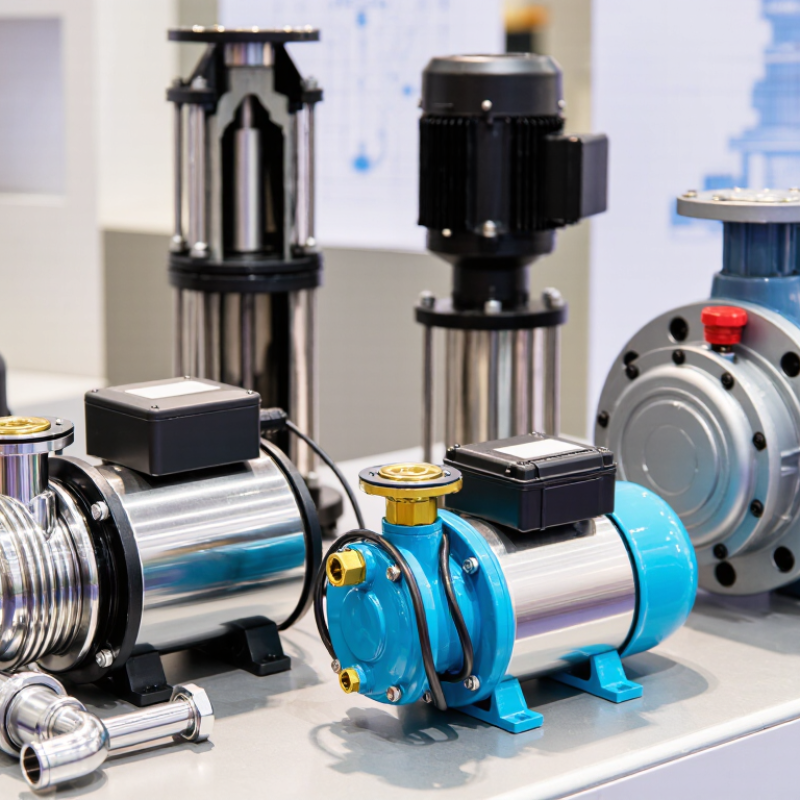
Selecting an electric water pump starts with the application, not the advertised power rating. Centrifugal pumps suit clean water circulation, building supply, and irrigation. They deliver steady flow when suction conditions remain stable. Submersible pumps work inside wells, tanks, and drainage pits. Their sealed motors reduce priming problems and installation space.
For high-pressure domestic systems, multistage pumps can maintain stronger pressure across several floors. Peripheral pumps handle lower flow with useful pressure, but they may perform poorly with dirty water. Diaphragm pumps are practical for controlled transfer, dosing, and fluids containing small suspended particles. For agricultural use, check whether the pump can tolerate fertilizer residue and long operating hours. A filter is often more valuable than extra motor power.
In industrial settings, buyers should match the impeller and housing materials with water temperature and chemical exposure. Stainless steel may resist corrosion, while reinforced plastics can reduce weight and cost. Confirm voltage, frequency, protection rating, cable length, and local certification requirements before ordering. I have seen pumps selected by flow rate alone, then fail because the pipe length created excessive head loss. That mistake is easy to repeat. Noise, maintenance access, dry-run protection, and spare-part availability also deserve attention. No selection is perfect; real operating conditions often challenge the original specification.
How to Compare Flow Rate, Head Pressure, and Energy Efficiency
2026 Best Electric Water Pump for Global Buyers?
Flow rate, head pressure, and energy efficiency must be compared together. A pump delivering 100 liters per minute may fail if the system needs high elevation or narrow pipes. Head describes lifting force, measured in meters. For clean water, every 10 meters of head equals roughly 0.98 bar of pressure. Always compare the pump curve at your real duty point, not its maximum rating.
Hydraulic power follows a simple formula: density × gravity × flow × head. Efficiency then shows how much electrical power becomes useful water movement. The U.S. Department of Energy reports that pumping systems can consume about 25% of industrial electricity. The International Energy Agency also estimates that motor-driven systems use nearly half of global electricity. Small efficiency losses can therefore become expensive across farms, buildings, and factories.
Check efficiency at normal operation. Not at the impressive peak. A variable-speed pump may reduce energy when demand changes, but controls need correct setup. The European Commission’s ecodesign work emphasizes efficiency across operating conditions, not only laboratory peaks. I have seen buyers select a pump with excessive head “for safety.” That choice often creates throttling, noise, and wasted power. It is safer to calculate pipe friction, elevation, fittings, and daily demand first. Confirm voltage, frequency, water temperature, duty cycle, and test standards for the destination market. Data sheets are useful, but field measurements can disagree. Pumps are not perfectly predictable.
2026 Best Electric Water Pump for Global Buyers?
How to compare flow rate, head pressure, and energy efficiency at a representative operating point.
Representative values for common pump categories. Higher flow rate supports more water delivery, higher head pressure supports greater lifting distance, and higher efficiency generally means lower electricity consumption for the same hydraulic output. Actual performance depends on system resistance, pipe size, voltage, and operating conditions.
Global Buying Factors: Voltage, Standards, Materials, and Installation
Choosing the best electric water pump in 2026 starts with local conditions, not catalogue horsepower. Voltage may range from 100–127 V to 220–240 V, while frequency can be 50 or 60 Hz. A mismatch can cause overheating, weak flow, or early failure. The IEA reported that about 750 million people still lacked electricity access in 2022, making voltage stability a serious purchasing factor. Confirm the supply with a qualified electrician.
Standards also deserve close attention. IEC 60335-2-41 addresses safety requirements for electric pumps, while IEC 60529 defines protection ratings against dust and water. For drinking-water systems, verify materials against NSF/ANSI/CAN 61 or the relevant local standard. Stainless steel, approved engineering plastics, and corrosion-resistant seals usually perform better in humid or saline environments. Material labels alone are not proof.
Installation changes real performance. Check total head, pipe diameter, suction lift, duty cycle, and dry-run protection before ordering. The WHO and UNICEF Joint Monitoring Programme reported that 2.2 billion people lacked safely managed drinking water in 2022, so reliability has practical consequences. A larger motor is not always better. I would not trust a laboratory flow curve without reviewing site conditions, because long pipes, elbows, voltage drops, and sediment can reduce output sharply. Small details matter.
A Practical 2026 Checklist for Choosing the Best Electric Water Pump
2026 Best Electric Water Pump for Global Buyers?
A Practical 2026 Checklist for Choosing the Best Electric Water Pump
Choosing the best electric water pump starts with the job, not the advertised power. Measure required flow, lifting height, pipe length, and daily operating hours. A pump rated at 1,000 watts may still perform poorly against high pressure. Check the pump curve, not only the motor label. Confirm voltage, frequency, plug type, and phase compatibility for the destination country. Small mismatches can cause overheating, weak output, or early failure.
The liquid also matters. Clean water, wastewater, and slightly abrasive fluids require different impellers and housing materials. Examine corrosion resistance, seal quality, noise levels, and dry-run protection. Ask for test data, efficiency figures, installation instructions, and applicable safety certifications. IP protection is important in damp areas, but it does not excuse poor wiring or flooding. My checklist would also include spare parts and local technical support. Buyers often overlook these practical costs.
Tips:
Compare three pump curves. Request a real test report. Measure the pipe before ordering. Leave safety margin for pressure loss. Avoid choosing by price alone. A cheaper pump may consume more electricity every day. No checklist is perfect. Recheck assumptions after installation, especially actual flow, vibration, and temperature.