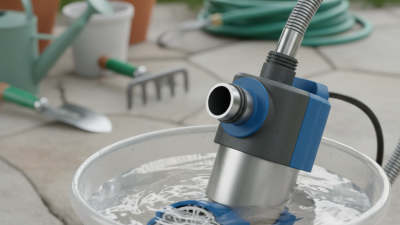
How to Choose a Small Submersible Pump in 2026?
Choosing a small submersible pump in 2026 is not simply a matter of picking the cheapest model online. The right choice depends on water depth, flow rate, discharge height, liquid quality, power supply, and expected operating time. A pump lifting clear rainwater from a 40-centimeter pit faces a different task from one handling muddy basement water. Small details matter. A clogged inlet can stop a pump within minutes.
Pump-system specialist Dr. Heinz P. Bloch offers a useful principle: “The pump must be selected for the system, not for the catalog page.” This idea remains important when comparing compact pumps with similar wattage ratings. A higher power number does not always mean better performance. Check the actual flow at the required head, not the maximum flow printed on the box. Also examine cable length, float-switch reliability, thermal protection, noise, corrosion resistance, and replacement-part availability.
This guide explains how to evaluate each factor with practical judgment. It also considers efficiency, portability, maintenance, and real installation conditions. Some product descriptions remain vague. That is a warning sign. Specifications can look impressive while hiding weak performance at higher lift heights. Measure your pit, estimate the water volume, and allow a sensible safety margin. Even careful buyers can misjudge sediment, hose friction, or frequent cycling. That uncertainty deserves attention. A dependable small submersible pump should match the job closely, operate safely, and remain serviceable after the first season.
Define the Job: Drainage, Fountain, Sewage, or Clean-Water Duty
How to Choose a Small Submersible Pump in 2026?
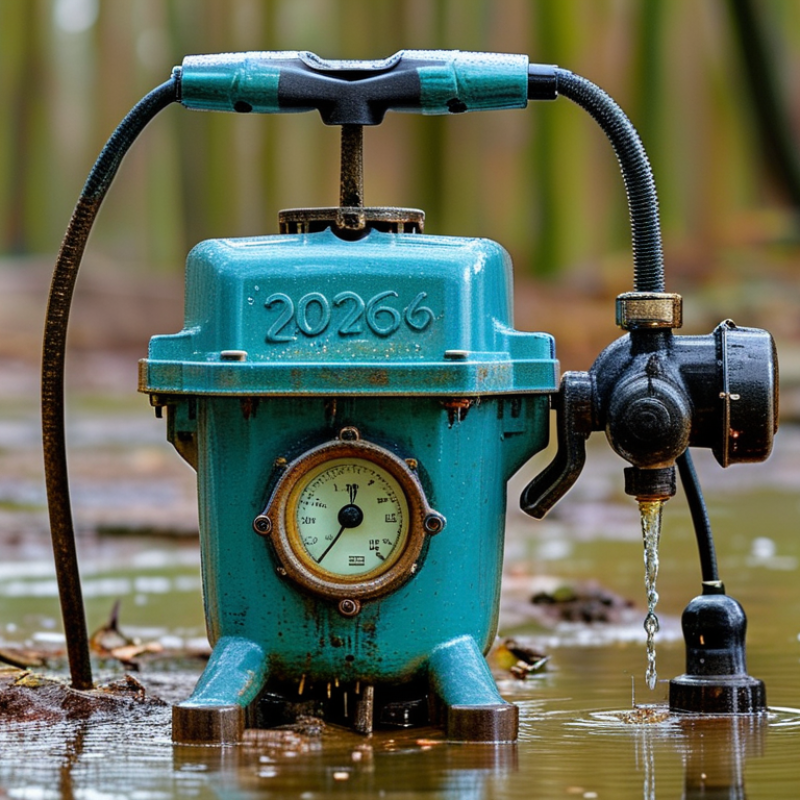
Define the job before comparing flow rates. Clean-water duty suits a basement tray, rain barrel, or shallow tank with minimal debris. Drainage pumps handle muddy water, leaves, and small stones, but their intake can still clog. Fountain pumps need quiet, continuous circulation and stable operation at low head. Sewage pumps require a larger solids passage and a design suitable for intermittent wastewater movement. I once chose a pump by horsepower alone. That was a costly mistake.
Measure vertical lift from the water surface to the discharge point. Then add hose friction, bends, and a check valve. A pump rated at 100 liters per minute may deliver far less at three meters of head. The U.S. Department of Energy notes that pump-system efficiency depends on the complete system, not only the motor. For sewage applications, the U.S. Environmental Protection Agency estimates 23,000–75,000 sanitary sewer overflows occur annually in the United States. Reliable solids handling matters.
Check the duty cycle, cable length, float-switch range, and minimum water level. For fountains, continuous-duty ratings and low noise are more important than peak flow. For drainage, automatic restart and thermal protection can prevent unattended flooding. For sewage, confirm the permitted solids size and discharge-pipe diameter. IEC 60335-2-41 covers safety requirements for household and similar electric pumps, but installation conditions still require professional judgment. Manufacturer charts are useful. They are not the whole site assessment.
Check Solids Handling: Particle Size, Screen Design, and Clogging Risk
When choosing a small submersible pump in 2026, examine solids handling before comparing flow rates. Wastewater may contain sand, hair, leaves, grit, or stringy debris. Each material creates a different clogging problem. A pump rated for a 20-millimeter particle may still struggle with long fibers.
Check the stated maximum particle size against the liquid’s actual debris. Do not trust a broad “solids capable” claim alone. Ask whether the measurement applies to round particles, fibrous waste, or both. A wider inlet reduces restriction, while a poorly designed screen can trap debris before the impeller. Look for smooth openings, adequate open area, and easy access for cleaning. Small screens often look protective, but they can become plugs.
I have found that real site testing reveals more than a specification sheet. Place a sample of the expected debris in a container and observe whether it gathers around the inlet. Watch the pump after thirty minutes, not only during startup. Wipes and weeds are common troublemakers. Very small pumps may need a coarse intake screen, a cutter-free design, or frequent cleaning. That choice is not always obvious. My earlier mistake was choosing finer protection and creating faster blockage. A larger opening can perform better when the pump’s impeller safely passes the measured solids. Check the manual, measure the debris, and leave room for uncertain conditions.
Verify Electrical Safety: Voltage, Frequency, IP68, and GFCI Protection
Choosing a small submersible pump in 2026 starts with electrical safety, not flow rate. Check the pump’s voltage and frequency against your power supply. A 120-volt, 60-hertz pump may run poorly on an incompatible circuit. It may also overheat. Read the rating plate carefully, because similar-looking models can require different electrical conditions.
IP68 indicates strong protection against dust and prolonged water immersion under specified test conditions. It does not make every connection waterproof. Keep plugs, joints, and control boxes above standing water. Use a grounded outlet protected by a GFCI. The GFCI should cut power when leakage occurs, reducing shock risk. Test its reset function before operation. Follow local electrical rules, and ask a qualified electrician when wiring is uncertain.
Tips: Inspect the cable for cuts, swelling, or stiff sections. Never lift the pump by its power cord. Avoid improvised adapters and damaged extension leads. Confirm that the circuit can handle the pump’s starting current. I once focused only on IP68 and overlooked the outlet location. That assumption was wrong. A sealed pump cannot compensate for an unsafe power source. Check the frequency, test the GFCI, and keep electrical connections away from splashing water. Small details matter.
How to Choose a Small Submersible Pump in 2026?
Compare the pump’s rated voltage and frequency with the available electrical supply. The values shown are common nominal systems: 12 V and 24 V DC, 120 V AC at 60 Hz, and 230 V AC at 50 Hz. Always follow the pump nameplate and local electrical standards.
For submerged use, verify the complete IP68 rating and its manufacturer-defined immersion conditions. Use a properly installed GFCI/RCD; personnel-protection trip levels are commonly around 5 mA in North American GFCI systems and 30 mA for many IEC-based residual-current devices, depending on local regulations.
Compare Power, Materials, Controls, Warranty, and Lifecycle Cost
How to Choose a Small Submersible Pump in 2026?
Choosing a small submersible pump starts with real workload, not the largest wattage. Measure required flow and lifting height. A pump rated at 1,000 watts may still perform poorly against a high vertical lift. Check the performance curve, outlet size, duty cycle, and water temperature. I have seen buyers compare horsepower alone and regret it later. That shortcut misses hydraulic efficiency. A float switch helps prevent dry running, while adjustable sensors offer better control in narrow tanks. Remote monitoring can be useful, but only when the installation truly needs it.
Tips: Select corrosion-resistant stainless steel or reinforced polymer for the fluid involved. Abrasive water may demand stronger impellers and better seals. Inspect the cable length and waterproof entry point carefully. Small details matter. Ask whether controls support manual override and alarm signals. Keep a simple backup plan. Electronic controls can fail, especially in damp enclosures.
Warranty terms should state coverage for seals, motors, switches, and labor. A long warranty has limited value if exclusions are vague. Request service intervals and replacement-part availability in writing. Then estimate lifecycle cost: purchase price, electricity, cleaning, repairs, and expected service life. An efficient pump may cost more initially but consume less power each month. Still, efficiency claims need test conditions. They are not always comparable. Check independent certifications and installation guidance from qualified professionals. A pump that fits today’s tank may become undersized after expansion, which is an easy mistake to overlook.