
China Top Chemical Transfer Pump Suppliers How to Choose?
Choosing among China’s chemical transfer pump suppliers requires more than comparing price, flow rate, or factory photographs. Chemical service exposes weak decisions quickly. A pump may handle water well but fail with acids, solvents, oxidizers, or abrasive slurries. The U.S. Department of Energy reports that pumping systems can consume 25% to 50% of industrial electricity in some facilities. Therefore, efficiency, duty-point stability, and maintenance access deserve early attention.
The global chemical pumps market continues expanding, according to Grand View Research’s Chemical Pumps Market Size, Share & Trends Analysis report. However, market growth does not automatically prove supplier quality. Buyers should verify material compatibility, seal design, NPSH margin, temperature limits, and continuous-duty testing. API, ISO, and Hydraulic Institute guidance can support technical evaluation, but certificates alone are not enough. Ask for performance curves, hydrostatic test records, traceable material certificates, and references from comparable chemical plants.
Look beyond the brochure.
A reliable China supplier should explain why it selected fluoropolymer-lined components, alloy construction, magnetic drive, or mechanical seals for a specific medium. It should also identify expected wear points, spare-part lead times, and inspection responsibilities. Factory audits can reveal practical details, such as clean assembly areas, calibrated test instruments, and realistic packaging for export transport. No ranking is perfect. A polished website can hide poor after-sales support, while a smaller manufacturer may offer stronger engineering cooperation. This guide compares China’s leading chemical transfer pump suppliers through evidence, application fit, compliance, lifecycle cost, and documented customer experience. The final choice should reflect your actual liquid, operating cycle, site conditions, and risk tolerance.
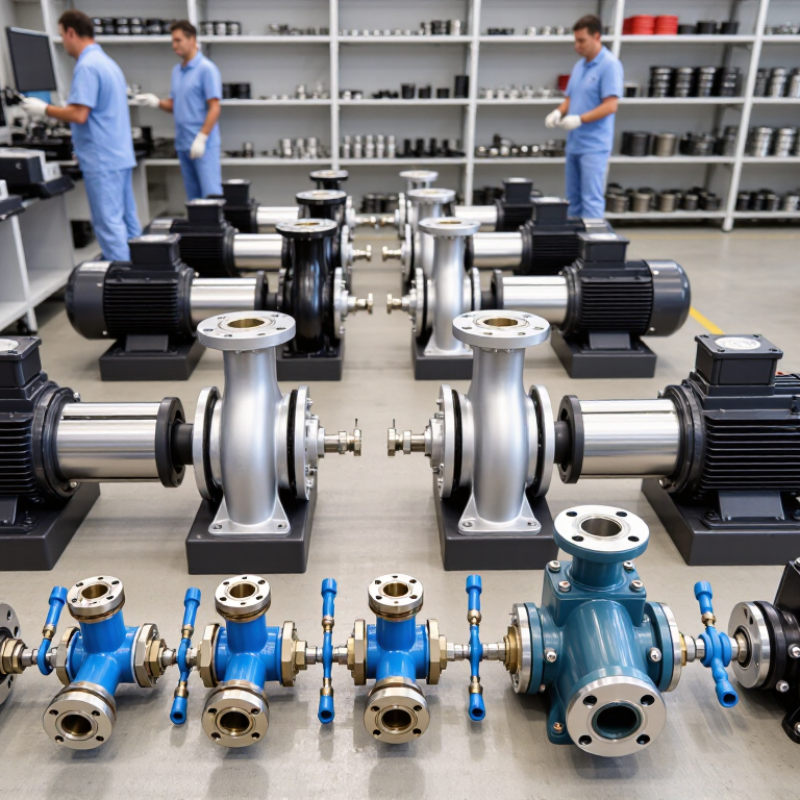
Understanding Chemical Transfer Pumps and Their Applications
Chemical transfer pumps move liquids from storage tanks to process lines, filling systems, or treatment equipment. Their design must match the liquid, pressure, temperature, and required flow rate. A pump suitable for clean solvents may fail quickly with abrasive slurries or concentrated acids. Small details matter.
In practical applications, engineers often use these pumps for water treatment, coatings, pharmaceuticals, agriculture, and industrial cleaning. Diaphragm pumps can handle many corrosive or particle-filled liquids with controlled flow. Magnetic-drive pumps reduce leakage risks because the motor does not directly connect to the impeller shaft. Peristaltic pumps protect sensitive fluids from contamination, although their tubing needs regular inspection. I have found that temperature changes can affect seals more than expected. That detail is easy to overlook.
Choosing a reliable supplier involves more than comparing prices. Ask for material compatibility data, tested performance curves, spare-part availability, and clear maintenance guidance. The supplier should explain how the pump performs under real operating conditions, not only ideal laboratory figures. Certifications, traceable testing, and responsive technical support also indicate professional capability. However, even good documentation cannot replace a site-specific assessment. A small mismatch in viscosity or piping resistance may reduce performance. Leave room for testing, adjustment, and honest review.
Key Factors for Choosing a Chinese Chemical Transfer Pump Supplier
Choosing a Chinese chemical transfer pump supplier requires more than comparing prices. Start with the pump’s actual working conditions: chemical composition, viscosity, temperature, flow rate, and discharge pressure. A capable supplier should recommend suitable wetted materials, seal designs, and motor configurations based on these details. Ask for performance curves, material certificates, inspection records, and test data from a comparable application. Experience matters when handling corrosive liquids.
Tips: Request a sample quotation with clear specifications. Check whether the supplier can provide drawings, spare parts, remote technical support, and operator guidance. Visit the factory if possible, or arrange a live video inspection of machining, assembly, and testing areas. Confirm production lead times and packaging details before placing an order.
Reliable suppliers communicate precisely and document each stage. Their engineers should explain limitations, not only advantages. Ask how they control dimensional accuracy, pressure testing, and final performance checks. Traceable records show stronger quality discipline. Still, no supplier is perfect. Some technical promises may depend on installation conditions, operator habits, or fluid changes. A careful buyer should record these risks and request written clarification. Do not trust polished brochures alone. Compare references from similar chemical processes, inspect after-sales response times, and verify whether replacement seals and impellers are readily available. Small details often decide whether a pump runs steadily beside a storage tank or causes repeated production delays.
China Top Chemical Transfer Pump Suppliers How to Choose? - Key Factors for Choosing a Chinese Chemical Transfer Pump Supplier
| Evaluation Dimension | Recommended Requirement | Typical Chemical-Transfer Data | How to Verify a Supplier | Importance |
|---|---|---|---|---|
| Chemical Compatibility | Provide a wetted-material compatibility statement for the exact chemical and concentration. | Common wetted materials include polypropylene, PVDF, PTFE, ceramic, stainless steel, and selected elastomers. | Request a material list, chemical-resistance chart, concentration range, and written suitability confirmation. | Critical |
| Flow Capacity | Select a pump that meets the required flow at the actual discharge pressure, not only at free-flow conditions. | Typical industrial chemical-transfer requirements range from below 1 m³/h to above 100 m³/h, depending on the process. | Review the pump curve and confirm duty-point flow, pressure, speed, and efficiency. | Critical |
| Differential Head and Pressure | The rated head and pressure should exceed the calculated static head, friction loss, and control-valve loss. | Many process systems operate within approximately 10–80 m of head; the final value depends on piping layout and fluid properties. | Submit the piping calculation and compare the operating point with the certified performance curve. | Critical |
| Temperature Range | The pump, seals, bearings, and motor must be rated for both normal and abnormal operating temperatures. | Ambient and liquid-temperature limits vary by construction; many standard systems handle approximately 0–80°C, while special designs support higher temperatures. | Check the temperature rating for every wetted and non-wetted component. | High |
| Viscosity and Specific Gravity | The supplier should size the pump using the actual viscosity and density at operating temperature. | Water-like fluids are close to 1 mPa·s; many chemical solutions range from approximately 1–1000 mPa·s. | Provide viscosity, density, temperature, and vapor-pressure data; request corrected performance calculations. | High |
| Solids and Particles | Confirm maximum particle size, concentration, hardness, and whether the liquid is abrasive or crystallizing. | Clean-liquid centrifugal pumps are commonly unsuitable for significant solids without appropriate clearance or filtration. | Request allowable solids data, impeller clearance, filtration requirements, and wear-part recommendations. | High |
| Seal and Leakage Control | Choose the sealing arrangement according to toxicity, volatility, crystallization, and allowable emissions. | Options may include mechanical seals, double mechanical seals, magnetic drive, canned motor, or sealless designs. | Ask for seal-face materials, elastomer type, leakage-control method, and maintenance instructions. | Critical |
| Motor and Electrical Compliance | Motor voltage, frequency, power, enclosure, hazardous-area classification, and efficiency must match the installation site. | Common industrial supplies include 380–415 V and 50 Hz in many regions, but local requirements must be confirmed. | Request motor certificates, nameplate data, enclosure rating, efficiency class, and area-classification documents where applicable. | Critical |
| Quality Management and Testing | A documented quality system and a repeatable inspection process should cover materials, assembly, pressure, vibration, and performance. | A complete test package may include dimensional inspection, hydrostatic testing, no-load testing, performance testing, and vibration records. | Request inspection and test plans, sample reports, calibration records, and traceability documentation. | Critical |
| Customization Capability | The supplier should be able to adapt connections, materials, motor configuration, control method, and mounting arrangement. | Common customization areas include flange standards, connection sizes, impeller diameter, seal arrangement, and variable-speed control. | Evaluate engineering drawings, approval procedures, prototype support, and change-control practices. | High |
| Lead Time and Supply Reliability | Lead time should be stated separately for standard units, customized units, spare parts, and replacement components. | Standard equipment may ship faster than engineered-to-order equipment; actual time depends on materials, testing, and export documentation. | Request a written production schedule, delivery history, critical-component stock policy, and contingency plan. | High |
| After-Sales Service and Spare Parts | Technical support, troubleshooting, manuals, exploded drawings, and replacement-part availability should be clearly defined. | Typical critical spares include mechanical seals, bearings, gaskets, sleeves, couplings, impellers, and wear components. | Review service response times, spare-part list, warranty terms, commissioning support, and maintenance training. | High |
| Total Cost of Ownership | Compare purchase price together with energy use, maintenance, spare parts, downtime, installation, and disposal costs. | A lower purchase price can result in higher operating cost if efficiency, seal life, reliability, or serviceability is poor. | Use a three- to five-year cost model based on duty hours, energy price, planned maintenance, and expected replacement intervals. | High |
Evaluating Pump Materials, Performance, and Chemical Compatibility
Choosing a chemical transfer pump starts with the liquid, not the supplier’s catalogue. A U.S. Department of Energy pumping-system guide reports that pumping may consume 25–50% of industrial facility electricity. Inefficient selection can therefore increase both energy use and downtime.
Material compatibility needs careful checking. Polypropylene and PVDF can suit many corrosive liquids, while PTFE-lined parts offer broader chemical resistance. Stainless steel may work well, but chloride exposure can still cause pitting. Check concentration, temperature, viscosity, solids, and pressure together. A compatibility chart is only a starting point. Actual service conditions can change the result.
Performance data should include flow, total head, NPSH available, efficiency, and operating temperature. ISO 2858 provides standardized dimensions and performance references for many centrifugal pumps. For low-emission duties, API 685 offers guidance for sealless centrifugal pump designs. Ask for test curves using a fluid close to yours, not only water. Water curves can mislead.
Experience matters here. A pump that transfers clean solvent may struggle with a warm, viscous mixture. Watch the suction line closely. Poor piping can create cavitation, vibration, and seal failure. I would also request material certificates, factory test records, and maintenance intervals. A spreadsheet can still lie. Field inspection and a short pilot test may reveal problems that polished documents hide.
China Top Chemical Transfer Pump Suppliers: How to Choose?
Indicative chemical compatibility screening by pump material
The index uses a 0–100 screening scale based on commonly reported material-resistance behavior. PTFE provides broad resistance across acids, alkalis, and solvents; PVDF and polypropylene are strong choices for many corrosive aqueous chemicals; 316L stainless steel requires special care with hydrochloric acid and chloride-rich media. Final selection should confirm chemical concentration, temperature, pressure, abrasion, and permeation requirements.
Comparing Supplier Quality, Certifications, and Technical Support
Choosing a chemical transfer pump supplier in China requires more than comparing prices. I would not trust a polished catalog alone. Request ISO 9001 certificates, accreditation details, and the certified site’s scope. ISO’s 2023 Survey recorded more than one million ISO 9001 certificates worldwide, but certification does not prove pump suitability. Check material traceability, impeller balancing, pressure testing, seal inspection, and documented factory acceptance tests. Every report should identify the pump serial number.
Technical support often separates a reliable supplier from a trading intermediary. Ask for calculations covering flow, viscosity, temperature, vapor pressure, NPSH, and seal compatibility. The U.S. Department of Energy notes that pumping systems can represent roughly 20–25% of industrial electricity use. Incorrect sizing may increase throttling, heat, and maintenance costs. Request performance curves based on your actual liquid, not water alone. This detail is frequently missed. It should not be.
Tips: Verify certificate validity independently. Ask for three recent test records. Require bilingual drawings and a commissioning checklist. Confirm response times for breakdown support. A video call with an engineer can reveal practical knowledge quickly. Also ask how spare parts are identified and packed. Even experienced buyers can overlook viscosity changes during winter operation. That small assumption may damage both efficiency and reliability.
Reviewing Pricing, Delivery, Warranty, and After-Sales Service
China Top Chemical Transfer Pump Suppliers: How to Choose?
Price should be compared against the complete operating cost, not the purchase quote alone. Ask for pump materials, seal specifications, motor efficiency, spare parts, and testing records. A low price can hide weak corrosion resistance or expensive maintenance. My early mistake was comparing identical flow rates without checking chemical temperature and viscosity. That created an unrealistic shortlist.
Delivery needs measurable details. Request a written production schedule, inspection date, shipping method, and contingency plan. For urgent projects, confirm whether critical parts are available locally or only made after payment. A reliable supplier should provide drawings before production. Check each dimension carefully. Small errors can delay installation.
Warranty terms deserve close reading. Confirm coverage for the pump body, seals, motor, and workmanship. Ask how claims are handled, who pays freight, and how quickly replacement parts ship. A twelve-month warranty sounds useful, but its exclusions may be broad. After-sales service should include commissioning guidance, troubleshooting support, and operating instructions in clear English. Request service contacts and response times in writing. Keep maintenance records, photos, and test data for future claims. I would also ask for references from similar chemical applications, though references are not perfect evidence. Some suppliers present polished case studies but provide little technical depth. A video call with an engineer can reveal more than a sales brochure.
Related Posts
-
Exploring Innovative Alternatives to Chemical Pumps for Enhanced Efficiency and Reliability
-
Exploring Innovative Chemical Pump Alternatives for Industrial Applications
-
2026 Best Chemical Transfer Pump for Global Buyers
-
How to Choose the Right Chemical Transfer Pump for Your Needs
-
How to Choose the Best Bleach Pump for Your Needs?
-
2026 Top Bleach Pump Buying Guide for Global Buyers