China Top 10 Small Submersible Pump Manufacturers?
A small submersible pump works below the waterline, where a sealed motor and compact housing must handle continuous contact with water. It may drain a basement sump, transfer water from a tank, or support a small irrigation setup. In each case, performance depends on more than rated power. Flow rate, lift height, solids handling, seal design, and access to replacement parts all matter.
The need for dependable water infrastructure is substantial. The WHO/UNICEF Joint Monitoring Programme’s 2023 report estimates that 2.2 billion people lacked safely managed drinking water in 2022. That figure does not measure pump sales, but it shows why reliable water equipment matters. Grand View Research’s global pumps market reports track the wider pump sector; they do not provide a definitive ranking of Chinese small-pump makers. That distinction matters.
This guide examines ten Chinese manufacturers through practical purchasing criteria: product range, published specifications, manufacturing capabilities, quality documentation, and export support. A listed flow rate is useful, but it is not a field test. Buyers should confirm operating conditions, warranty terms, and spare-part availability directly with each supplier. Some company information can be hard to compare. That is worth noting. Rankings can simplify a crowded market, yet they may overlook smaller specialists or changing product lines. Treat this list as a starting point for supplier evaluation, not a substitute for technical checks.
What Defines a Small Submersible Pump?
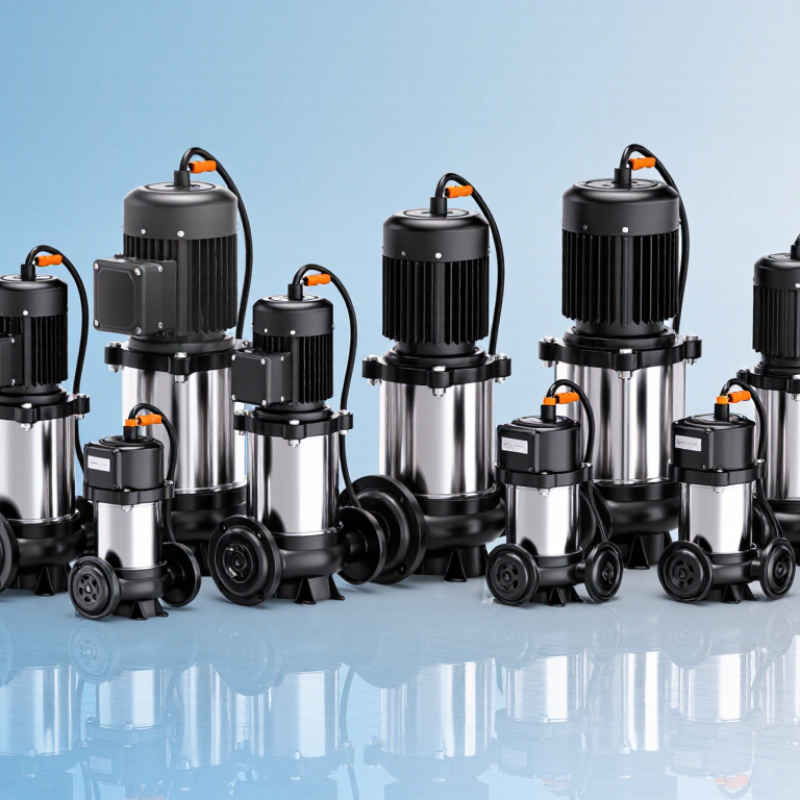
A small submersible pump is defined less by a fixed size than by its intended workload. It has a sealed motor and pump body designed to operate below the water surface. “Small” usually points to compact dimensions, modest power, and easier handling, not one universal measurement. There is no single industry-wide cutoff. That distinction gets overlooked.
In practical use, these pumps move water from narrow sumps, rain barrels, shallow pits, or small tanks. A unit may fit inside a bucket, yet still be unsuitable if its discharge head is too low. Check the required lift, hose diameter, flow rate, and whether the water contains grit or fibers. A pump rated for clear water can clog quickly in muddy drainage. Small, but not delicate by definition.
Housing material, cable length, cooling method, and thermal protection also affect daily reliability. A cramped basement pit may need a low-level intake, while a garden tank may need steady flow. Compare the pump’s duty cycle with the task; some compact models are not made for continuous operation. Specifications deserve a careful read, though field conditions rarely match the test bench exactly.
A little uncertainty remains.
How China’s Small Submersible Pump Industry Is Organized
China’s small submersible pump industry is not one uniform market. It includes factories that design complete pumps, contract manufacturers that build to customer specifications, and suppliers focused on motors, seals, impellers, or control parts. Some companies handle engineering and assembly in-house; others depend on a network of specialist vendors. The map is not perfectly tidy.
Production is often organized around practical applications, such as draining basements, circulating water in small systems, or removing wastewater. A compact pump may contain a sealed motor, an impeller, a power cable, and sometimes a float switch. Each part affects performance. Buyers comparing manufacturers should check flow rate, head, materials, insulation, and documented testing—not just the advertised wattage. Ask how the pump behaves during continuous operation, too.
Regional supply networks can make components and assembly easier to coordinate, but that does not guarantee consistent quality. Factory capability varies, even among firms selling similar-looking products. A useful assessment looks at technical drawings, sample inspection, traceable test records, and the maker’s ability to explain failure limits. Small differences matter. Cable entry, seal fit, and debris tolerance can decide whether a pump works reliably in a real installation. And specifications may not tell the whole story.
Profiles of 10 Leading Chinese Small Submersible Pump Manufacturers
Profiles of ten leading Chinese small submersible pump manufacturers are most useful when they show what each producer actually makes. Some focus on compact drainage pumps for basements and construction sites. Others build clean-water models for tanks, wells, or garden use. A few specialize in corrosion-resistant materials or automatic float switches. These are practical differences, not proof of a company’s overall quality.
Compare measurable details: rated flow, maximum head, motor power, cable length, and permitted liquid temperature. Check whether published specifications match the pump’s nameplate and test records. Ask about seal construction, overload protection, spare parts, and warranty terms. Product photos can help, but they cannot confirm performance. A profile that lacks test conditions leaves an important gap. Honestly, that is easy to overlook.
Tips: Match the pump to the job, not just the outlet size. Measure the vertical lift and pipe run, then allow for bends and friction. Confirm the liquid is suitable for the materials and pump design. If details are unclear, request a written specification before ordering.
China Top 10 Small Submersible Pump Manufacturers? - Profiles of 10 Leading Chinese Small Submersible Pump Manufacturers
The table below compares ten common small submersible-pump product specializations. The figures are indicative industry ranges, not verified specifications for individual manufacturers or a ranking of companies; exact performance depends on the pump model and operating conditions.
| No. | Product specialization profile | Typical application | Indicative flow range | Indicative head range | Common power / supply | Selection consideration |
|---|---|---|---|---|---|---|
| 1 | Clean-water drainage pumps | Basements, tanks, and general water transfer | 2–20 m³/h | 5–25 m | 0.18–1.1 kW; commonly 220 V AC | Check minimum water level and dry-run protection. |
| 2 | Dirty-water drainage pumps | Site drainage and water containing small suspended particles | 3–25 m³/h | 5–20 m | 0.25–1.5 kW; 220 V AC or 380 V AC | Confirm the permitted particle size and water chemistry. |
| 3 | Sewage and wastewater pumps | Residential wastewater and small treatment systems | 3–30 m³/h | 5–25 m | 0.37–1.5 kW; 220 V AC or 380 V AC | Check solids passage, impeller design, and clog resistance. |
| 4 | Stainless-steel submersible pumps | Water transfer where corrosion resistance is important | 1–15 m³/h | 5–40 m | 0.18–1.5 kW; commonly 220 V AC | Verify the exact stainless-steel grade and fluid compatibility. |
| 5 | Small-borehole pumps | Wells, household supply, and irrigation | 0.5–10 m³/h | 20–100 m | 0.25–1.5 kW; 220 V AC or 380 V AC | Match pump diameter to well casing and check required delivery head. |
| 6 | Pond and aquaculture pumps | Pond circulation, water exchange, and fish-farm drainage | 5–30 m³/h | 3–15 m | 0.18–1.1 kW; commonly 220 V AC | Consider continuous-duty rating, intake screening, and maintenance access. |
| 7 | Fountain and water-feature pumps | Decorative fountains and small water displays | 1–15 m³/h | 2–20 m | 0.05–0.75 kW; 220 V AC or low-voltage DC | Select flow and head together to suit the nozzle or display design. |
| 8 | Construction dewatering pumps | Excavations and temporary site-water removal | 5–30 m³/h | 5–25 m | 0.37–1.5 kW; 220 V AC or 380 V AC | Check abrasion resistance, cable protection, and duty cycle. |
| 9 | Solar-powered submersible pumps | Off-grid well supply and small-scale irrigation | 0.2–5 m³/h | 10–80 m | Approximately 0.1–1.5 kW; DC or controller-driven AC | Size the pump, controller, and solar array for site conditions and demand. |
| 10 | Vortex or cutter wastewater pumps | Wastewater with fibrous or clog-prone solids | 2–20 m³/h | 5–20 m | 0.37–1.5 kW; 220 V AC or 380 V AC | Compare solids-handling capability and cutter service requirements. |
Before purchase, request the manufacturer's model-specific pump curve, rated duty point, motor protection details, materials list, and applicable test or conformity documents.
How the Manufacturers Compare by Products and Capabilities
Comparing ten small submersible pump manufacturers is most useful when the products are matched to real operating conditions. Some suppliers focus on compact pumps for clean water, while others offer models for drainage, shallow pits, or light wastewater. These categories are not interchangeable. A pump that handles clear water well may clog when solids enter the inlet.
Check flow rate and head at the same duty point, not as isolated maximum figures. Ask for a performance curve, motor power, cable length, and permitted liquid temperature.
Details matter. For frequent starts, thermal protection and a durable mechanical seal can matter more than a slightly higher advertised flow. Housing materials also deserve attention, especially where water chemistry varies.
Manufacturing capability shows up in testing and documentation, not just a broad catalogue. Look for routine leak checks, electrical safety tests, spare-part availability, and clear instructions for installation and maintenance.
Some manufacturers may customize voltage, outlet size, or float-switch options, but confirm how those changes affect lead time and warranty coverage. A polished specification sheet is helpful, though it cannot replace a sample test under your actual conditions.
That is easy to overlook. Even capable suppliers may provide uneven detail across product lines, so compare the exact model you plan to buy.
Key Factors for Choosing a Chinese Small Submersible Pump Manufacturer
A small submersible pump should be selected against the actual duty point, not its maximum flow figure. Record required flow, total head, liquid temperature, solids size, and daily operating hours. Then compare the pump curve with your system curve. A mismatch can mean weak discharge or frequent cycling. Fit matters. The IEA’s 2011 report, Energy-Efficiency Policy Opportunities for Electric Motor-Driven Systems, estimates that motor-driven systems use about 69% of industrial electricity. Since pumps are a major motor-driven load, efficiency data and realistic operating conditions deserve close attention.
Tips: Ask for a test report showing flow, head, power, and test conditions. Check whether the test method follows ISO 9906, and confirm the proposed materials suit your liquid. Request clear warranty terms and a list of replaceable parts.
A common purchasing mistake is trusting a catalog rating without checking how it was measured. Ask the manufacturer for the pump curve, motor protection details, cable length, and rated submersion depth. Also verify that its quality system covers inspection and final testing, not just assembly. A polished datasheet helps, but it cannot replace consistent records. Supplier replies may still leave gaps; clarify them before ordering.
Related Posts
-
How to Choose a Small Submersible Pump in 2026?
-
How to Choose the Best Submersible Water Pump for Your Needs?
-
2026 Top Small Submersible Pump Reviews and Buying Guide?
-
Exploring the Efficiency of Electric Transfer Pumps: A Detailed Study on Flow Rates and Energy Consumption Trends
-
How to Choose the Right Water Tank Pump for Your Needs?
-
Top 2 Diaphragm Pump Options for Global Buyers?