
How to Choose the Right 12 Volt Pump for Your Needs?
Choosing the right 12 volt pump is not simply a matter of matching voltage. The real decision begins with the job.
Will it move clean water, diesel, chemicals, or thick liquids? How far must the fluid travel? What pressure and flow rate are actually required? A compact pump may fill a small tank efficiently, yet fail when connected to a long hose, clogged filter, or elevated outlet.
Michael R. Jones, a veteran mobile-pumping systems engineer, offers a practical reminder: “Select the pump for the duty cycle, not just the voltage.”
That distinction matters.
A pump used for three minutes behaves differently from one running for two hours beside a warm engine. Battery capacity, wire length, fuse size, inlet diameter, and dry-run protection can influence performance. Even pump noise matters inside a camper or service vehicle.
The specifications deserve careful reading. Rated flow may be measured without hose resistance. Maximum pressure may describe a brief limit, not continuous operation. Real conditions are often less generous.
This guide explains how to compare flow rate, pressure, materials, power consumption, control methods, and installation requirements. It also considers common mistakes, including undersized wiring and ignoring duty-cycle limits.
There is no perfect choice.
A reliable 12 volt pump should match the liquid, workload, environment, and available power. That sounds obvious, but practical selection often exposes hidden assumptions. A cheaper model may appear efficient until repeated overheating, slow delivery, or premature seal wear changes the calculation. Careful measurement usually prevents expensive disappointment.
Define the Pump’s Purpose, Fluid Type, and 12 V DC Power Source
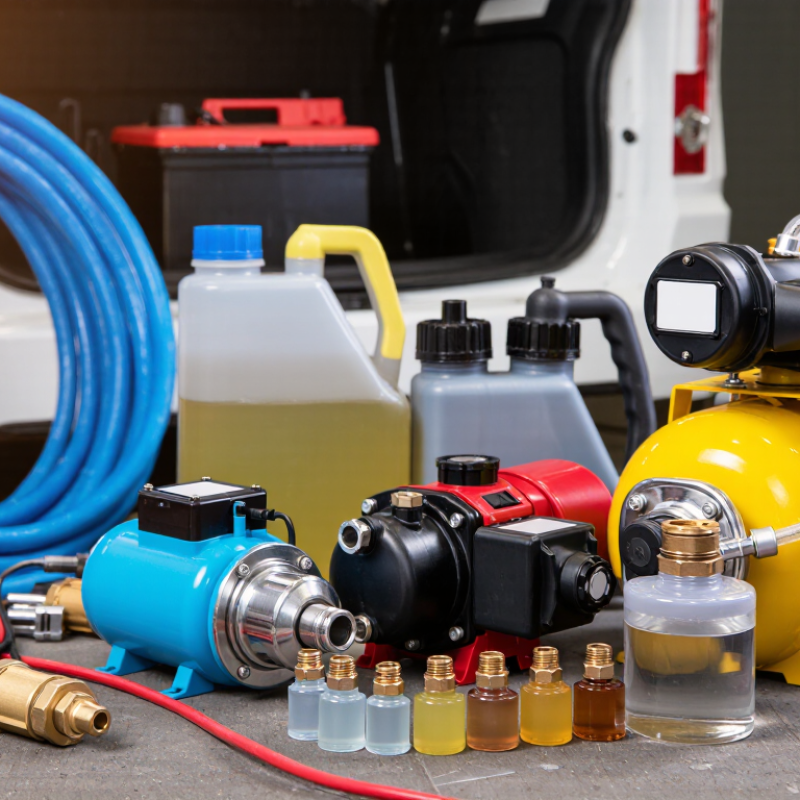
Before choosing a 12-volt pump, define the job clearly. Are you transferring water, circulating coolant, or draining a small tank? The purpose determines the needed flow rate, pressure, and duty cycle. A pump that fills a bucket quickly may not suit a long hose or steady circulation. Measure the hose length and height difference, too. Small details matter.
Check the fluid. Clean water is different from water containing grit, oil, or chemicals. Confirm that the pump’s wetted materials are compatible with the fluid and its temperature. If the liquid is dirty, a suitable inlet strainer may help, but it can also restrict flow when clogged. I once underestimated that trade-off. It was inconvenient.
Finally, match the pump to a 12 V DC source, such as a vehicle battery or a properly rated power supply. Check the pump’s current draw, then verify that the wiring, connector, fuse, and supply can handle it. Voltage drop over a long cable can reduce performance. Keep the setup dry and ventilated, and follow the manufacturer’s installation instructions. A quick test with the actual hose and fluid can reveal problems before regular use.
Match Flow Rate and Pressure Using the Manufacturer’s Pump Curve
How to Choose the Right 12 Volt Pump for Your Needs?
Match Flow Rate and Pressure Using the Manufacturer’s Pump Curve
A pump’s advertised flow rate is not always the flow you’ll get. Check the manufacturer’s pump curve, which shows how flow changes as pressure rises. Find your required pressure on the curve, then read the corresponding flow rate. For example, a pump rated at 10 gallons per minute at zero pressure may deliver much less through a narrow hose or raised outlet. Measure the hose length, fittings, lift height, and any filter resistance before choosing. Small details matter.
Tips: Compare the curve with your real operating conditions, not just the pump’s maximum rating. Leave some margin for pressure losses. If your setup falls between two curve points, estimate cautiously; the curve is a guide, not a promise. That part is easy to overlook.
Also check the pump’s voltage range, duty cycle, and fluid compatibility. A long, thin power cable can cause voltage drop and reduce performance. If possible, test the system with a pressure gauge and flow meter after installation. Actual results may differ from the chart, especially when fittings or battery condition change. Keep notes from the test. They can help you spot a poor match before it becomes a recurring problem.
Check Current Draw, Wiring, and Typical 13.8–14.4 V Charging Voltage
Choosing a 12-volt pump starts with its electrical load, not just its flow rate. Check the pump’s rated running current and any startup surge listed in its specifications. A pump drawing 8 amps continuously needs a different circuit from one drawing 3 amps. Allow headroom; operating at a circuit’s limit can cause heat and unreliable starts.
Wire length matters. A long cable run can reduce the voltage reaching the pump, even when the battery looks healthy. Match wire gauge to current and total circuit length, and install a correctly sized fuse near the power source. Measure voltage at the pump terminals while it runs. That reading is more useful than a battery reading taken at rest. Small details matter.
A 12-volt system may reach about 13.8–14.4 volts while charging. Confirm that the pump and its controller can tolerate this range; “12 volt” does not always mean the same operating limits. If the pump slows when other equipment switches on, check connections, cable size, and voltage drop before replacing it. I would not assume the battery is at fault without testing. It is easy to focus on the pump alone, and that can miss a warm connector or undersized wire. When specifications are unclear, ask a qualified installer to verify the circuit.
Compare Duty Cycle, Materials, and IP Protection for the Installation
Choosing a 12-volt pump is not only about maximum flow. Duty cycle, construction materials, and IP protection often determine service life. In field installations, I compare these details before checking the advertised performance.
Duty cycle shows how long the pump can operate before cooling. A pump rated for intermittent use may overheat during continuous transfer. Check the label and calculate the real operating pattern. Starting current also matters, because thin wiring can cause voltage loss and weak performance. I have learned that a slightly lower flow rate may be safer than pushing a small pump beyond its limits.
Housing and wetted materials should match the liquid. Reinforced polymer can suit clean water, while stainless steel may handle harsher surroundings more reliably. However, corrosion resistance does not guarantee seal compatibility. Review the material data for the fluid, temperature, and pressure. Test the liquid.
IP protection describes resistance to dust and water. The first digit concerns solids; the second concerns moisture. An IP65 enclosure resists dust and water jets, while IP67 generally supports temporary immersion. These ratings apply only when connectors, cable entries, and covers are installed correctly. A higher rating cannot fix poor mounting. Use drip loops, protect the wiring, and avoid placing the pump where water collects. I sometimes overlook access for maintenance, and that mistake makes a good installation frustrating later.
Verify Standards, Safety Features, and Maintenance Requirements
How to Choose the Right 12 Volt Pump for Your Needs?
A 12 volt pump should match both the application and its operating environment. Check its voltage range, current draw, flow rate, and maximum pressure. A pump that looks powerful may overload a small electrical system. Verify certification marks and documentation against recognized standards in your region. Do not rely on a product label alone. Ask for test data, wiring guidance, and pressure limits from a qualified supplier.
Safety details deserve close attention. Look for thermal overload protection, sealed electrical connections, and a suitable fuse near the power source. Confirm whether the pump tolerates moisture, dust, vibration, or outdoor exposure. Never assume water resistance means complete waterproofing. A dry-run protection feature can prevent damage when a tank empties unexpectedly. Check hose fittings carefully. Small leaks can reduce performance and create messy, unsafe conditions.
Tips: Measure the cable length before choosing the pump. Long cables may cause voltage loss. Inspect the inlet filter every few weeks, especially with dirty water. Clean blocked filters gently. Harsh tools can damage the mesh. Keep a simple maintenance record with dates, noise changes, and flow results. A pump may continue working while quietly losing efficiency. I once underestimated this warning sign. That mistake increased cleaning time later. Review the manual before changing seals, wiring, or pressure settings.
Related Posts
-
What is a 24v Water Pump and How Does It Work?
-
What Are China Top 10 12 Volt Water Pump Manufacturers?
-
What Is a Chemical Pump and How Does It Work?
-
How to Choose the Best Submersible Water Pump for Your Needs?
-
How to Choose a Small Submersible Pump in 2026?
-

China Top Water Pump Motor Manufacturers and Suppliers