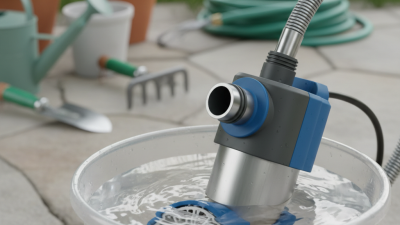
2026 Top Submersible Pump Types for Global Buyers
Submersible pumps operate below the waterline, where access is difficult and operating conditions can change quickly. A drainage pump in a basement faces a different duty from a wastewater unit handling solids or a deep-well pump lifting groundwater. For global buyers, matching pump type to fluid, flow, head, solids content, and power supply matters more than comparing horsepower alone. Small details matter.
Grand View Research estimated the global submersible pump market at USD 13.61 billion in 2023 and projected a 6.1% compound annual growth rate from 2024 to 2030. This broad market figure signals sustained demand, but it does not tell buyers which design suits a specific site. Robert Asdal, executive director of the Hydraulic Institute, represents a useful system-level perspective. Paraphrased, his selection principle is: “Choose for the actual duty point, not the nameplate alone.” Buyers should verify performance curves, motor protection, materials, service access, and local support before choosing. A lower purchase price can become costly when seals fail, solids clog the intake, or replacement parts are unavailable.
This guide compares major submersible pumps for 2026, including drainage, sewage, well, and industrial models. It focuses on practical distinctions, not just catalog claims. Some specifications still need careful checking against site conditions; no single pump fits every job.
Understanding Submersible Pumps and Their Core Design
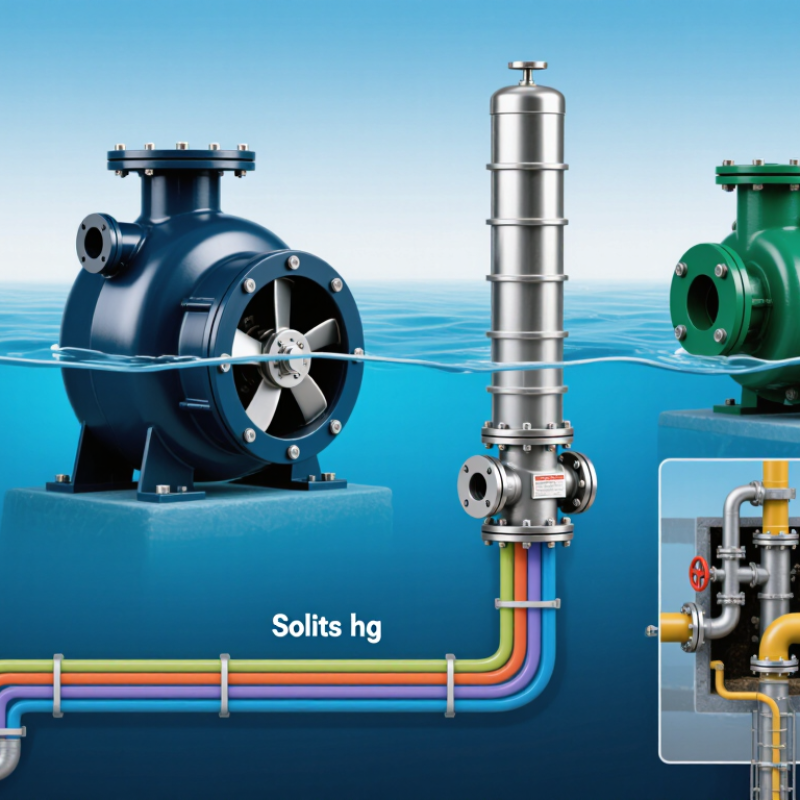
A submersible pump operates with its motor and pumping components below the liquid surface. Unlike a surface pump, it pushes fluid upward through a discharge pipe rather than drawing it from above. Its main parts are a sealed motor housing, an impeller, an intake screen, and a discharge outlet. The impeller spins to move water or other compatible liquids. A tight seal helps keep fluid away from the electrical components. Small details matter.
Immersion can help cool the motor, but it does not make every pump suitable for every job. Buyers should match the pump to the required flow rate, lifting height, liquid temperature, and particle size. A narrow intake screen may clog when leaves or grit enter the sump. Cable length and safe electrical protection also deserve attention during installation. In practice, checking the liquid and pipe layout before choosing a pump prevents avoidable problems. Yet specifications can feel clear on paper and still miss site conditions. That is why operating limits and maintenance access should be checked, not assumed.
Leading Submersible Pump Types Available in 2026
Leading submersible pump types in 2026 serve very different jobs. Sewage pumps move wastewater containing solids, using impellers designed to reduce clogging. For buildings or municipal lift stations, check the permitted solids passage and discharge size. A narrow pipe can restrict performance.
Drainage and dewatering pumps handle rainwater, seepage, or construction-site water. Many suit relatively clean or lightly muddy water, while abrasive slurry needs a more wear-resistant design. Borehole pumps use multiple stages to lift water from deep wells. Their diameter must match the well casing, and the required flow should reflect actual demand, not just the highest advertised capacity. Small details matter.
Buyers may also consider submersible utility pumps for tanks and flooded spaces, or dedicated slurry pumps for water carrying sand and sediment. Review liquid temperature, pH, particle size, cable length, motor protection, and available power before comparing models. Ask for pump curves and installation guidance from qualified suppliers; a matching flow rate alone does not confirm a suitable system. I would not treat any type list as a perfect checklist. Water conditions change, and site measurements are sometimes incomplete. The right choice depends on the liquid, lift height, pipework, and maintenance access.
How Submersible Pump Types Work and Differ
A submersible pump operates with its motor and hydraulic section below the liquid surface. This arrangement pushes water upward, rather than drawing it through a long suction line. Drainage models commonly use compact impellers for relatively clear water. Sewage models need wider passages or vortex-style impellers to pass suspended solids. Borehole pumps use stacked impeller stages, with each stage adding pressure for deep lifts. These designs are not interchangeable.
Match the pump to the liquid and the duty point: required flow, total head, and solids size. A pump that moves water quickly may still struggle against a high lift. The U.S. Department of Energy’s Improving Pumping System Performance sourcebook reports that pumping can account for 25–50% of energy use in some industrial facilities. That makes correct sizing more than a purchasing detail. In the field, check the motor’s cooling conditions, cable entry, and whether the pump cycles too often. Small details matter. A clean-looking specification sheet can still leave uncertainty about grit, fiber, or changing water levels; verify these conditions before selecting a type.
Common Applications for Each Pump Type
Submersible pump choice follows the water, solids, and operating depth on site. For clear groundwater in deep wells, borehole pumps supply homes, irrigation systems, and remote facilities. They need a casing-matched diameter and stable water levels; dry running can quickly damage a motor. Measure twice.
On construction sites, drainage pumps remove rainwater and shallow groundwater, while high-head models suit deeper excavations. For sewage and stormwater, vortex or channel impellers help pass suspended solids through wet wells. UN-Water’s 2017 World Water Development Report estimated that over 80% of wastewater was released without adequate treatment. That figure describes treatment, not pump demand, but it highlights the scale of wastewater collection needs. Specifications often look cleaner than the site itself.
For municipal lift stations and industrial systems, compare the pump’s duty-point efficiency, motor protection, and cleaning access—not just its rated flow. The U.S. Department of Energy’s Improving Pumping System Performance sourcebook reports that pumping systems account for nearly 20% of global electricity demand. Efficient operation matters. Still, even a suitable pump can disappoint when solids, cable length, or actual head are guessed instead of measured.
2026 Top Submersible Pump Types for Global Buyers - Common Applications for Each Pump Type
| Pump Type | How It Works | Common Applications | Typical Fluid | Key Selection Considerations |
|---|---|---|---|---|
| Submersible Drainage Pump | Uses an immersed motor and impeller to remove water from a low point or flooded area. | Construction-site dewatering, basement flooding, sumps, utility pits, and rainwater removal. | Relatively clean water or water containing limited fine sediment, depending on the model. | Check required flow and lift, particle passage, water temperature, and whether the pump can run at the expected water level. |
| Submersible Sewage Pump | Moves wastewater with a non-clog or vortex-style impeller designed to pass solids within its stated limits. | Municipal lift stations, commercial wastewater systems, residential sewage pits, and treatment facilities. | Domestic or municipal wastewater with suspended solids and fibrous material within the pump's specified limits. | Match the solids-passage requirement, discharge pipe size, head, duty cycle, and corrosion resistance to the site. |
| Submersible Grinder Pump | Cuts or macerates sewage solids before pumping the resulting slurry through a pressurized discharge line. | Small-diameter force mains, remote properties, and sites where gravity sewer connections are impractical. | Domestic sewage containing waste that can be reduced by the cutting mechanism. | Consider discharge pressure, force-main length, solids load, maintenance access, and the extra energy required for grinding. |
| Submersible Slurry Pump | Uses a heavy-duty hydraulic end and wear-resistant components to move liquid containing abrasive solids. | Mining, aggregate washing, mineral processing, dredging support, and industrial sludge transfer. | Abrasive mixtures of water and solids, such as sand, mineral particles, or process sludge. | Assess solids concentration and size, abrasiveness, required flow and head, and material wear life. |
| Submersible Borehole Pump | A multistage centrifugal pump installed below the water level in a narrow well to lift water to the surface. | Groundwater supply, irrigation, livestock watering, and water supply for homes or facilities. | Clean or lightly sediment-bearing groundwater within the pump's water-quality limits. | Check well diameter, static and pumping water levels, total dynamic head, flow demand, and sand tolerance. |
| Submersible Utility Pump | A compact pump for temporary or intermittent transfer of water from shallow or confined spaces. | Draining tanks, pools, window wells, flooded rooms, and small reservoirs. | Mostly clean water; some models handle small particles, as stated by the manufacturer. | Review minimum operating depth, automatic float-switch function, power supply, and residual water level. |
| Submersible Propeller (Axial-Flow) Pump | A propeller-type impeller moves a large volume of water at relatively low head. | Flood control, stormwater drainage, irrigation channels, and circulation in large water systems. | Large volumes of water with limited suspended solids, subject to the pump design. | Best suited to high-flow, low-head duties; verify intake conditions, debris screening, and the operating point. |
How Global Buyers Can Compare and Select Submersible Pumps
Global buyers should compare submersible pumps by operating conditions, not by horsepower alone. A clear-water borehole pump handles a different job from a solids-handling wastewater pump. Record the required flow, total head, liquid temperature, and particle size before requesting quotations. For wastewater, check the stated free passage against the largest expected solids. For drainage, confirm how low the pump can draw the water level. Small details matter.
The U.S. Department of Energy’s Improving Pumping System Performance sourcebook reports that pumping systems account for nearly 20% of global electricity demand. It stresses evaluating the whole system, including controls and pipe losses, rather than judging a pump by its nameplate efficiency alone. Ask suppliers for performance curves and check that the expected duty point sits near the pump’s best-efficiency range. A curve is more useful than a broad efficiency claim. Not always.
Also compare motor protection, seal design, cooling method, and service access. A unit installed deep in a narrow well may be efficient but costly to retrieve. Match construction materials to the water’s salinity, acidity, and abrasive content, and verify local voltage and frequency. I would leave room for uncertainty here: real liquid samples and site measurements can reveal conditions that a specification sheet misses. Ask what maintenance interval the stated operating life assumes.
2026 Top Submersible Pump Types for Global Buyers
Indicative head ranges by common pump type (metres)
Borehole pumps commonly cover higher-head duties, while drainage, sewage, and slurry pumps are generally selected for lower-head applications. These broad indicative ranges are not product specifications: actual head depends on the model, flow rate, liquid, and system design. Compare pump curves against your required duty point before purchasing.
Related Posts
-
2026 Top Small Submersible Pump Reviews and Buying Guide?
-
What Are the Top 10 Types of Submersible Pumps?
-
Best Submersible Water Pump for Your Home Needs?
-
How to Choose a Small Submersible Pump in 2026?
-
China Top 10 Small Submersible Pump Manufacturers?
-
How to Choose a Small Submersible Pump in 2026?